Molecular Regulation of Secondary Hair Follicle Stem Cell by S100a4 in Cashmere Goat
Xinyue Liang, Bohan Liu, Jiayi Wang, Yanlei Liu, Yiping Wei, Hongji Yu, Junpeng Zhang, Shuyi Zhang, Huiling Xue

TL;DR
This study identifies S100a4 as a key regulator of secondary hair follicle stem cells in cashmere goats, influencing their activation and differentiation during fiber regeneration.
Contribution
The paper reveals S100a4 as a novel molecular regulator of secondary hair follicle stem cell function in cashmere goats.
Findings
S100a4 expression is highest in secondary hair follicle stem cells during anagen, indicating its role in follicle regeneration.
S100a4 promotes stem cell competence and differentiation by upregulating key epidermal and pluripotency markers.
Proteomic analysis shows S100A4 interacts with keratins essential for hair follicle development, suggesting a structural and regulatory role.
Abstract
Secondary hair follicle stem cells (HFSCs) are essential for cashmere fiber regeneration, yet the molecular mechanisms governing their activation and lineage progression remain poorly understood. Here, we identify S100a4 as a key regulator of secondary HFSCs in cashmere goat. S100a4 expression peaks during anagen and is markedly enriched in secondary HFSCs relative to hair matrix cells (HMCs), suggesting a role in initiating follicle regeneration. Functional assays show that S100a4 promotes HFSCs into a dynamically regulated state that activates stem cell competence while facilitating differentiation, with overexpression upregulating epidermal and follicular differentiation markers (Ivl, Cux1, K14, Klk5), as well as pluripotency genes (Itga6, Krt15), while knockdown suppresses these programs. Proteomic analysis further reveals direct interactions between S100A4 and keratins critical for…
Genes, proteins, chemicals, diseases, species, mutations and cell lines named across the full text — each resolved to its canonical identifier and authoritative record.
Click any figure to enlarge with its caption.
 Figure 1
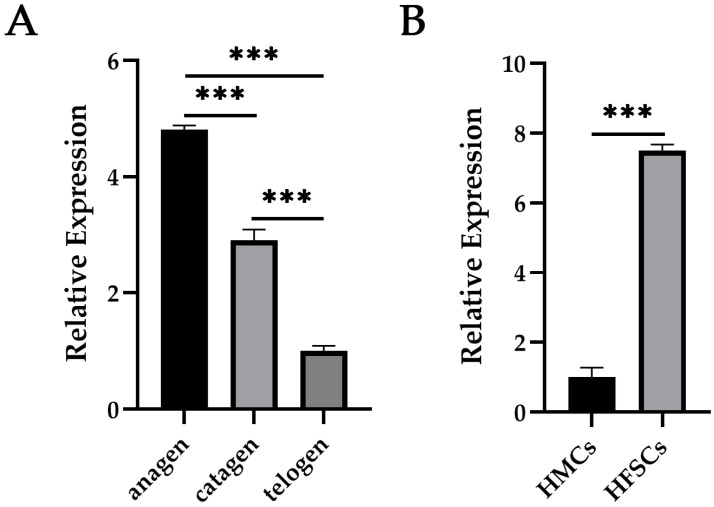 Figure 2
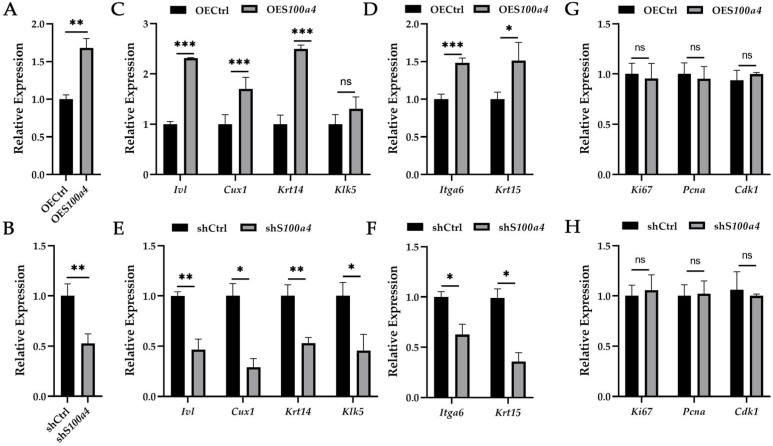 Figure 3
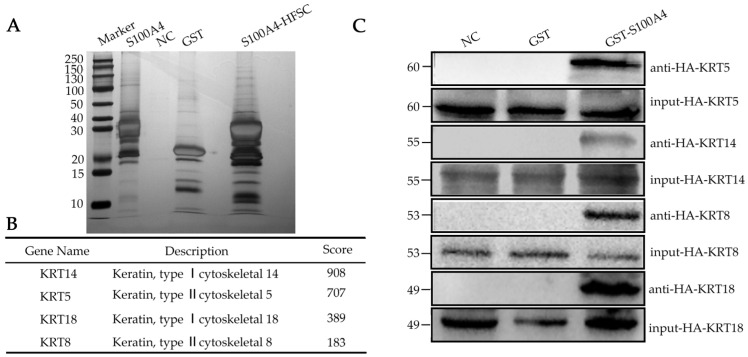 Figure 4
Peer Reviews
No public reviews on file for this paper yet. If you reviewed it on a platform where reviews are public (OpenReview, ICLR, NeurIPS, ICML), you can paste yours below so the community can read it here.
Videos
No videos yet. Explain this paper in a talk, walkthrough, or lecture? Add one.
Taxonomy
TopicsHair Growth and Disorders · Hearing, Cochlea, Tinnitus, Genetics · Skin and Cellular Biology Research