Solid-State Fermentation of Jatropha curcas Cake by Pleurotus ostreatus or Ganoderma lucidum Mycelium to Determine Multi-Bioactivities
Enrique Javier Olloqui, Emmanuel Pérez-Escalante, Raúl Velasco-Azorsa, Carlos Gutierrez, Juan Carlos Moreno-Seceña, Daniel Martínez-Carrera

TL;DR
This study explores using fungi to ferment Jatropha curcas cake to produce bioactive peptides with health benefits like antioxidant and antidiabetic properties.
Contribution
The first report of hypocholesterolemic activity in Jatropha curcas and a comparison of bioactivity between two fungal fermentation systems.
Findings
FGL fermentation showed higher multi-bioactivity than FPO fermentation.
FGL achieved maximum hypocholesterolemic activity at 24 days.
Both fermentation systems produced peptides with molecular weights under 10 kDa.
Abstract
Non-toxic Jatropha curcas cake is a by-product rich in protein that can be used in the food industry. Proteolytic kinetics were used to identify and quantify its antioxidant, antidiabetic, angiotensin-converting enzyme inhibitory, and hypocholesterolemic capacities. J. curcas cake was subjected to two systems of solid-state fermentation (SSF) hydrolysis by Pleurotus ostreatus (FPO) or Ganoderma lucidum (FGL), recording every 6 d until 24 d had passed. The maximum proteolytic capacity in FPO was reached on day 6 of the study, whereas FGL was achieved at 12 d. The FPO and FGL electrophoresis gels revealed the presence of 28 bands corresponding to peptides with molecular weights of less than 10 kDa in both systems analyzed. The highest FRAP values were obtained at 12 d for FPO and at the start of SSF for FGL. The highest antidiabetic capacity of FPO was obtained at 18 d and that of FGL at…
Genes, proteins, chemicals, diseases, species, mutations and cell lines named across the full text — each resolved to its canonical identifier and authoritative record.
Click any figure to enlarge with its caption.
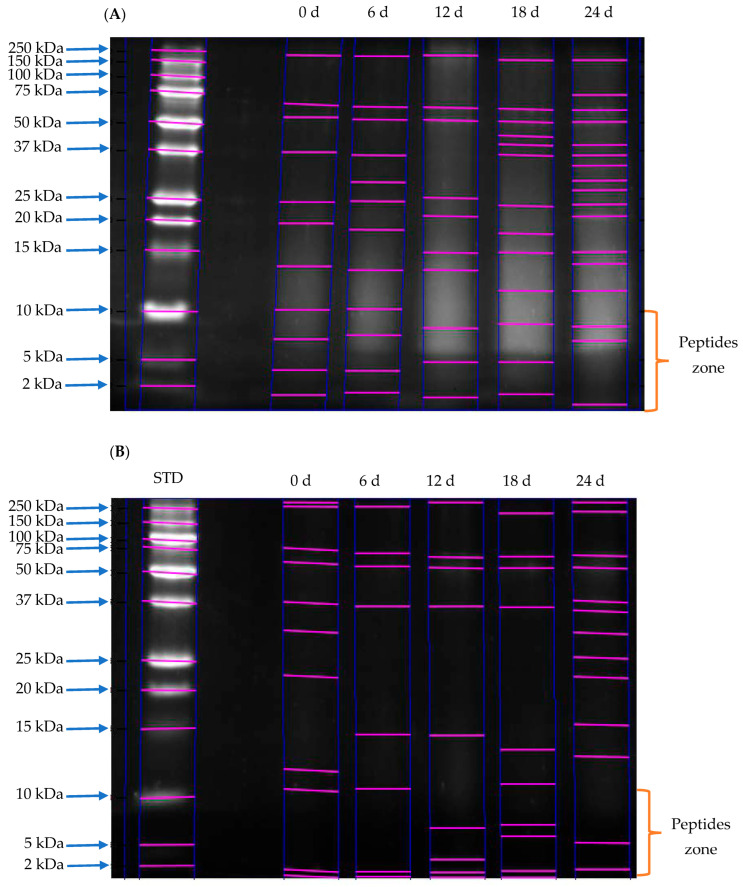 Figure 1
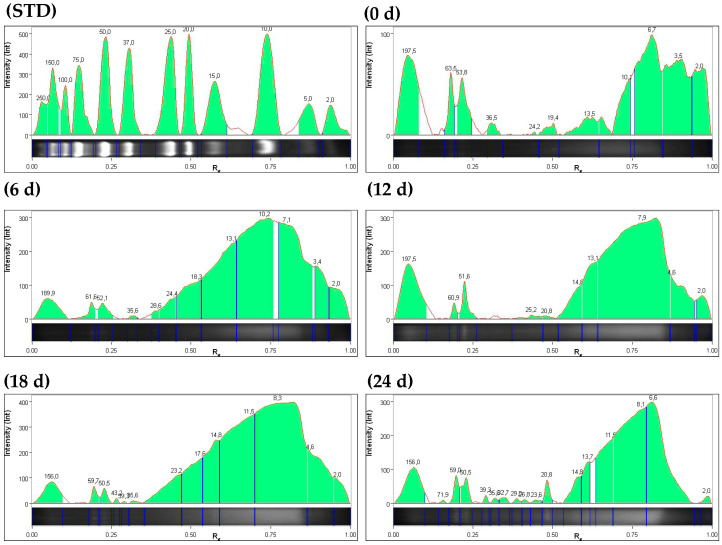 Figure 2
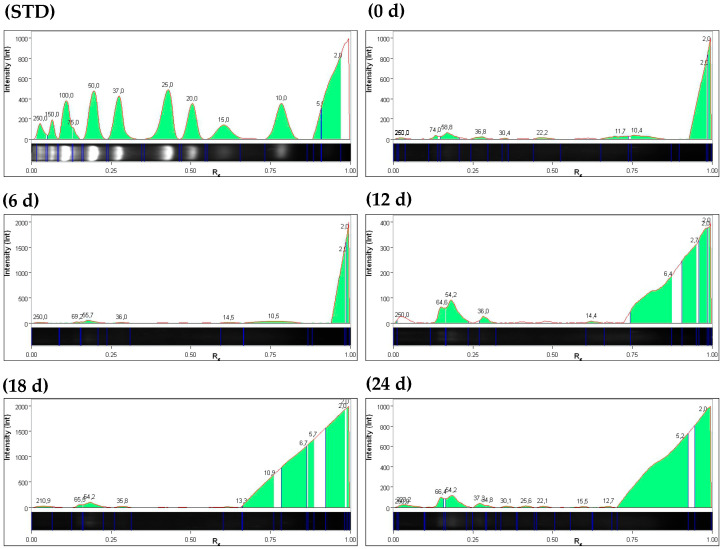 Figure 3
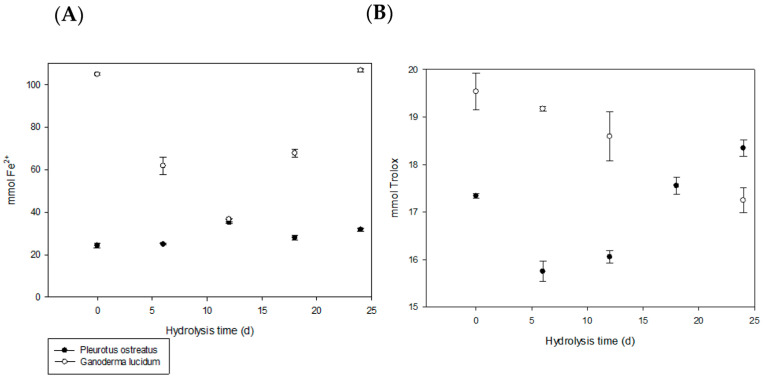 Figure 4
Peer Reviews
No public reviews on file for this paper yet. If you reviewed it on a platform where reviews are public (OpenReview, ICLR, NeurIPS, ICML), you can paste yours below so the community can read it here.
Videos
No videos yet. Explain this paper in a talk, walkthrough, or lecture? Add one.
Taxonomy
TopicsProtein Hydrolysis and Bioactive Peptides · Fungal Biology and Applications · Enzyme Production and Characterization