Basal Heat Capacity of Skinned Skeletal Muscle with Selective Removal and Denaturation of Myoproteins: A Study with Differential Scanning Calorimetry
Naoya Nakahara, Tetsuo Ohno, Sumiko Kimura, Maki Yamaguchi, Shigeru Takemori

TL;DR
This study uses differential scanning calorimetry to investigate how proteins in muscle tissue affect heat capacity, finding that actin contributes significantly to thermal buffering.
Contribution
The paper identifies actin as a key contributor to basal heat capacity in skinned skeletal muscle, revealing its role in thermal buffering.
Findings
Actin contributes to an extra basal heat capacity of 0.4 J K−1 (g evaporable weight)−1 in skinned muscle.
Myosin partially suppresses actin's thermal contribution under rigor conditions.
Non-freezing water molecules may be involved in the preserved basal heat capacity at sub-zero temperatures.
Abstract
The specific heat capacity of skinned muscle in an adhering rigor solution was studied with differential scanning calorimetry (DSC) heating runs to search for a heat sink in the sarcomere of the muscle. To elucidate the contribution of major myoproteins to heat capacity, myosin and actin were partially removed by high-KCl and gelsolin treatments, respectively. Differential heat denaturation of myosin (together with α-actinin) and actin was induced to confirm their contributions. On the DSC curve, aside from the endothermic peaks representing ice melting and protein denaturation, the steady baseline level showed a significant increase in basal heat capacity in the presence of skinned muscle compared to the rigor solution alone. In the physiological temperature range from 10 to 25 °C, untreated skinned muscle in the native state (non-denatured) introduced an extra basal heat capacity of…
Genes, proteins, chemicals, diseases, species, mutations and cell lines named across the full text — each resolved to its canonical identifier and authoritative record.
Click any figure to enlarge with its caption.
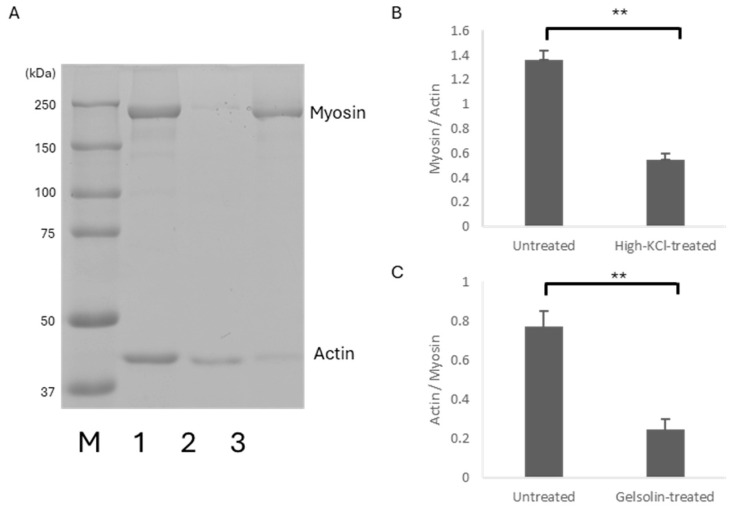 Figure 1
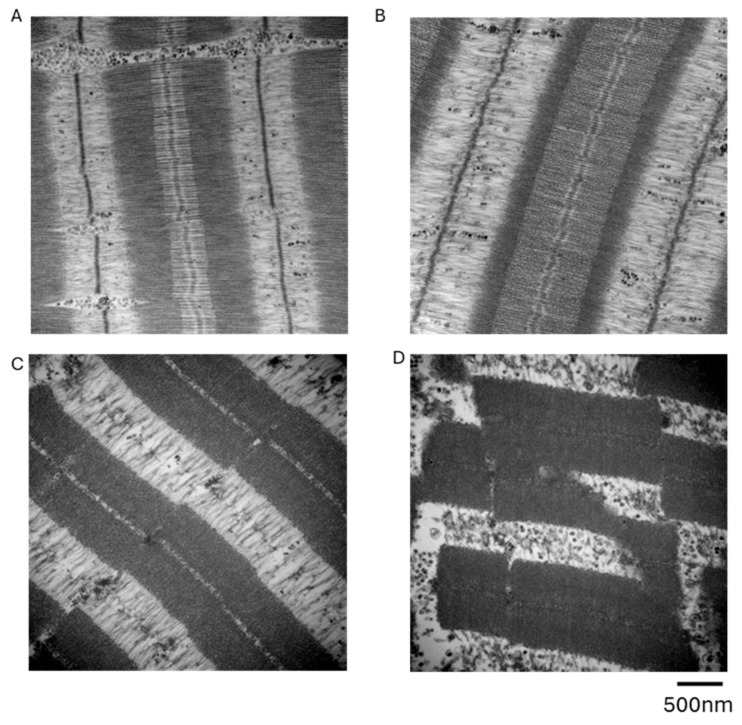 Figure 2
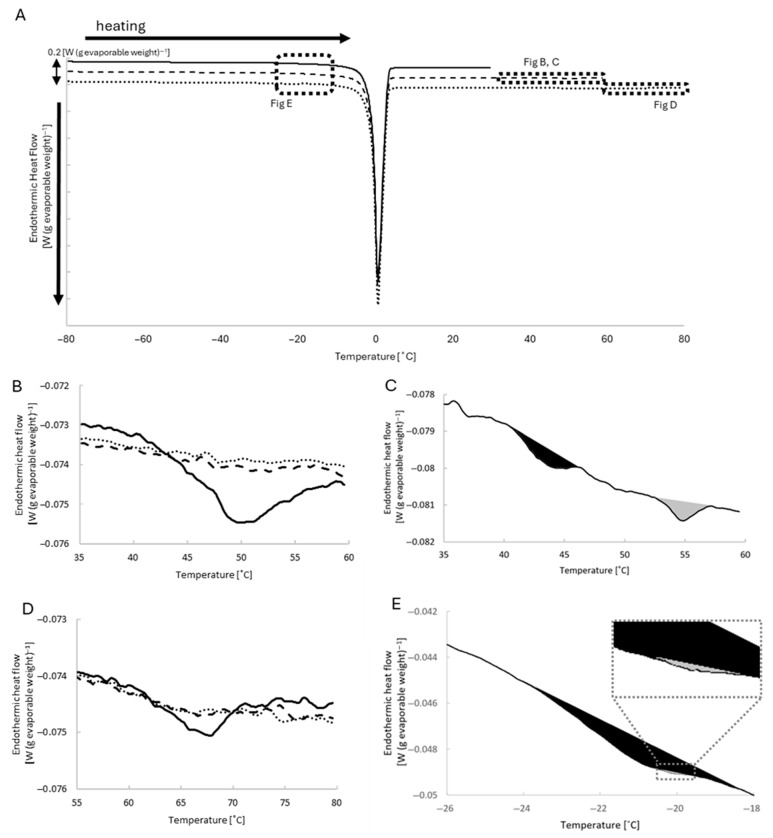 Figure 3
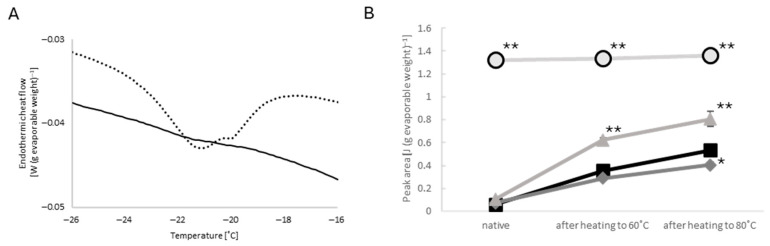 Figure 4
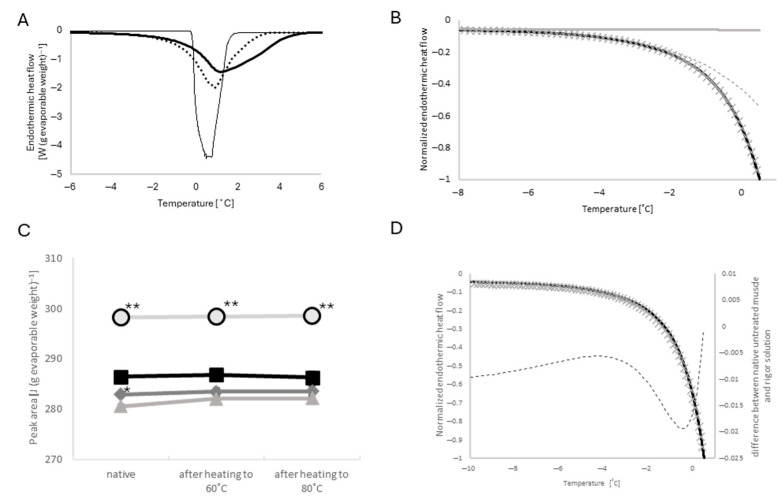 Figure 5
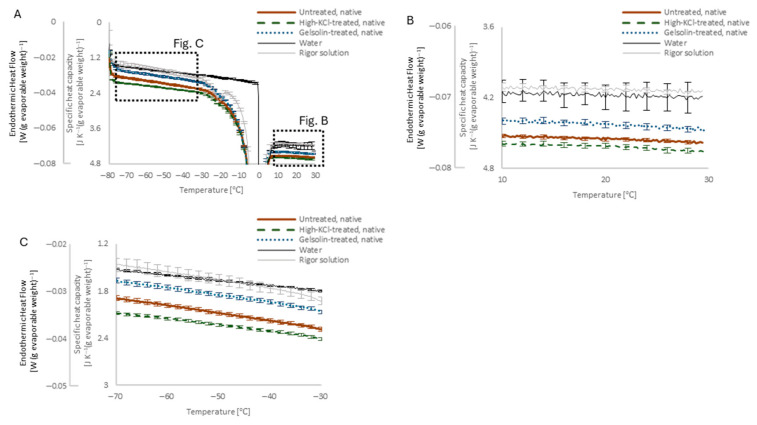 Figure 6
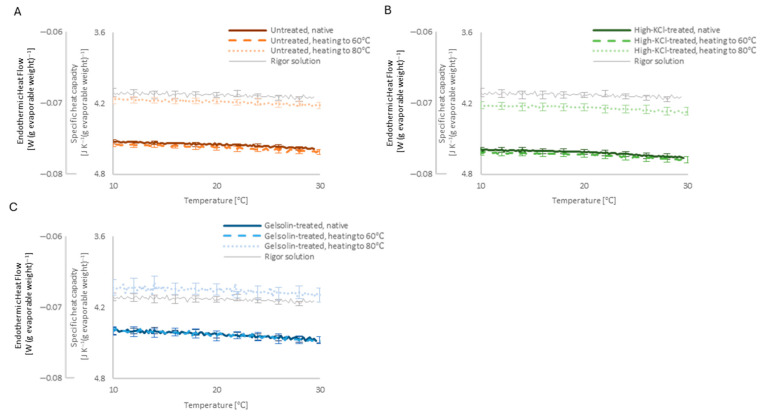 Figure 7
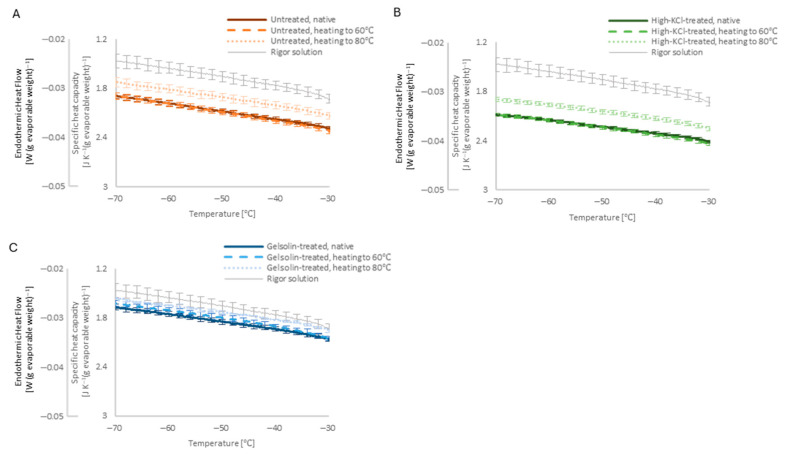 Figure 8
Peer Reviews
No public reviews on file for this paper yet. If you reviewed it on a platform where reviews are public (OpenReview, ICLR, NeurIPS, ICML), you can paste yours below so the community can read it here.
Videos
No videos yet. Explain this paper in a talk, walkthrough, or lecture? Add one.
Taxonomy
Topicsthermodynamics and calorimetric analyses · Cardiomyopathy and Myosin Studies · Exercise and Physiological Responses