Ambiguous Role of p53 in Transcription-Dependent Tumor Cell Death
Angelina A. Romanova, Tatyana A. Grigoreva, Anastasia D. Zenina, Anna D. Smirnaya, Kira Y. Margolina, Aleksandra Sagaidak, Vyacheslav G. Tribulovich

TL;DR
This review explores how the p53 protein influences different types of cancer cell death and their potential effects on treatment outcomes.
Contribution
The paper provides a comprehensive overview of p53's role in various cell death pathways and their implications for cancer therapy.
Findings
p53 regulates multiple cell death pathways, including apoptosis, necrosis, and autophagy.
Different p53-mediated cell death mechanisms can lead to adverse outcomes like infection and tumor progression.
Shared molecular pathways among cell death types complicate the identification and targeting of specific mechanisms.
Abstract
Currently, research in anti-cancer therapy remains a priority. This is driven by two main challenges: the difficulty of modeling and developing targeted or precision drugs and the multiple, often unpredictable, body responses to treatment. The primary objective of modern anti-cancer drugs is the induction of cancer cell death. One of the key regulators of cell death is the tumor suppressor protein p53. This protein is a well-known transcription factor encoded by TP53. Despite the fact that p53 is generally considered a pro-apoptotic inducer, it also regulates cell death pathways such as necrosis and autophagy. Given the diversity of p53-mediated cell death pathways, establishing a specific activated mechanism is a necessary step in developing effective anti-cancer drugs, since certain types of cell death can cause adverse outcomes in patients, including infection, sepsis, tumor…
Genes, proteins, chemicals, diseases, species, mutations and cell lines named across the full text — each resolved to its canonical identifier and authoritative record.
Click any figure to enlarge with its caption.
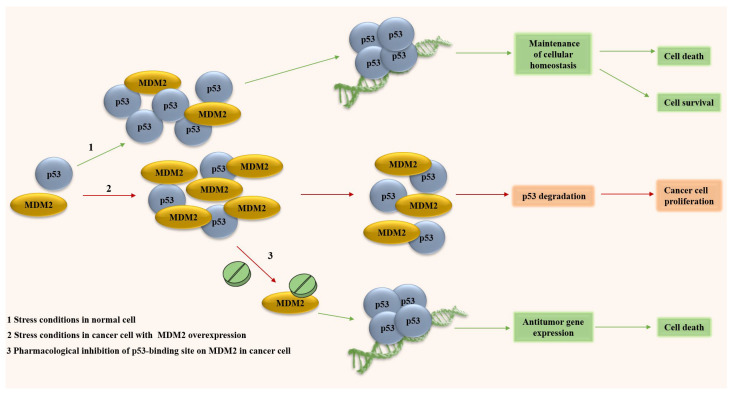 Figure 1
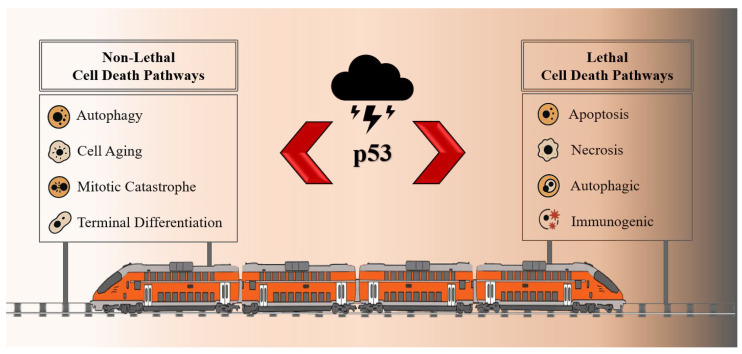 Figure 2
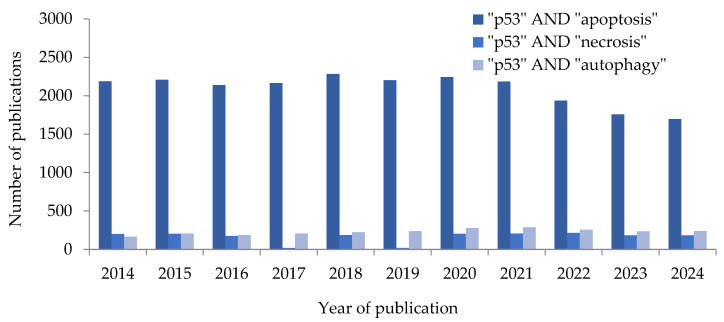 Figure 3
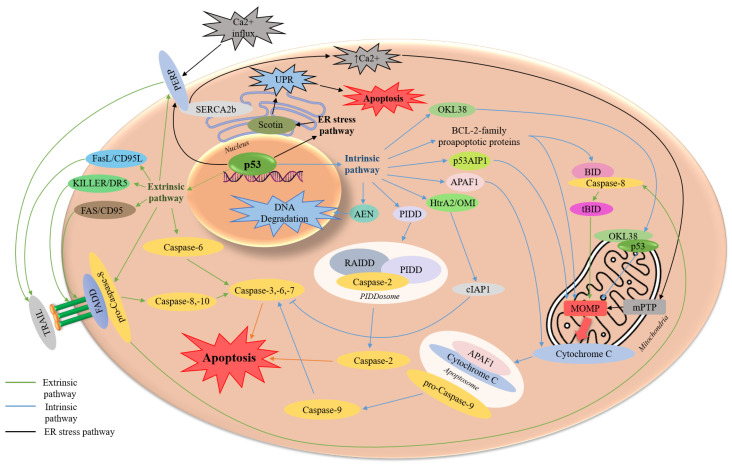 Figure 4
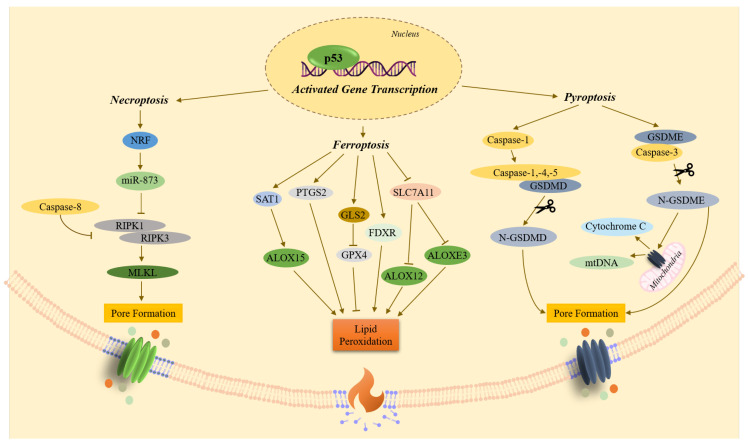 Figure 5
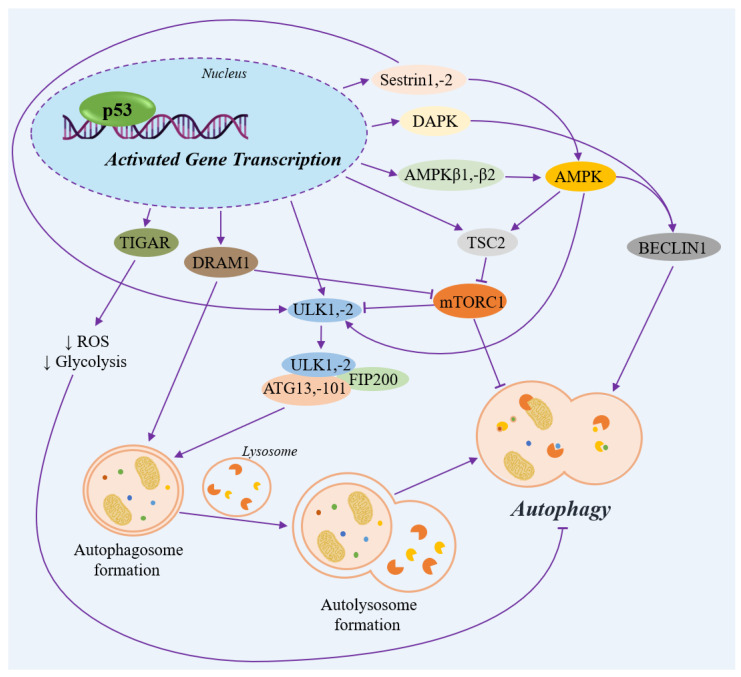 Figure 6
Peer Reviews
No public reviews on file for this paper yet. If you reviewed it on a platform where reviews are public (OpenReview, ICLR, NeurIPS, ICML), you can paste yours below so the community can read it here.
Videos
No videos yet. Explain this paper in a talk, walkthrough, or lecture? Add one.
Taxonomy
TopicsCell death mechanisms and regulation · Cancer-related Molecular Pathways · Autophagy in Disease and Therapy