Hereditary Polyneuropathies in the Era of Precision Medicine: Genetic Complexity and Emerging Strategies
Maria Chrysostomaki, Despoina Chatzi, Stella Aikaterini Kyriakoudi, Soultana Meditskou, Maria Eleni Manthou, Sofia Gargani, Paschalis Theotokis, Iasonas Dermitzakis

TL;DR
This review discusses the genetic complexity of hereditary polyneuropathies and explores new therapeutic strategies in the era of precision medicine.
Contribution
The paper provides a comprehensive synthesis of mutations and evaluates emerging therapies for hereditary polyneuropathies.
Findings
Key causative genes like PMP22, MPZ, MFN2, TTR, EGR2, and CX32 (GJB1) are linked to various hereditary polyneuropathies.
Emerging therapies include adeno-associated virus mediated RNA interference, CRISPR-based gene editing, and antisense oligonucleotide therapy.
Precision diagnostics such as next-generation sequencing are highlighted for personalized disease management.
Abstract
Hereditary polyneuropathies represent a genetically and clinically heterogeneous group of disorders affecting the peripheral nervous system, characterized by progressive motor, sensory, and autonomic impairment. Advances in molecular genetics have identified key causative genes, including PMP22, MPZ, MFN2, TTR, EGR2, and CX32 (GJB1), which are implicated in Charcot–Marie–Tooth disease, Dejerine–Sottas syndrome, and related neuropathies. These conditions display substantial allelic and locus heterogeneity. Pathogenetically, mechanisms involve impaired myelin maintenance, disrupted axonal transport, mitochondrial dysfunction, and aberrant Schwann cell biology. Despite these insights, therapeutic options remain limited, and there is a pressing need to translate genetic findings into effective interventions. This review aims to provide a comprehensive synthesis of current knowledge…
Genes, proteins, chemicals, diseases, species, mutations and cell lines named across the full text — each resolved to its canonical identifier and authoritative record.
Click any figure to enlarge with its caption.
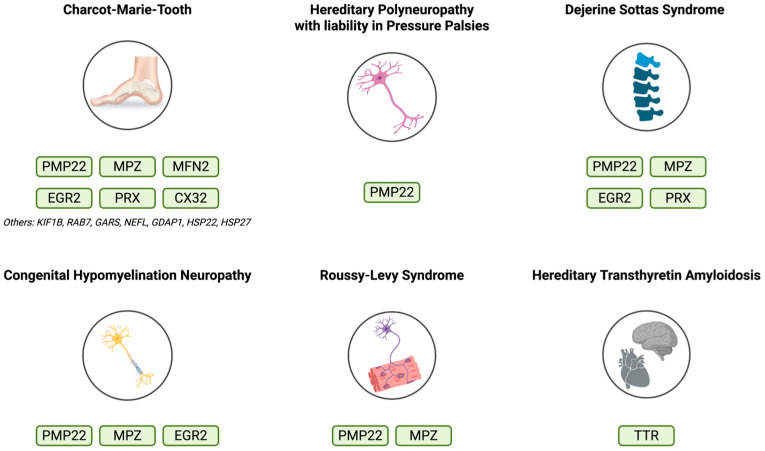 Figure 1
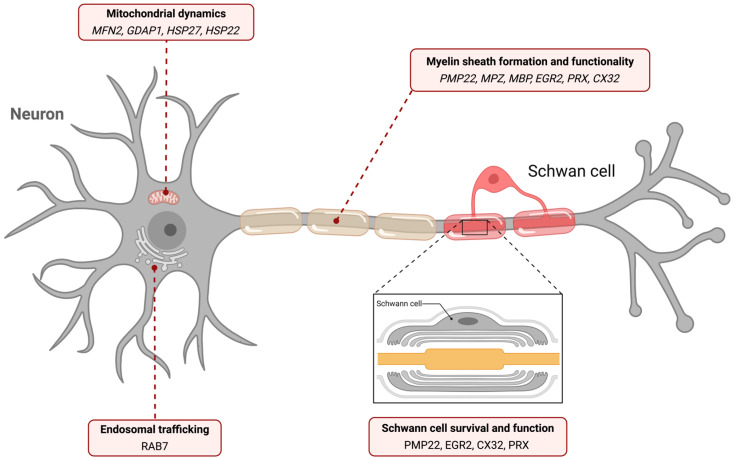 Figure 2
Peer Reviews
No public reviews on file for this paper yet. If you reviewed it on a platform where reviews are public (OpenReview, ICLR, NeurIPS, ICML), you can paste yours below so the community can read it here.
Videos
No videos yet. Explain this paper in a talk, walkthrough, or lecture? Add one.
Taxonomy
TopicsHereditary Neurological Disorders · Genetic Neurodegenerative Diseases · Neurological diseases and metabolism