Post-Mortem Biomarkers in Sudden Cardiac Death: From Classical Biochemistry to Molecular Autopsy and Multi-Omics Forensic Approaches
Matteo Antonio Sacco, Helenia Mastrangelo, Giuseppe Neri, Isabella Aquila

TL;DR
This paper explores new biomarkers and advanced techniques like molecular autopsy and multi-omics to better understand and diagnose sudden cardiac death.
Contribution
The paper highlights the integration of classical biochemistry with modern molecular and multi-omics approaches to improve sudden cardiac death diagnosis.
Findings
Molecular autopsy using next-generation sequencing identifies genetic causes of sudden cardiac death.
Peptide and inflammatory biomarkers provide insights into cardiac dysfunction and ischemia.
Multi-omics and AI frameworks offer new ways to interpret complex forensic data.
Abstract
Sudden cardiac death (SCD) remains a major challenge in forensic medicine, representing a leading cause of natural mortality and frequently occurring in individuals without antecedent symptoms. Although conventional autopsy and histology remain the cornerstones of investigation, up to 10–15% of cases are classified as “autopsy-negative sudden unexplained death,” underscoring the need for complementary diagnostic tools. In recent years, post-mortem biochemistry and molecular approaches have become essential to narrowing this gap. Classical protein markers of myocardial necrosis (cardiac troponins, CK-MB, H-FABP, GPBB) continue to play a fundamental role, though their interpretation is influenced by post-mortem interval and sampling site. Peptide biomarkers reflecting hemodynamic stress (BNP, NT-proBNP, copeptin, sST2) offer additional insight into cardiac dysfunction and ischemic burden,…
Genes, proteins, chemicals, diseases, species, mutations and cell lines named across the full text — each resolved to its canonical identifier and authoritative record.
Click any figure to enlarge with its caption.
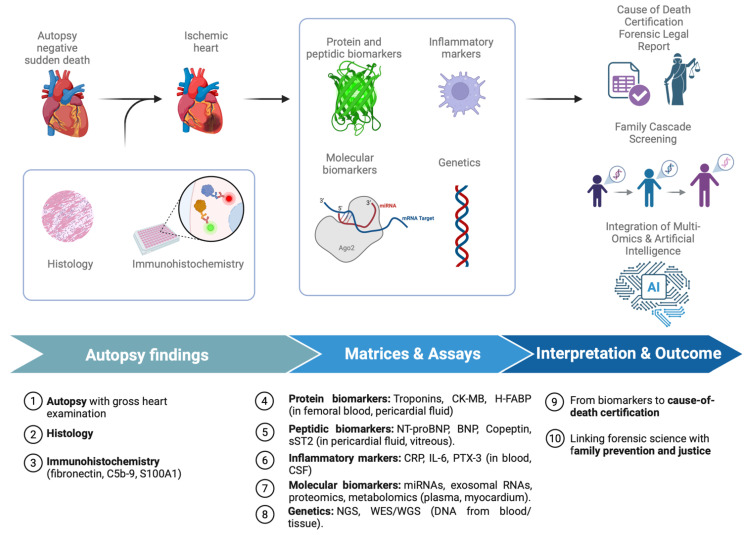 Figure 1
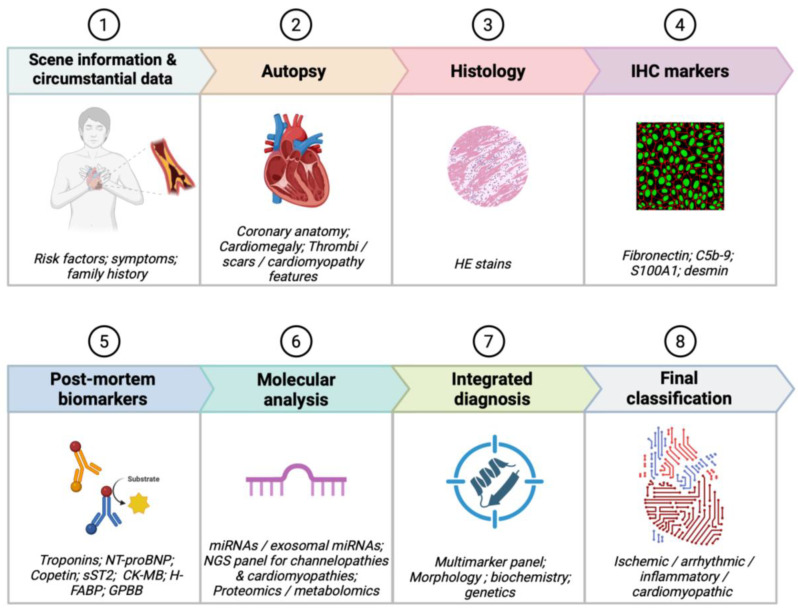 Figure 2
Peer Reviews
No public reviews on file for this paper yet. If you reviewed it on a platform where reviews are public (OpenReview, ICLR, NeurIPS, ICML), you can paste yours below so the community can read it here.
Videos
No videos yet. Explain this paper in a talk, walkthrough, or lecture? Add one.
Taxonomy
TopicsCardiac electrophysiology and arrhythmias · S100 Proteins and Annexins · Acute Myocardial Infarction Research