Preparation, Separation, and Identification of Low-Bitter ACE-Inhibitory Peptides from Sesame (Sesamum indicum L.) Protein
Xin Lu, Cong Jia, Lixia Zhang, Xiaojing Sun, Guohui Song, Qiang Sun, Jinian Huang

TL;DR
Researchers developed a method to create low-bitter peptides from sesame protein that can inhibit ACE, a target for blood pressure control, and potentially reduce bitterness in food.
Contribution
A novel triple-enzyme hydrolysis system was optimized to produce low-bitter ACE-inhibitory peptides from sesame protein with high efficiency and purity.
Findings
The optimal enzyme ratio and hydrolysis conditions produced peptides with 95.92% ACE-inhibitory activity and low bitterness.
Peptides APQLGR and APWLR showed strong ACE inhibition and minimal bitterness through specific interactions with ACE and bitter taste receptors.
Molecular docking revealed distinct stabilization mechanisms for APQLGR and APWLR when interacting with the T2R14 bitter taste receptor.
Abstract
To prepare and characterize low-bitter angiotensin-converting enzyme (ACE)-inhibitory peptides from sesame protein, a triple-enzyme hydrolysis system was optimized using mixture design and response surface methodology. The resulting hydrolysate was separated by ultrafiltration and medium-pressure chromatography, followed by identification through nano-liquid chromatography–electrospray ionization-tandem mass spectrometry. Finally, the mechanism of typical low-bitter ACE-inhibitory peptides was elucidated by molecular docking and molecular dynamics simulation. Results showed that the optimal enzyme activity ratio of 1:0.94:1.07 for Alcalase, trypsin, and Flavourzyme, combined with optimized hydrolysis conditions (E/S ratio of 126,793.03 nkat/g, pH 8.40, 4.82 h hydrolysis time, and 45 °C), resulted in a peptide yield of 93.19 ± 0.14%, ACE-inhibitory rate of 95.92 ± 0.23%, and bitter value…
Genes, proteins, chemicals, diseases, species, mutations and cell lines named across the full text — each resolved to its canonical identifier and authoritative record.
Click any figure to enlarge with its caption.
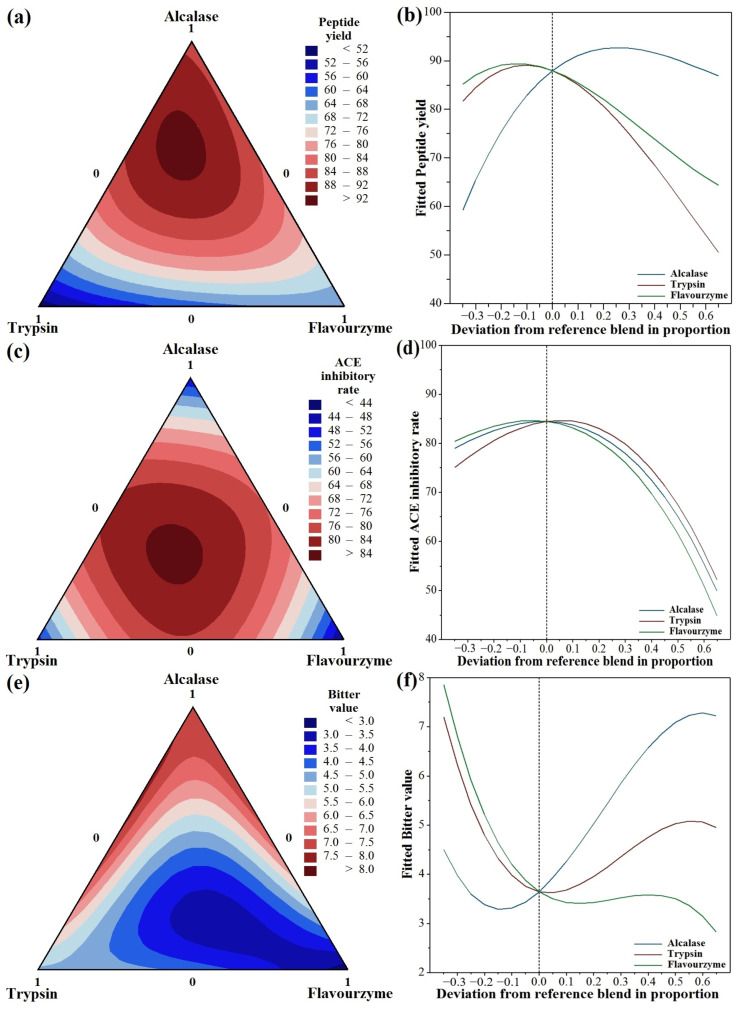 Figure 1
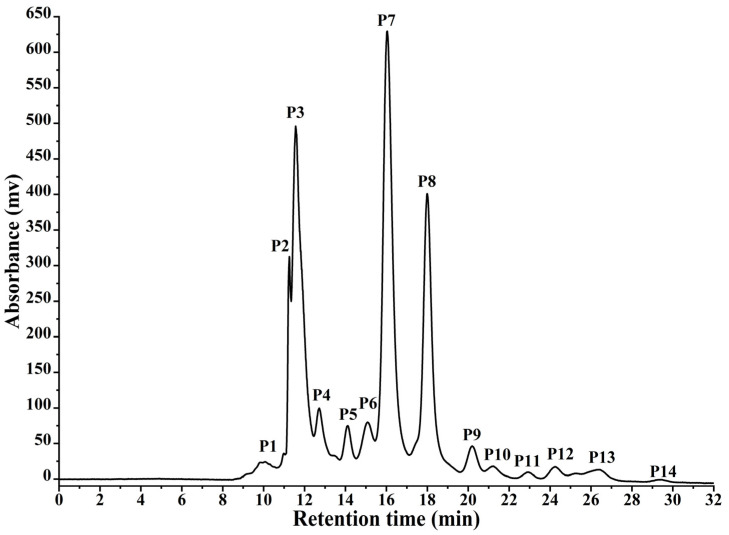 Figure 2
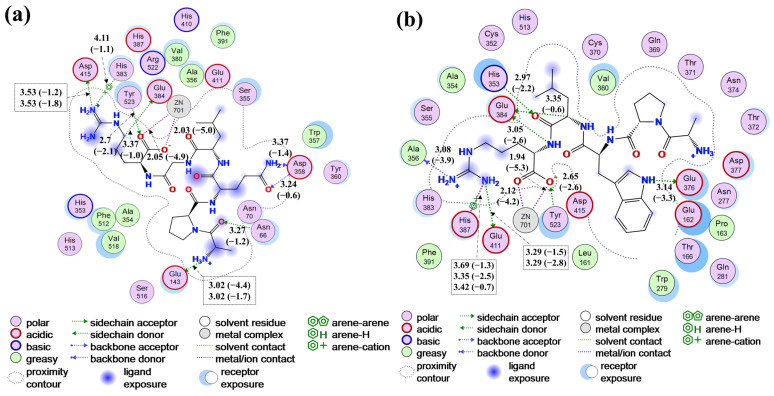 Figure 3
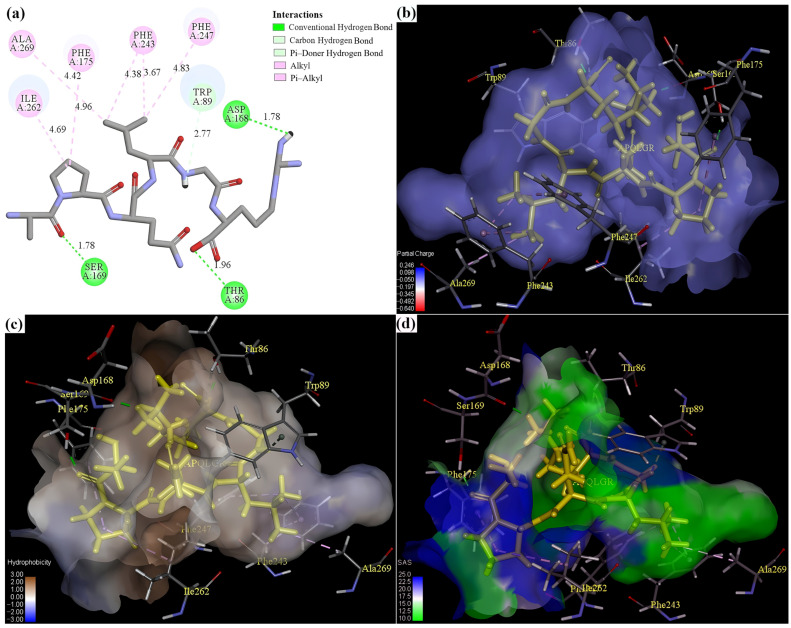 Figure 4
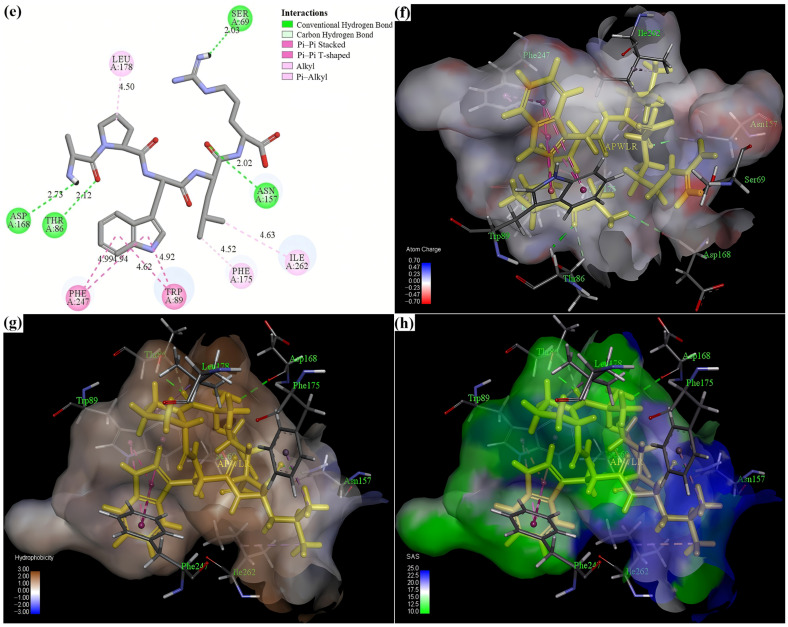 Figure 5
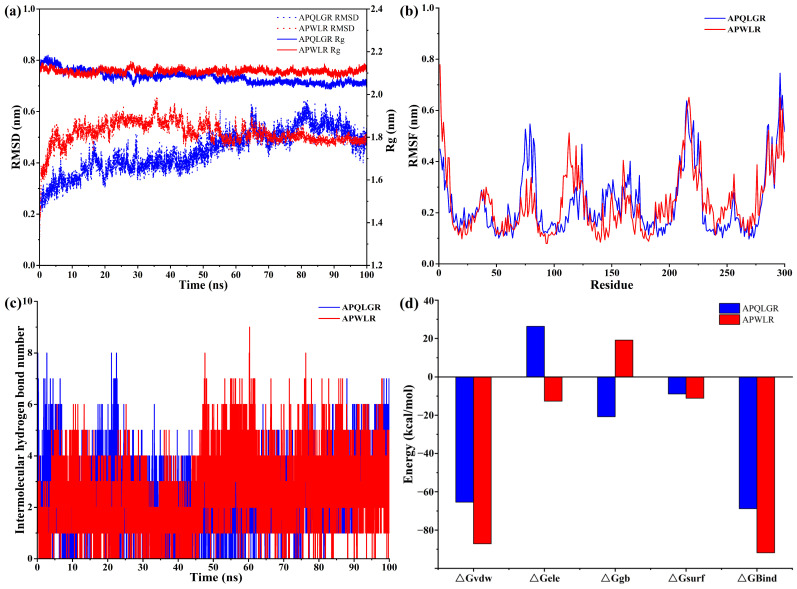 Figure 6
Peer Reviews
No public reviews on file for this paper yet. If you reviewed it on a platform where reviews are public (OpenReview, ICLR, NeurIPS, ICML), you can paste yours below so the community can read it here.
Videos
No videos yet. Explain this paper in a talk, walkthrough, or lecture? Add one.
Taxonomy
TopicsProtein Hydrolysis and Bioactive Peptides · Biochemical Analysis and Sensing Techniques · Food Allergy and Anaphylaxis Research