Phosphatidylinositol 4-Kinase IIIβ: A Therapeutic Target for Contractile Dysfunction in Hypertrophic Cardiomyocytes
Myrthe M. A. Willemars, Aomin Sun, Shujin Wang, Ozlenen Simsek Papur, Agnieszka Brouns-Strzelecka, Rick van Leeuwen, Sabina J. V. Vanherle, Dimitrios Kapsokalyvas, Jan F. C. Glatz, Dietbert Neumann, Miranda Nabben, Joost J. F. P. Luiken

TL;DR
This study shows that inhibiting PI4KIIIβ can reduce glucose uptake and improve heart function in hypertrophic cardiomyocytes.
Contribution
The paper introduces PI4KIIIβ as a novel therapeutic target for treating contractile dysfunction in hypertrophic cardiomyopathy.
Findings
PI4KIIIβ inhibition reversed glucose uptake and contractile dysfunction in hypertrophic cardiomyocytes.
Hypertrophic signaling and cell size were unaffected by PI4KIIIβ inhibition.
Targeting PI4KIIIβ may offer a new strategy to treat contractile dysfunction without affecting hypertrophy itself.
Abstract
Cardiac hypertrophy is an important risk factor for heart failure and is often accompanied by contractile dysfunction. While hypertrophic growth contributes to disease progression, the underlying molecular mechanisms remain incompletely understood. A proposed contributor is a metabolic shift toward glucose uptake, suggesting that kinases regulating this process, such as protein kinase D1 (PKD1) and downstream target phosphatidylinositol 4-kinase IIIβ (PI4KIIIβ), might be effective targets to mitigate cardiac hypertrophy-induced contractile dysfunction. We investigated whether PI4KIIIβ inhibition downregulates enhanced glucose uptake in hypertrophic cardiomyocytes and thereby treats cardiac hypertrophy-induced contractile dysfunction. Hypertrophy was induced in cultured adult rat cardiomyocytes and human stem cell-derived cardiomyocytes using either phenylephrine (PE) or adenoviral PKD1…
Genes, proteins, chemicals, diseases, species, mutations and cell lines named across the full text — each resolved to its canonical identifier and authoritative record.
Click any figure to enlarge with its caption.
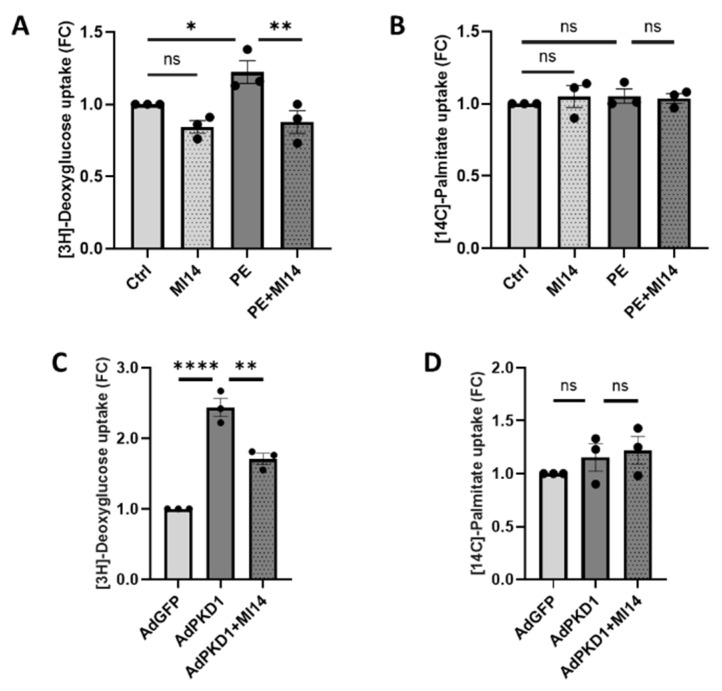 Figure 1
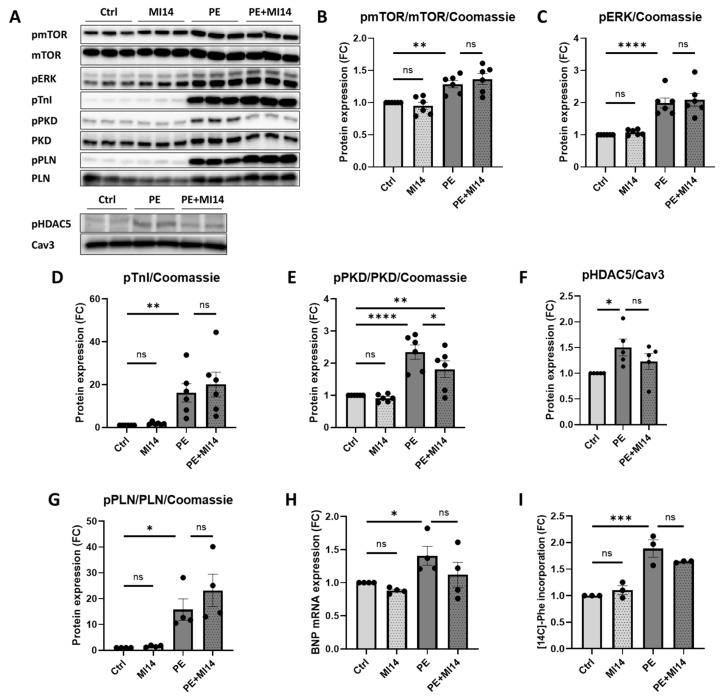 Figure 2
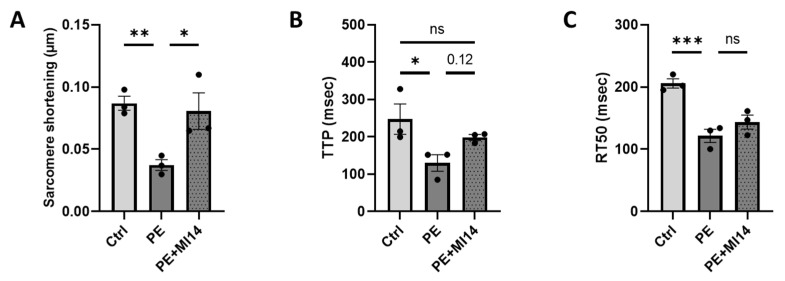 Figure 3
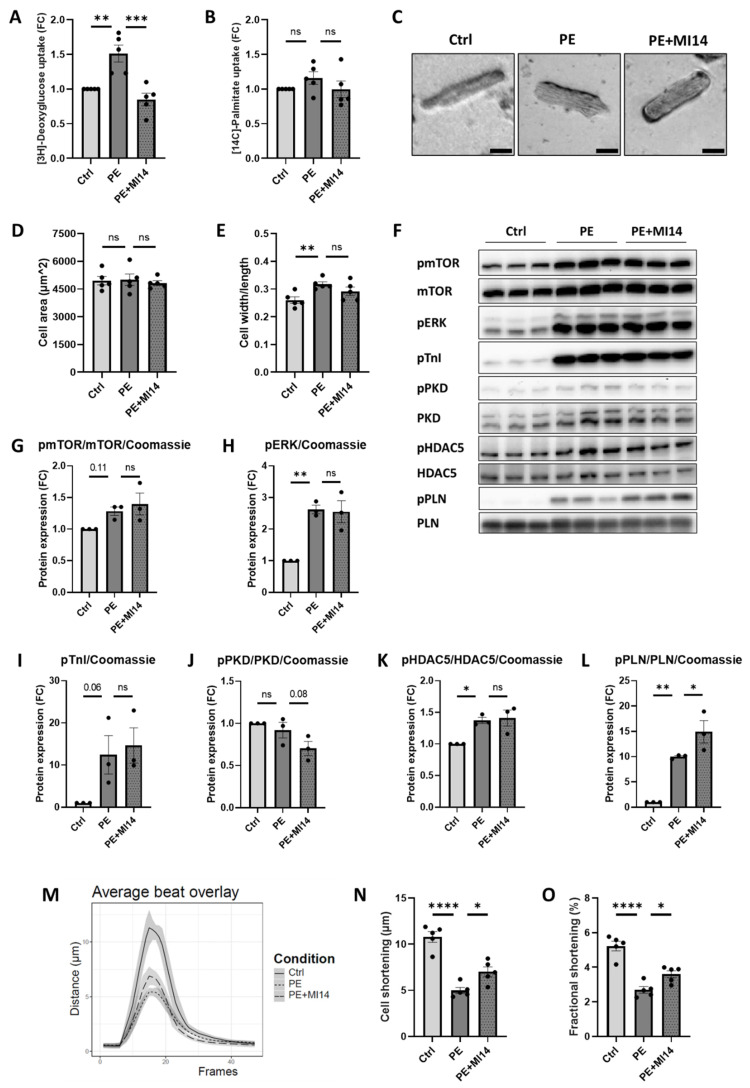 Figure 4
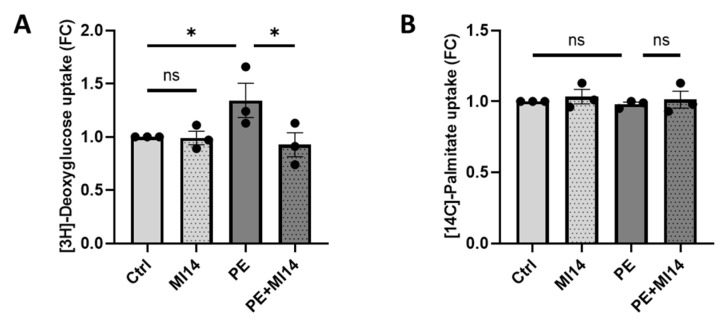 Figure 5
Peer Reviews
No public reviews on file for this paper yet. If you reviewed it on a platform where reviews are public (OpenReview, ICLR, NeurIPS, ICML), you can paste yours below so the community can read it here.
Videos
No videos yet. Explain this paper in a talk, walkthrough, or lecture? Add one.
Taxonomy
TopicsProtein Kinase Regulation and GTPase Signaling · PI3K/AKT/mTOR signaling in cancer · Cardiomyopathy and Myosin Studies