Impact of Goji Berry Juice on Redox Status in Wistar Rats: A Subchronic Toxicity Assessment
Cristiane de Freitas Rodrigues, Jean Ramos Boldori, Félix Roman Munieweg, Marcell Valandro Soares, Bibiana Pistoia Rabuske, Thais Ribeiro Pinheiro, Cristiane Casagrande Denardin

TL;DR
This study assesses the subchronic toxicity of goji berry juice in rats, finding potential redox imbalances and organ damage.
Contribution
The study provides new insights into the potential pro-oxidant effects of goji berry juice in a rodent model.
Findings
Goji berry juice caused elevated hepatic transaminase levels and reactive species in liver and kidney.
Antioxidant defenses were imbalanced, leading to lipid and protein damage.
Kidney damage was observed with increased Bowman space.
Abstract
Goji berry consumption provides various beneficial health effects, although little is known about the possible toxicological and pro-oxidant effects. Therefore, this study aimed to evaluate the subchronic oral toxicity of goji berry juice (GBJ) for 28 days in Wistar rats (OECD 407). The GBJ was prepared in a blender with water and then filtered. The total phenolic compounds were evaluated using the Folin method (μg equivalent of gallic acid/mL juice). Forty 90-day-old female Wistar rats were divided into four groups of 10 animals each. The control group received an oral saline solution of 1 mL/100 g, and the treatments received daily doses of 1.85, 5.68, and 11.36 μg GAE/100 g for 28 days. Our findings revealed that GBJ does not alter animal body weight or food intake, although we observed higher hepatic transaminase levels and reactive species generation in the liver and kidney, which…
Genes, proteins, chemicals, diseases, species, mutations and cell lines named across the full text — each resolved to its canonical identifier and authoritative record.
Click any figure to enlarge with its caption.
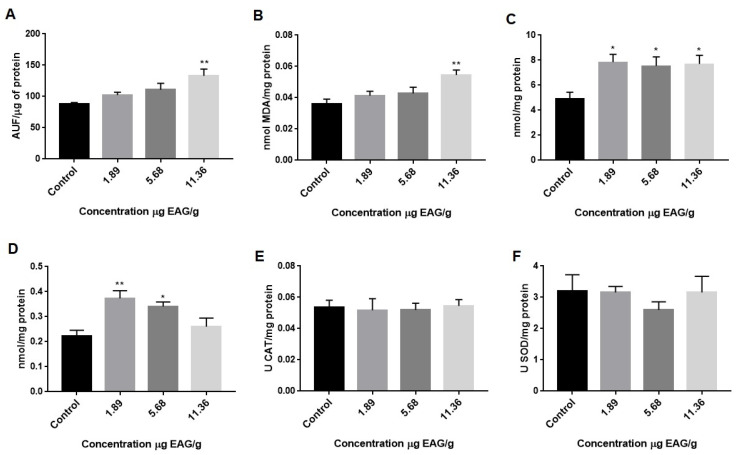 Figure 1
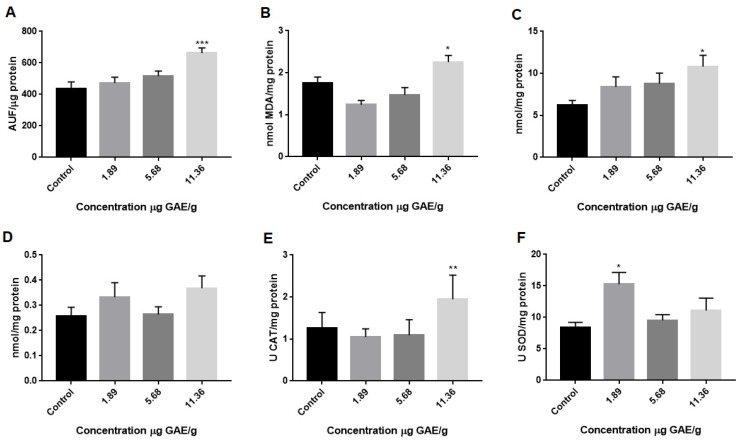 Figure 2
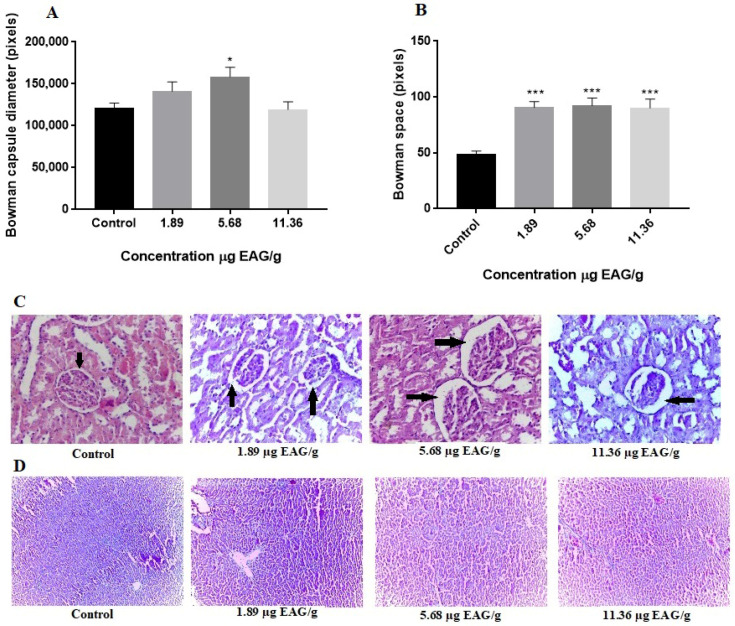 Figure 3
Peer Reviews
No public reviews on file for this paper yet. If you reviewed it on a platform where reviews are public (OpenReview, ICLR, NeurIPS, ICML), you can paste yours below so the community can read it here.
Videos
No videos yet. Explain this paper in a talk, walkthrough, or lecture? Add one.
Taxonomy
TopicsPhytochemicals and Antioxidant Activities · Ginkgo biloba and Cashew Applications · Food Science and Nutritional Studies