Joint Acidosis and GPR68 Signaling in Osteoarthritis: Implications for Cartilage Gene Regulation
Colette Hyde, Adam Yung, Ryan Taffe, Bhakti Patel, Nazir M. Khan

TL;DR
This paper explores how joint acidosis and the GPR68 receptor influence cartilage changes in osteoarthritis, suggesting GPR68 may help cells adapt to acidic conditions.
Contribution
The paper identifies GPR68 as a proton sensor in osteoarthritis joints and suggests it may mediate adaptive responses to acidic microenvironments.
Findings
GPR68 is activated in acidic conditions typical of osteoarthritis and is linked to key signaling pathways.
Pharmacologic activation of GPR68 can suppress IL1β-induced MMP13 in chondrocytes under acidic conditions.
GPR68 expression increases in OA cartilage and correlates with matrix turnover.
Abstract
Joint acidosis is increasingly recognized as an important determinant of cellular behavior in osteoarthritis (OA). Declines in extracellular pH (pHe) occur across cartilage, meniscus, synovium, and subchondral bone, where they influence inflammation, matrix turnover, and pain. Among proton-sensing G protein-coupled receptors, GPR68 responds to the acidic pH range characteristic of human OA joints. The receptor is activated between pH 6.8 and 7.0, couples to Gq/PLC-MAPK, cAMP-CREB, G12/13-RhoA-ROCK signaling pathways, and is expressed most prominently in articular cartilage, with additional expression reported in synovium, bone, vasculature, and some neuronal populations. These pathways regulate transcriptional programs relevant to cartilage stress responses, inflammation, and matrix turnover. GPR68 expression is increased in human OA cartilage and aligns with regions of active matrix…
Genes, proteins, chemicals, diseases, species, mutations and cell lines named across the full text — each resolved to its canonical identifier and authoritative record.
Click any figure to enlarge with its caption.
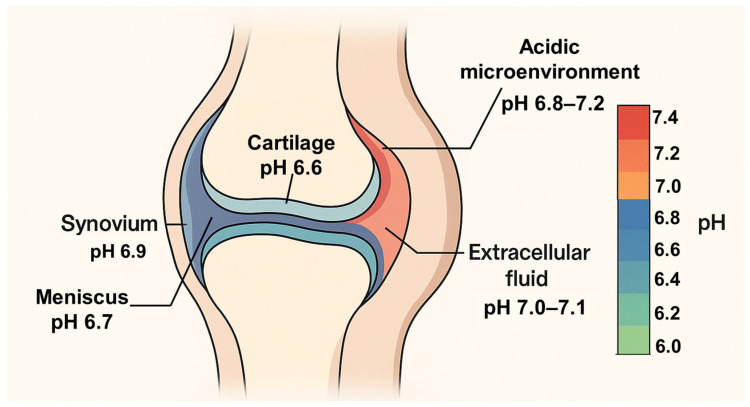 Figure 1
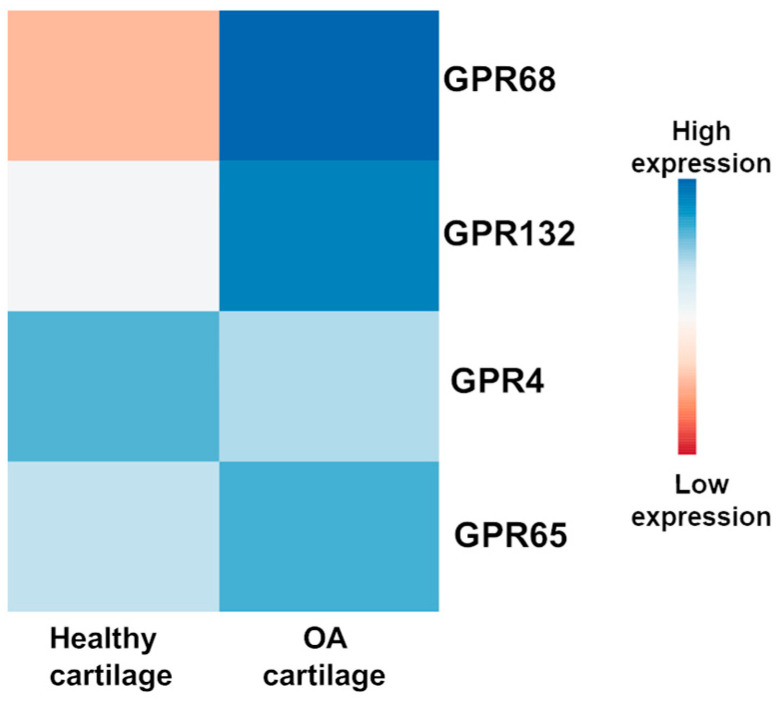 Figure 2
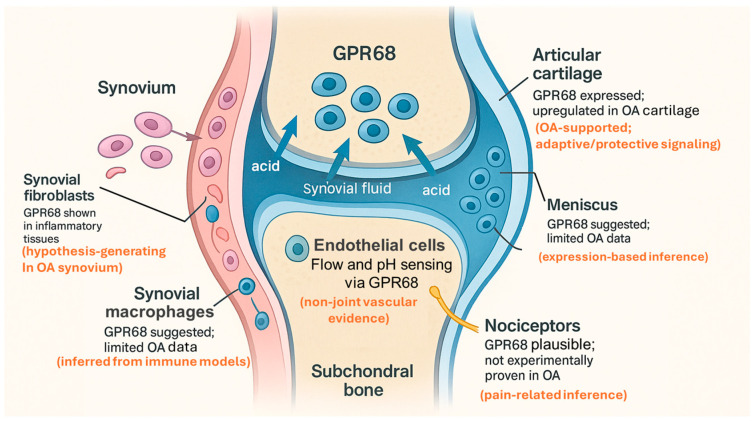 Figure 3
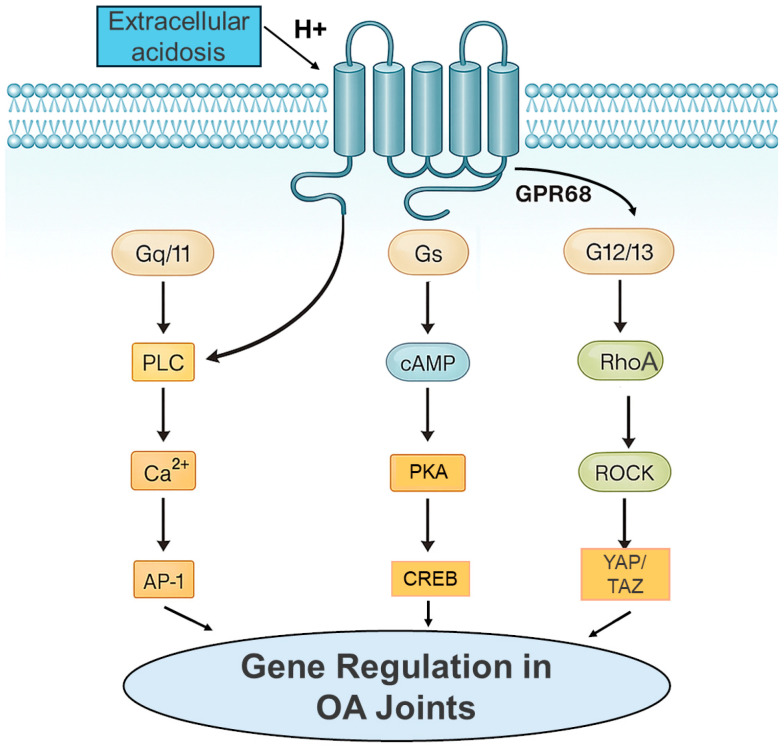 Figure 4
Peer Reviews
No public reviews on file for this paper yet. If you reviewed it on a platform where reviews are public (OpenReview, ICLR, NeurIPS, ICML), you can paste yours below so the community can read it here.
Videos
No videos yet. Explain this paper in a talk, walkthrough, or lecture? Add one.
Taxonomy
TopicsOsteoarthritis Treatment and Mechanisms · Renal function and acid-base balance · Sphingolipid Metabolism and Signaling