Impact of Modified Lactoperoxidase Systems on Glycolytic Metabolism and Virulence Factors in Streptococcus mutans
Marcin Rafał Magacz, Anna Skalniak, Paweł Mamica, Wiktoria Pepasińska, Anna Maria Osyczka, Grzegorz Tylko, Wirginia Krzyściak

TL;DR
This study shows that iodide-based lactoperoxidase systems can reduce harmful bacterial metabolism and virulence in Streptococcus mutans, a key contributor to tooth decay.
Contribution
The study reveals that iodide-based LpoS systems uniquely disrupt S. mutans metabolism and virulence compared to other variants.
Findings
LpoS-I− significantly reduced atpD and ldh gene expression and impaired acid tolerance in S. mutans.
LpoS-I− inhibited pyruvate accumulation, indicating altered glycolytic flux.
LpoS-SCN− and LpoS-SeCN− also downregulated virulence genes but had less impact on acid production.
Abstract
The lactoperoxidase system (LpoS) is an enzymatic antimicrobial mechanism of saliva that oxidizes (pseudo)halide substrates to reactive compounds capable of limiting microbial growth. This study evaluated how different LpoS variants—utilizing iodide (LpoS-I−), thiocyanate (LpoS-SCN−), selenocyanate (LpoS-SeCN−), and a thiocyanate–iodide mixture (LpoS-SCN− + I−)—affect virulence, metabolism, and biofilm structure in Streptococcus mutans. Using qRT-PCR, pyruvate assays, MTT reduction, and confocal microscopy, we found that LpoS-I− most effectively reduced atpD and ldh expression, impaired acid tolerance, and decreased lactate and pyruvate production. LpoS-SCN− and LpoS-SeCN− also downregulated atpD and gtfB, although LpoS-SeCN− upregulated ldh. Despite minimal structural biofilm disruption, LpoS-I− markedly inhibited intracellular and extracellular pyruvate accumulation, suggesting…
Genes, proteins, chemicals, diseases, species, mutations and cell lines named across the full text — each resolved to its canonical identifier and authoritative record.
Click any figure to enlarge with its caption.
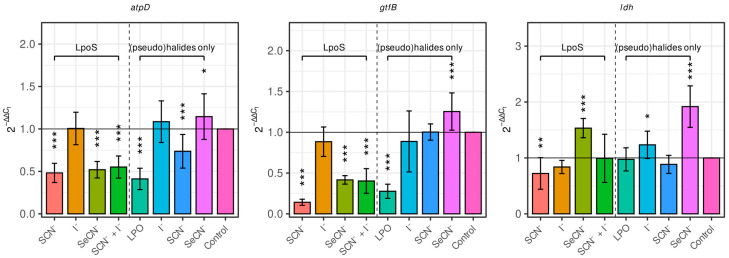 Figure 1
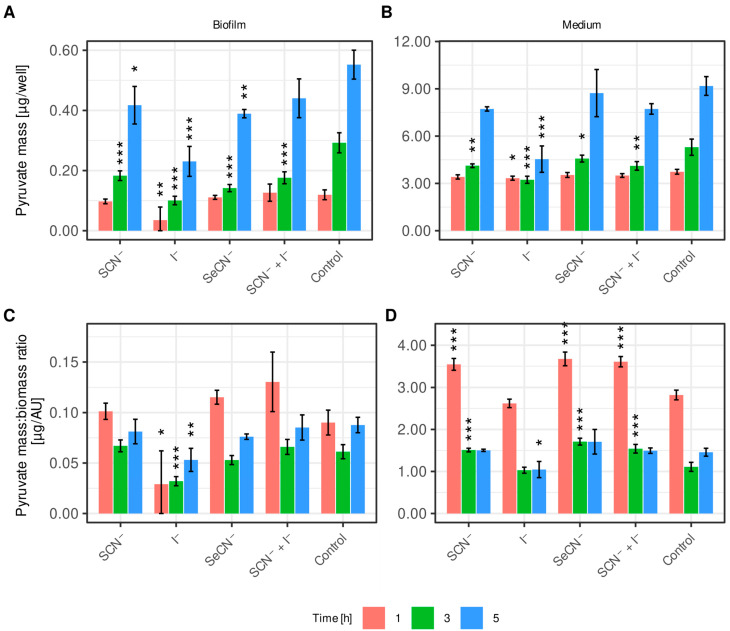 Figure 2
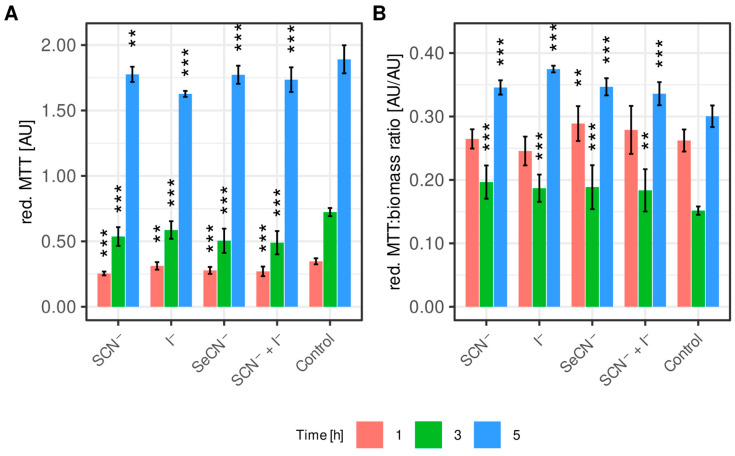 Figure 3
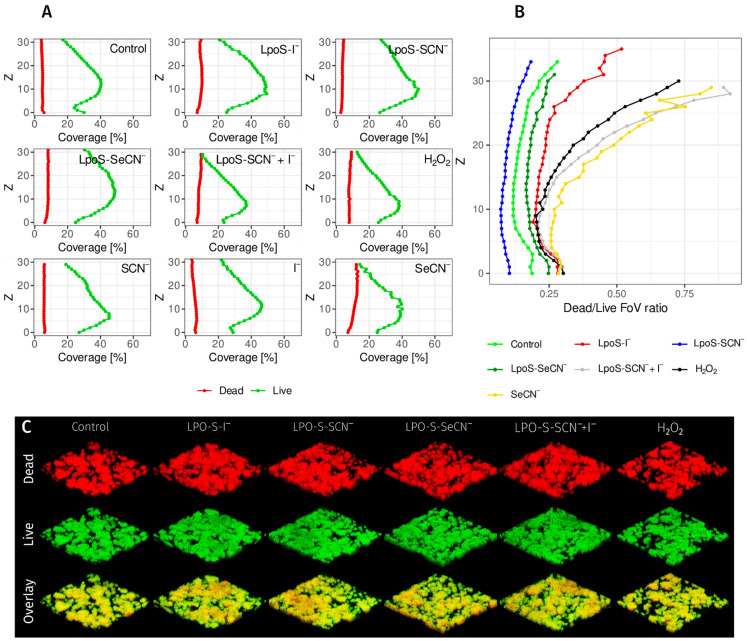 Figure 4
Peer Reviews
No public reviews on file for this paper yet. If you reviewed it on a platform where reviews are public (OpenReview, ICLR, NeurIPS, ICML), you can paste yours below so the community can read it here.
Videos
No videos yet. Explain this paper in a talk, walkthrough, or lecture? Add one.
Taxonomy
TopicsNeutrophil, Myeloperoxidase and Oxidative Mechanisms · Oral microbiology and periodontitis research · Medical and Biological Ozone Research