Development of a High-Hydrostatic-Pressure-Treated Recombinant Vaccine Targeting the Major Capsid Protein of Red Sea Bream Iridovirus
Yuta Sawasaki, Shogo Harakawa, Shin-Ichi Kitamura, Naomi Terawaki, Zhangliang Zhu, Kohdai Yamada, Hinako Fujisaki, Suzuno Hirano, Mana Hamada, Takuya Miyakawa, Tomomasa Matsuyama, Yuta Matsuura, Tatsuhiko Ozawa, Tomokazu Itano, Tatsuya Sawasaki, Akira Nozawa

TL;DR
A new recombinant vaccine for red sea bream iridovirus was developed using high-pressure technology to preserve protein structure and induce strong immune responses.
Contribution
The novel use of high-hydrostatic-pressure refolding to solubilize and preserve the structural integrity of a viral capsid protein for vaccine development.
Findings
HHP treatment under alkaline conditions solubilized the recombinant MCP while preserving its structure.
HHP–RSIV-rMCP induced strong IgM responses and improved disease resistance in red sea bream.
Structural preservation is crucial for antigenicity, as commercial vaccines showed minimal reactivity to HHP–RSIV-rMCP.
Abstract
Red sea bream (Pagrus major) aquaculture represents one of the most economically important marine aquaculture industries in Japan and East Asia. However, viral diseases, particularly those caused by red sea bream iridovirus (RSIV), pose a serious threat to aquaculture production in this region. In this study, we applied high-hydrostatic-pressure (HHP) refolding technology to develop a recombinant vaccine targeting the RSIV major capsid protein (MCP). The recombinant MCP (RSIV-rMCP) expressed in Escherichia coli was insoluble; however, HHP treatment under alkaline (pH 10) conditions in the presence of arginine successfully solubilised the protein while preserving its structural integrity. The solubilised protein (HHP–RSIV-rMCP) induced strong RSIV-specific IgM responses and enhanced disease resistance in red sea bream. In contrast, sera from fish immunised with a commercial…
Genes, proteins, chemicals, diseases, species, mutations and cell lines named across the full text — each resolved to its canonical identifier and authoritative record.
Click any figure to enlarge with its caption.
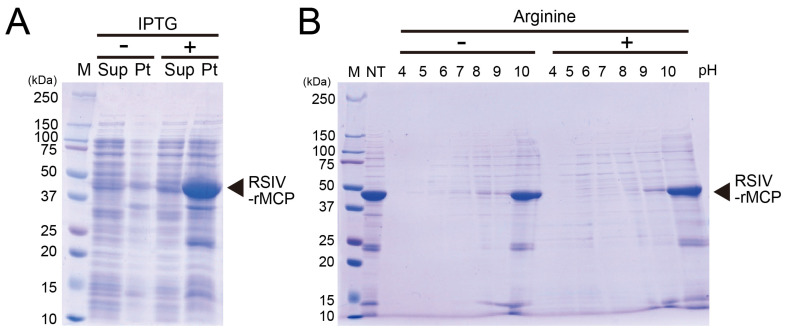 Figure 1
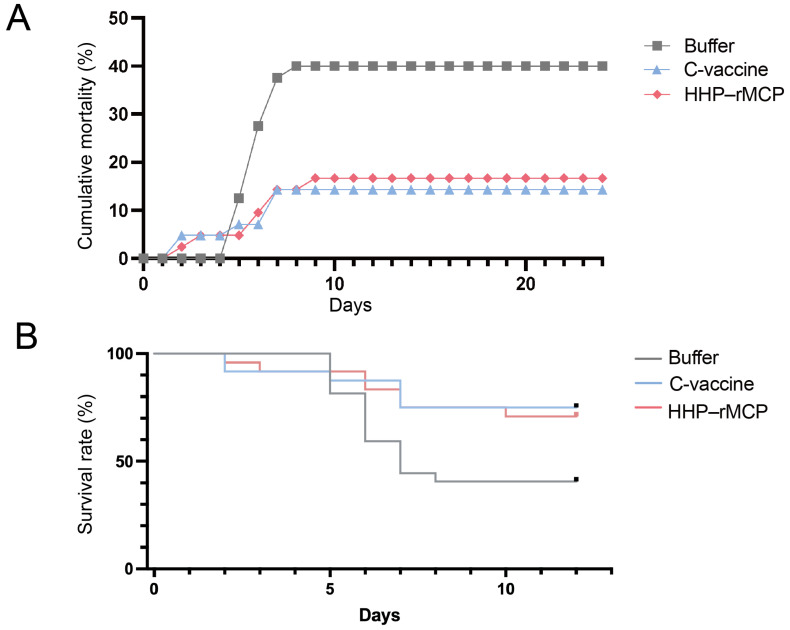 Figure 2
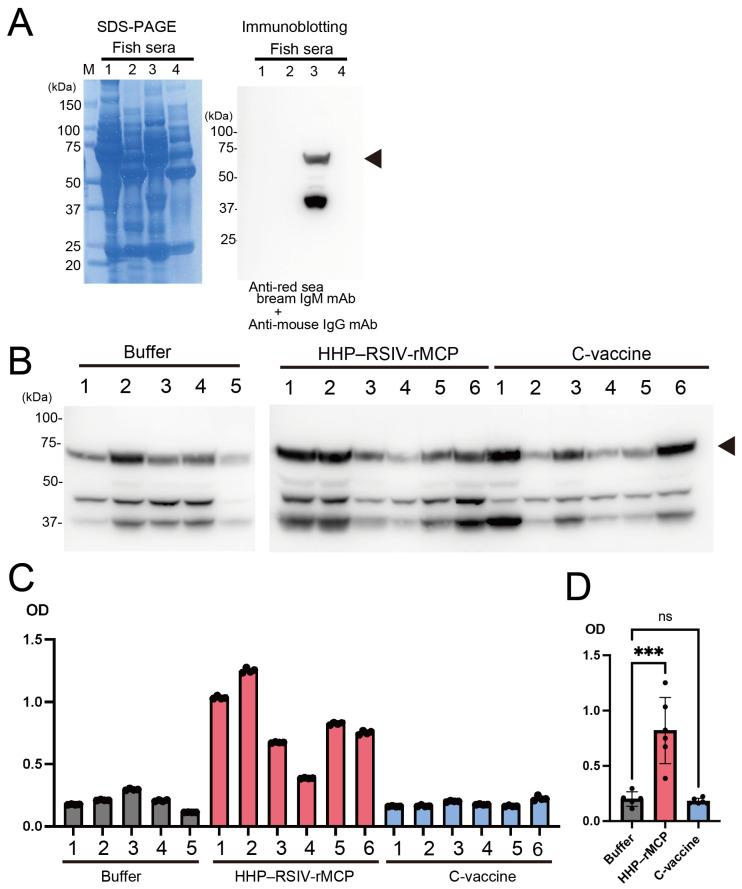 Figure 3
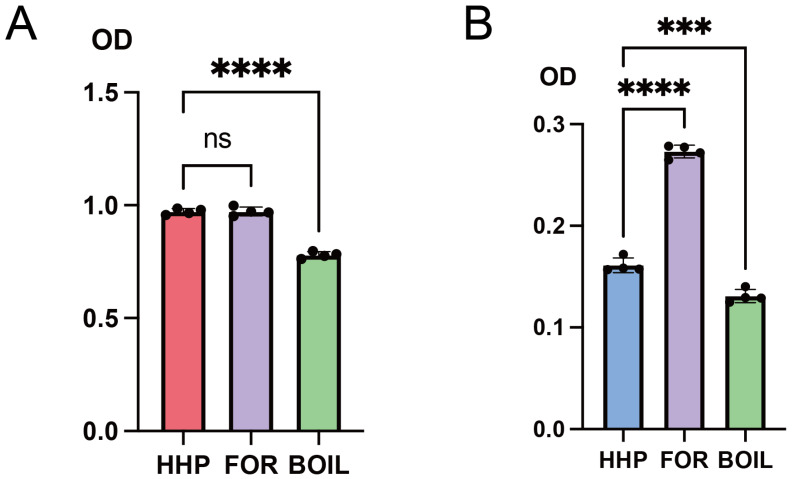 Figure 4
Peer Reviews
No public reviews on file for this paper yet. If you reviewed it on a platform where reviews are public (OpenReview, ICLR, NeurIPS, ICML), you can paste yours below so the community can read it here.
Videos
No videos yet. Explain this paper in a talk, walkthrough, or lecture? Add one.
Taxonomy
TopicsAquaculture disease management and microbiota · Invertebrate Immune Response Mechanisms · Aquaculture Nutrition and Growth