Constitutively Active Stat5b Expression in Dendritic Cells Enhances Treg-Mediated Elimination of Autoreactive CD8+ T Cells in Autoimmune Diabetes
Puregmaa Khongorzul, Farhan Ullah Khan, Daphnée Levasseur, Denis Gris, Abdelaziz Amrani

TL;DR
A mutation in dendritic cells in diabetic mice improves Treg function, reducing harmful CD8+ T cells and preventing diabetes.
Contribution
Constitutively active Stat5b in dendritic cells enhances Treg-mediated elimination of autoreactive CD8+ T cells in autoimmune diabetes.
Findings
NOD.Stat5b-CA mice show expanded Treg populations and reduced CD8+ T cells in peripheral lymphoid organs.
Tregs from NOD.Stat5b-CA mice exhibit increased activation markers and cytotoxic potential.
CD8+ T cell reduction is mediated via Treg cytotoxic activity, including perforin and granzyme B expression.
Abstract
In type 1 diabetes (T1D) in non-obese diabetic (NOD) mice, dendritic cells (DCs) exhibit a Stat5b mutation that impairs regulatory T cell (Tregs) numbers and suppressive function. To correct this defect, we generated transgenic NOD mice expressing constitutively active Stat5b (NOD.Stat5b-CA) in DCs, which conferred protection from diabetes that was associated with an expanded Treg population and a marked reduction in CD8+ T cell frequencies in secondary lymphoid organs. However, the phenotypic characteristics and underlying mechanisms to eliminate CD8+ T cells in NOD.Stat5b-CA mice are unknown. In this study, we found that the frequency of Tregs was significantly higher in the thymus and peripheral lymphoid organs of NOD.Stat5b-CA mice compared with NOD mice. Tregs in the peripheral lymphoid organs exhibited increased expression of activation markers CD69 and OX40, alongside reduced…
Genes, proteins, chemicals, diseases, species, mutations and cell lines named across the full text — each resolved to its canonical identifier and authoritative record.
Click any figure to enlarge with its caption.
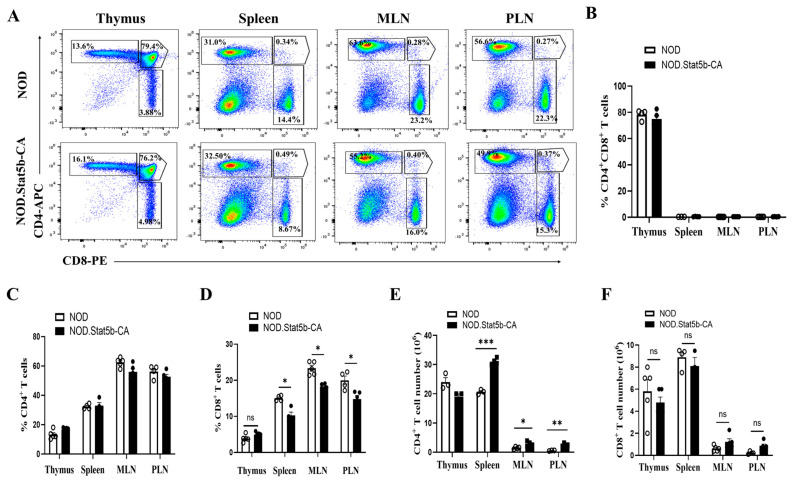 Figure 1
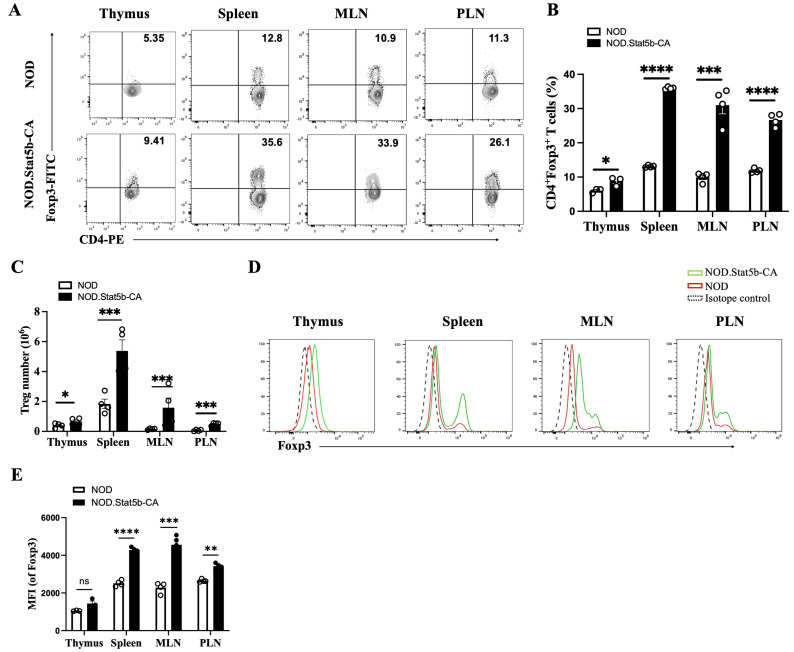 Figure 2
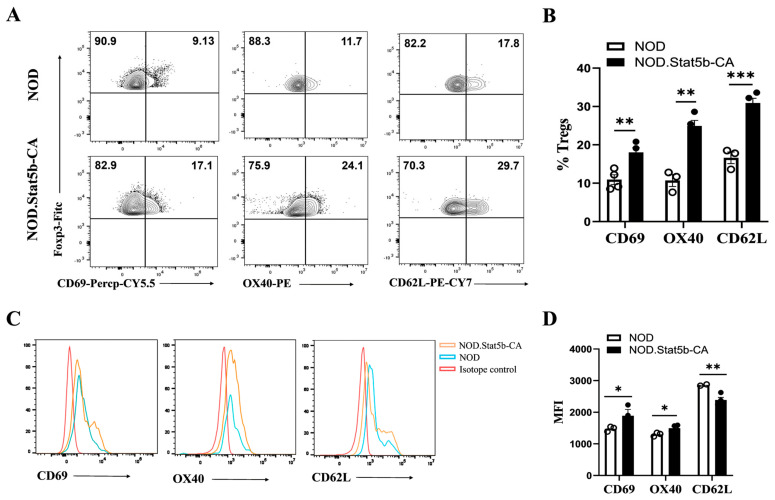 Figure 3
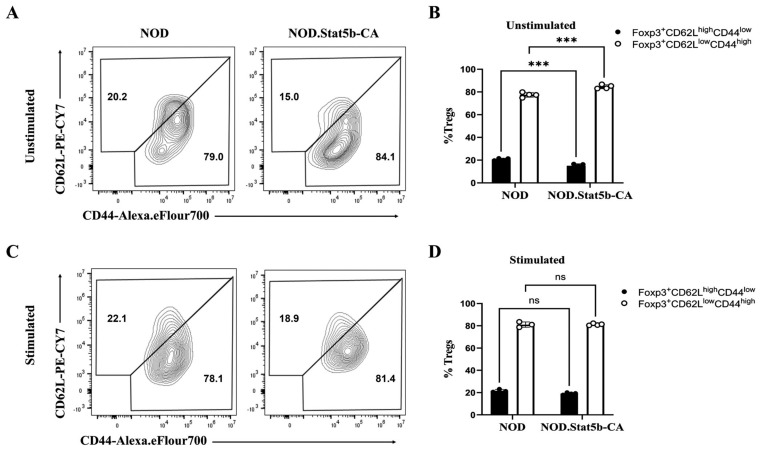 Figure 4
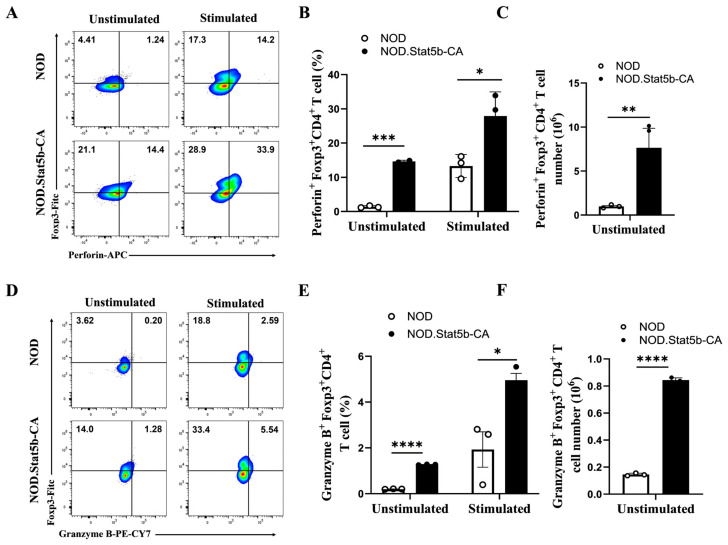 Figure 5
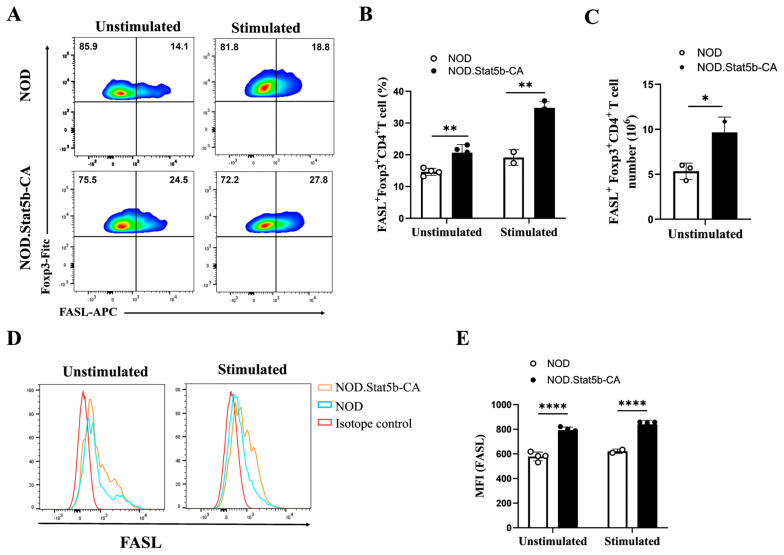 Figure 6
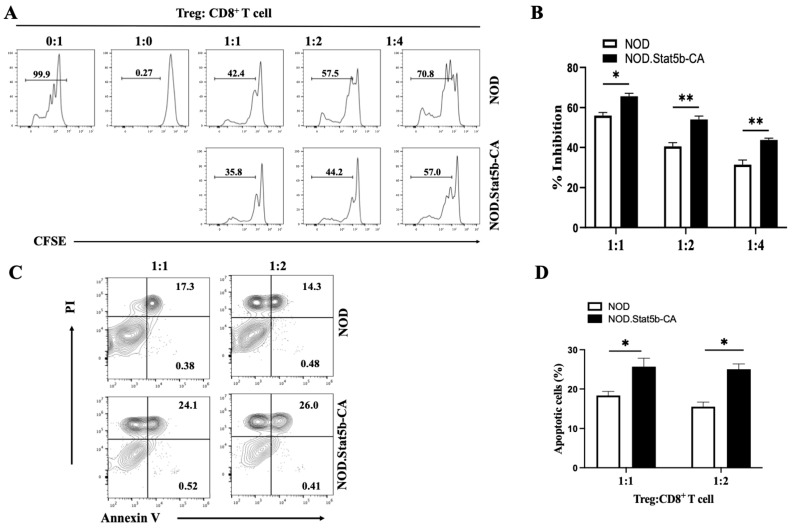 Figure 7
Peer Reviews
No public reviews on file for this paper yet. If you reviewed it on a platform where reviews are public (OpenReview, ICLR, NeurIPS, ICML), you can paste yours below so the community can read it here.
Videos
No videos yet. Explain this paper in a talk, walkthrough, or lecture? Add one.
Taxonomy
TopicsDiabetes and associated disorders · T-cell and B-cell Immunology · IL-33, ST2, and ILC Pathways