Liquid Metal Particles–Graphene Core–Shell Structure Enabled Hydrogel-Based Triboelectric Nanogenerators
Sangkeun Oh, Yoonsu Lee, Jungin Yang, Yejin Lee, Seoyeon Won, Sang Sub Han, Jung Han Kim, Taehwan Lim

TL;DR
A new triboelectric material is created using liquid metal particles and graphene in a hydrogel, offering high performance for flexible, self-powered electronics.
Contribution
A redox reaction method is introduced to create LMP@rGO core–shell structures in hydrogels, enhancing triboelectric performance.
Findings
LMP@rGO/PAA hydrogels generate enough power to illuminate over half of 504 series-connected LEDs.
The composite shows improved dielectric constant and charge retention while maintaining soft mechanical compliance.
Increasing GO content enhances core–shell formation, leading to higher electrical performance.
Abstract
The development of flexible and self-powered electronic systems requires triboelectric materials that combine high charge retention, mechanical compliance, and stable dielectric properties. Here, we report a redox reaction approach to prepare liquid metal particle-reduced graphene oxide (LMP@rGO) core–shell structures and introduce into a poly(acrylic acid) (PAA) hydrogel to create a high-performance triboelectric layer. The spontaneous interfacial reaction between gallium oxide of LMP and graphene oxide produces a conformal rGO shell while simultaneously removing the native insulating oxide layer onto the LMP surface, resulting in enhanced colloidal stability and a controllable semiconductive bandgap of 2.7 (0.01 wt%), 2.9 (0.005 wt%) and 3.2 eV (0.001 wt%). Increasing the GO content promotes more complete core–shell formation, leading to higher zeta potentials, stronger interfacial…
Genes, proteins, chemicals, diseases, species, mutations and cell lines named across the full text — each resolved to its canonical identifier and authoritative record.
Click any figure to enlarge with its caption.
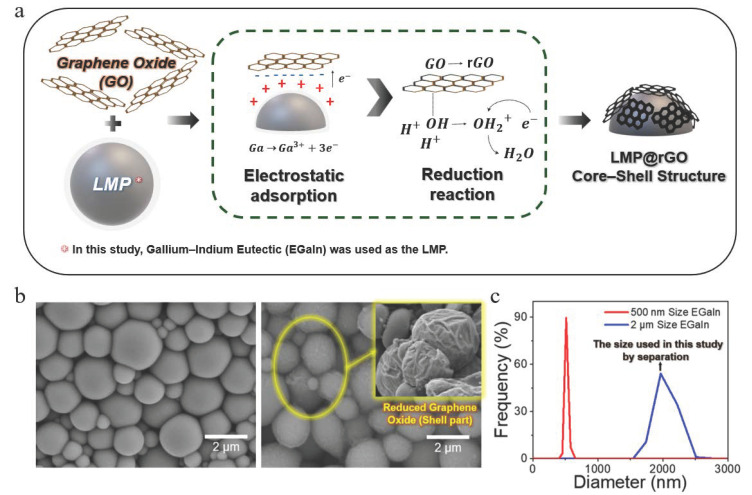 Figure 1
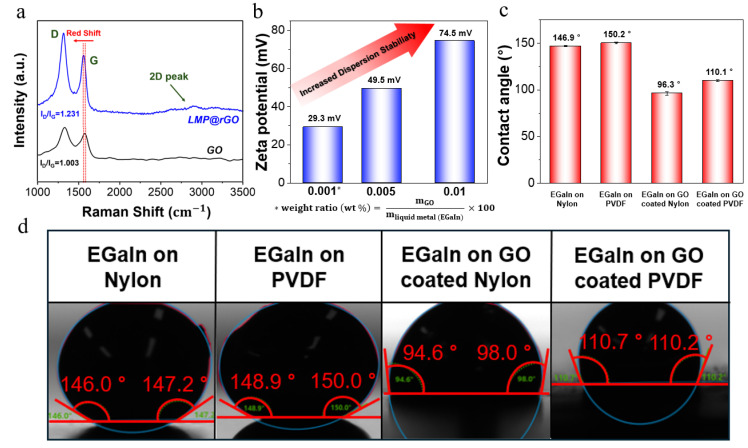 Figure 2
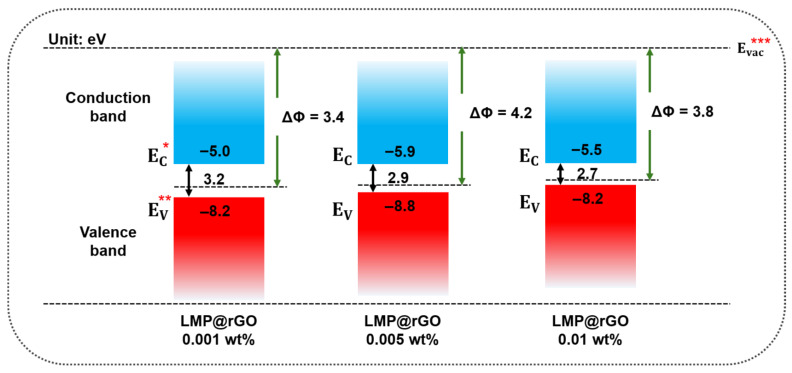 Figure 3
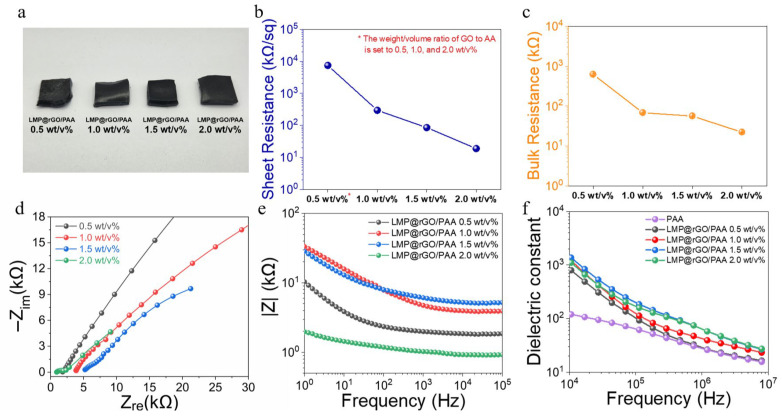 Figure 4
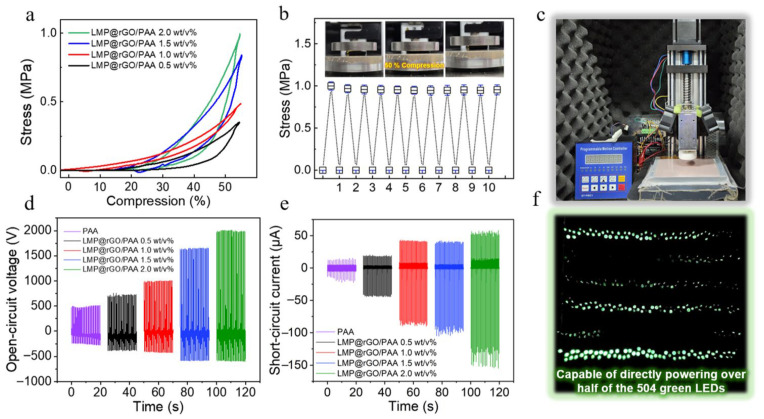 Figure 5
Peer Reviews
No public reviews on file for this paper yet. If you reviewed it on a platform where reviews are public (OpenReview, ICLR, NeurIPS, ICML), you can paste yours below so the community can read it here.
Videos
No videos yet. Explain this paper in a talk, walkthrough, or lecture? Add one.
Taxonomy
TopicsAdvanced Sensor and Energy Harvesting Materials · Dielectric materials and actuators · Conducting polymers and applications