Co-Immunoprecipitation-Coupled Mass Spectrometry Analysis of Zyxin’s Interactome and Phosphosites in Early Xenopus laevis Development
Elena A. Parshina, Rustam H. Ziganshin, Andrey G. Zaraisky, Natalia Y. Martynova

TL;DR
This study explores how Zyxin protein interacts with other proteins and gets modified during early frog development, revealing its role in controlling cell adhesion and gene activity.
Contribution
The study provides a detailed, stage-specific map of Zyxin’s protein interactions and phosphorylation events during early Xenopus development.
Findings
Zyxin interacts with focal adhesion components, transcriptional regulators, and kinases in a developmentally regulated manner.
Stage-specific phosphorylation of Zyxin isoforms suggests dynamic post-translational control of its functions.
Zyxin acts as a central regulator of cell adhesion, survival, and gene programs during morphogenesis.
Abstract
Protein complexes, assembled by scaffold proteins, act as molecular machines driving development. The mechanosensitive adapter protein Zyxin is a key example, integrating actin cytoskeleton dynamics with gene expression. However, the developmental regulation of its interactions and post-translational modifications remains poorly understood. Here, we characterize the dynamic Zyxin interactome across three early developmental stages of Xenopus laevis (from gastrulation to neurulation) using co-immunoprecipitation coupled with quantitative mass spectrometry (DDA and DIA). We identify stage-specific changes in Zyxin’s association with core focal adhesion components, transcriptional regulators and kinases. Furthermore, we uncover developmentally regulated phosphorylation events on isoforms, suggesting dynamic post-translational control of its interactions. Our work provides a comprehensive…
Genes, proteins, chemicals, diseases, species, mutations and cell lines named across the full text — each resolved to its canonical identifier and authoritative record.
Click any figure to enlarge with its caption.
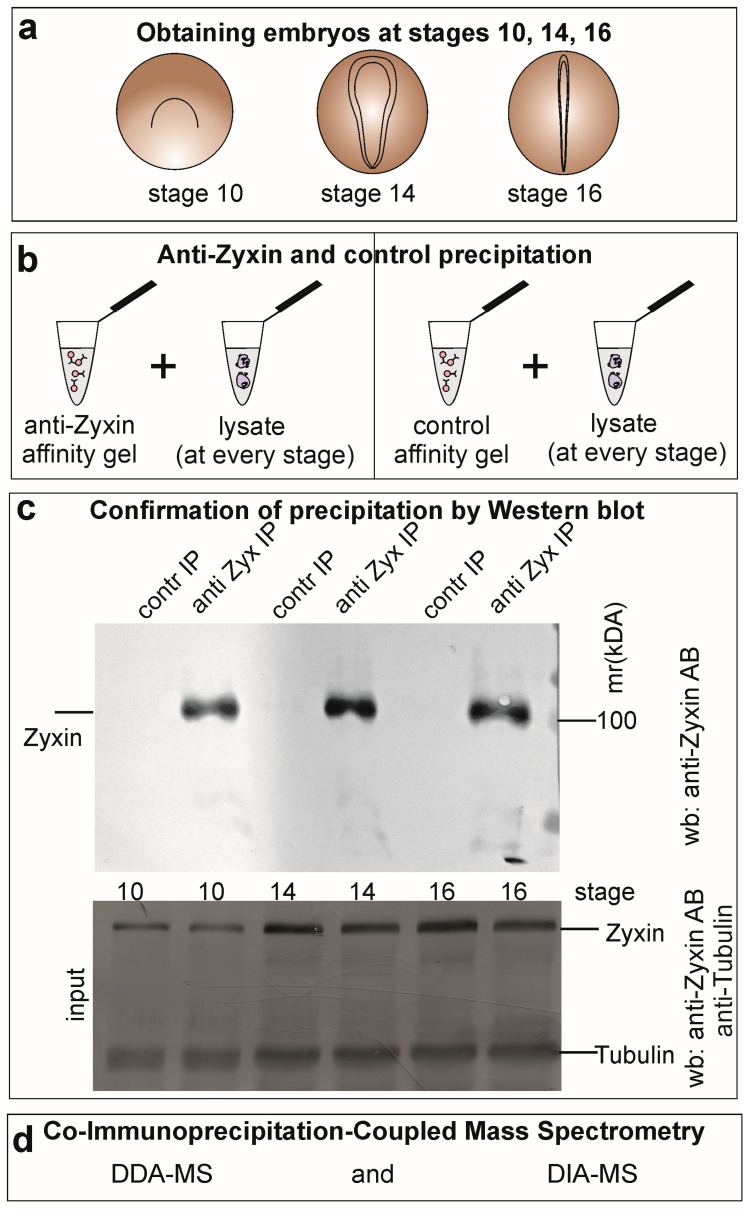 Figure 1
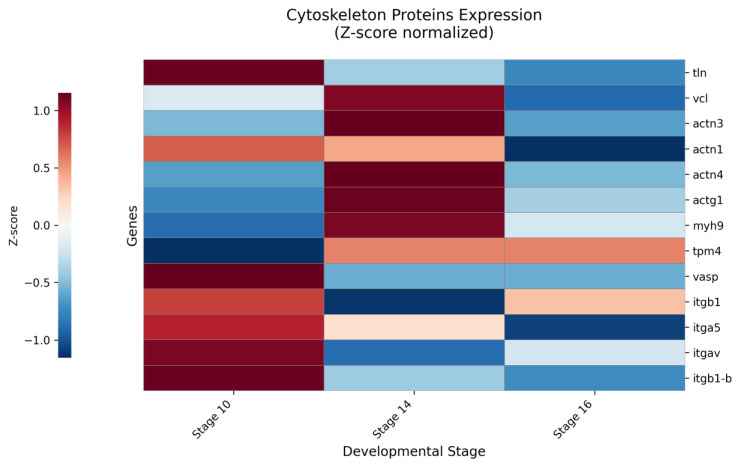 Figure 2
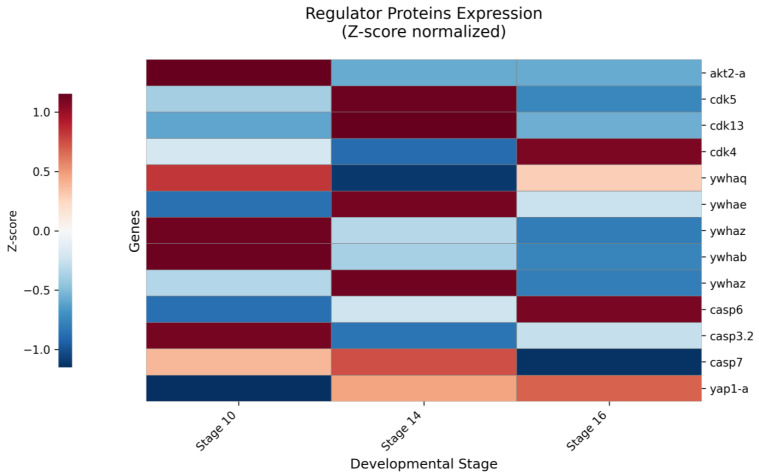 Figure 3
Peer Reviews
No public reviews on file for this paper yet. If you reviewed it on a platform where reviews are public (OpenReview, ICLR, NeurIPS, ICML), you can paste yours below so the community can read it here.
Videos
No videos yet. Explain this paper in a talk, walkthrough, or lecture? Add one.
Taxonomy
TopicsMass Spectrometry Techniques and Applications · Cellular Mechanics and Interactions · Erythrocyte Function and Pathophysiology