Efficiency of Lentiviral Vectors Pseudotyped with LCMV-G in Gene Transfer to Ldlr−/−ApoB100/100 Mice
Alisa Nousiainen, Anna-Kaisa Ruotsalainen, Krista Hokkanen, Svetlana Laidinen, Ahmed Tawfek, Diana Schenkwein, Seppo Ylä-Herttuala

TL;DR
This study compares the efficiency of lentiviral vectors pseudotyped with LCMV glycoprotein versus VSV-G in gene transfer to mice lacking LDL receptors.
Contribution
The study demonstrates that LCMV-LVs can be an effective alternative to VSV-G-LVs, though they may require higher doses for comparable gene transfer efficiency.
Findings
LCMV-LVs transduced all tested cell types efficiently in vitro without enhancers.
VSV-G-LVs showed higher in vivo gene transfer efficiency at the same dose, but LCMV-LVs accumulated more in the lungs.
A high-fat diet reduced the gene transfer efficiency of LCMV-LVs.
Abstract
Background/Objectives: Lentiviral vectors (LVs) are most commonly pseudotyped with the vesicular stomatitis virus glycoprotein (VSV-G), which lends LVs a wide tropism as it uses the low-density lipoprotein receptor (LDLR) as the main receptor for cell entry. In some gene therapy and research applications, however, alternative pseudotypes can be useful. In this work, we characterized LVs pseudotyped with lymphocytic choriomeningitis virus (LCMV) glycoprotein, particularly in gene transfer to an LDLR-deficient mouse strain used to model cardiovascular disease, Ldlr−/−ApoB100/100. Methods: LCMV-LVs were used in vitro to test their transduction efficiency across a variety of cell types. In vivo, the gene transfer efficiency, LV-specific immune responses and biodistribution of VSV-G-LVs and LCMV-LVs were compared after systemic gene transfer. Results: In vitro, LCMV-LVs transduced all tested…
Genes, proteins, chemicals, diseases, species, mutations and cell lines named across the full text — each resolved to its canonical identifier and authoritative record.
Click any figure to enlarge with its caption.
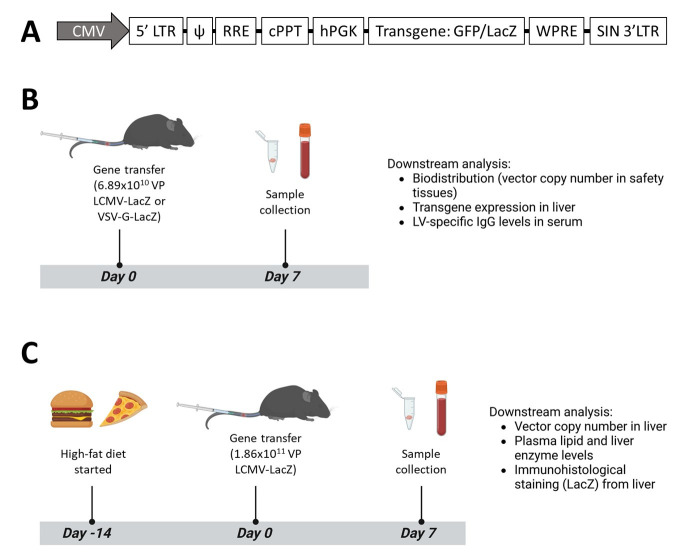 Figure 1
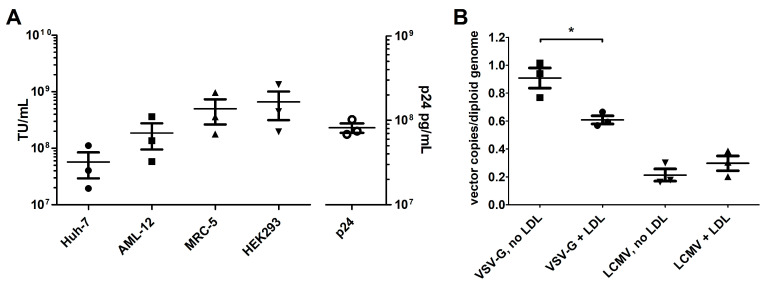 Figure 2
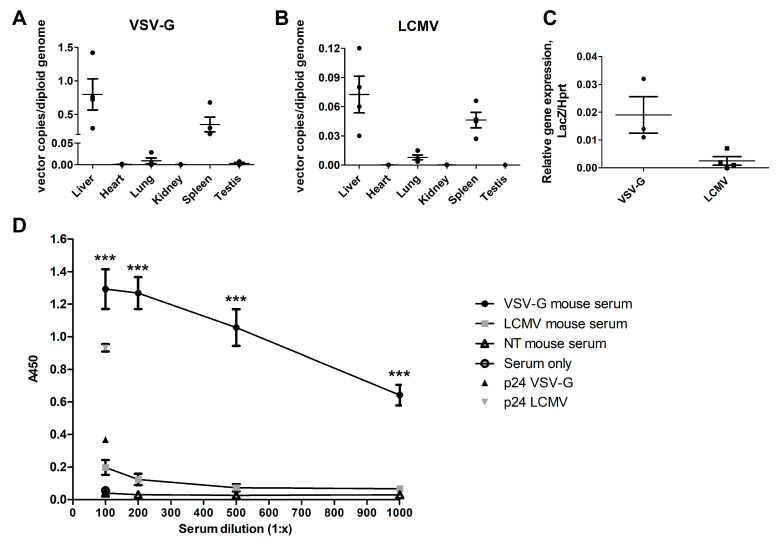 Figure 3
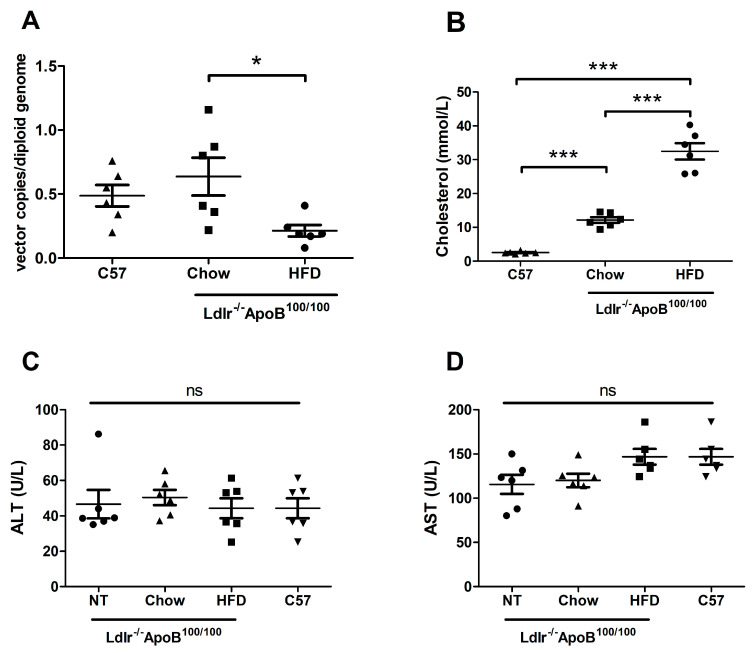 Figure 4
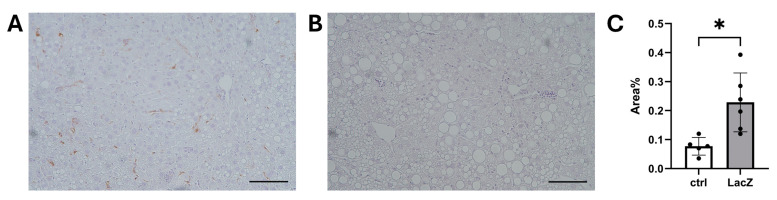 Figure 5
Peer Reviews
No public reviews on file for this paper yet. If you reviewed it on a platform where reviews are public (OpenReview, ICLR, NeurIPS, ICML), you can paste yours below so the community can read it here.
Videos
No videos yet. Explain this paper in a talk, walkthrough, or lecture? Add one.
Taxonomy
TopicsVirus-based gene therapy research · RNA Interference and Gene Delivery · Viral Infectious Diseases and Gene Expression in Insects