Training Load Oscillation and Epigenetic Plasticity: Molecular Pathways Connecting Energy Metabolism and Athletic Personality
Dan Cristian Mănescu

TL;DR
This paper explores how varying training intensity can influence both physical and mental adaptations through molecular pathways linked to energy metabolism and brain function.
Contribution
It introduces a conceptual model linking training load oscillation to epigenetic changes that may affect athletic performance and psychological traits.
Findings
Training load oscillation may influence DNA methylation and histone acetylation through energy-sensing pathways like AMPK and SIRT1.
Fluctuating energy states could impact PGC-1α and BDNF, which are linked to behavioral traits like resilience and cognitive control.
The proposed model suggests timing of nutritional and recovery inputs can align with molecular windows for optimized performance.
Abstract
Training adaptation involves muscular–metabolic remodeling and personality-linked traits such as motivation, self-regulation, and resilience. This narrative review examines how training load oscillation (TLO)—the deliberate variation in exercise intensity, volume, and substrate availability—may function as a systemic epigenetic stimulus capable of shaping both physiological and psychological adaptation. Fluctuating energetic states reconfigure key energy-sensing pathways (AMPK, mTOR, CaMKII, and SIRT1), thereby potentially influencing DNA methylation, histone acetylation, and microRNA programs linked to PGC-1α and BDNF. This review synthesizes converging evidence suggesting links between these molecular responses and behavioral consistency, cognitive control, and stress tolerance. Building on this literature, a systems model of molecular–behavioral coupling is proposed, in which TLO is…
Genes, proteins, chemicals, diseases, species, mutations and cell lines named across the full text — each resolved to its canonical identifier and authoritative record.
Click any figure to enlarge with its caption.
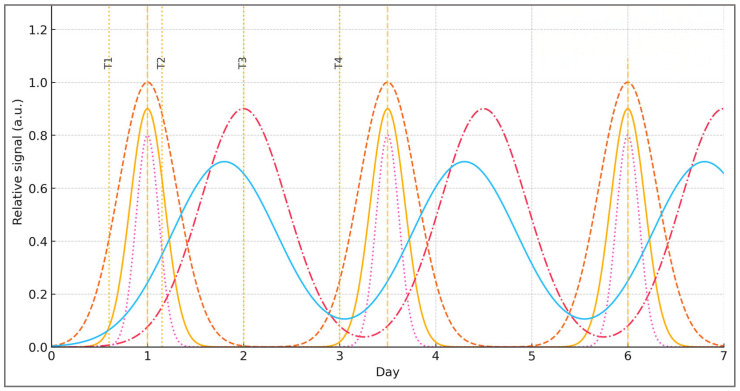 Figure 1
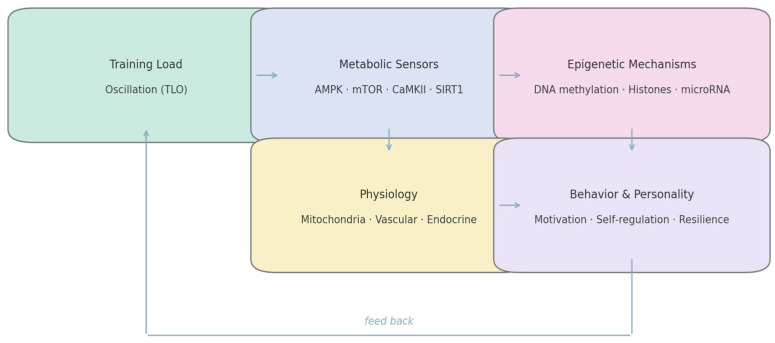 Figure 2
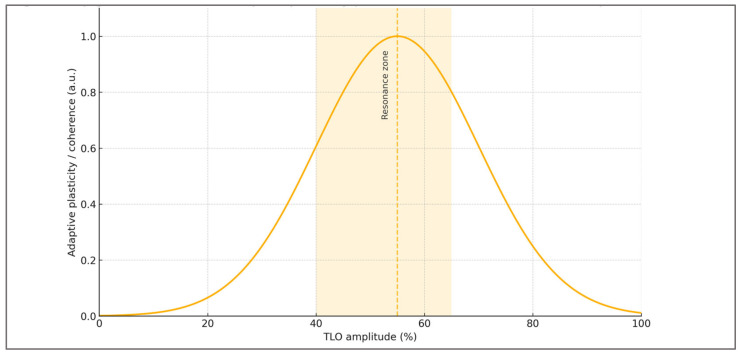 Figure 3
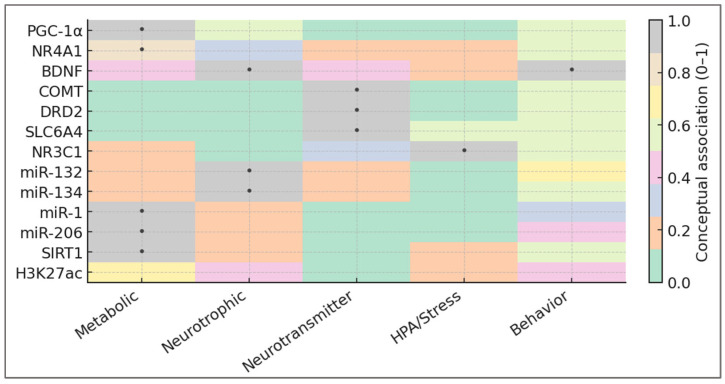 Figure 4
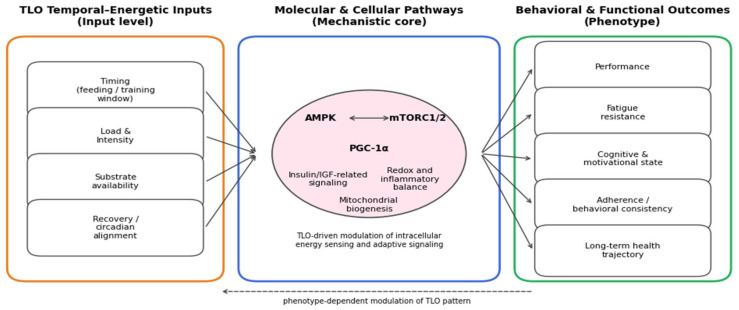 Figure 5
Peer Reviews
No public reviews on file for this paper yet. If you reviewed it on a platform where reviews are public (OpenReview, ICLR, NeurIPS, ICML), you can paste yours below so the community can read it here.
Videos
No videos yet. Explain this paper in a talk, walkthrough, or lecture? Add one.
Taxonomy
TopicsAdipose Tissue and Metabolism · Exercise and Physiological Responses · Genetics and Physical Performance