Bioengineered Tricomposite Hydrogel Enhances Chondrogenic Phenotype and Hyaline Matrix Formation in Human Chondrocytes
Antonio Rojas-Murillo, David Andrés de la Garza-Kalife, Jorge Lara-Arias, Héctor Leija-Gutiérrez, Rodolfo Franco-Márquez, Diana Laura Morales-Wong, Félix Vilchez-Cavazos, Elsa Nancy Garza-Treviño, Mario Simental-Mendía

TL;DR
A new hydrogel made from fibrin, cartilage, and amniotic membrane matrices supports cartilage cell growth and matrix formation better than fibrin alone.
Contribution
A tricomposite hydrogel combining dACM and dAMM with fibrin is introduced to enhance chondrocyte performance.
Findings
The tricomposite hydrogel showed high cell viability (~99%) and supported significant cell expansion (~250% by day 28).
It increased chondrogenic gene expression (e.g., SOX9 >3-fold) and reduced off-target genes like RUNX2 and COL1A2.
Histology confirmed proteoglycan-rich matrix and strong type II collagen and aggrecan production.
Abstract
Fibrin hydrogels are biocompatible but often lack instructive cues needed to sustain chondrocyte phenotype and cartilage-like matrix formation; therefore, we investigated whether a tricomposite fibrin hydrogel incorporating decellularized articular cartilage matrix (dACM) and decellularized amniotic membrane matrix (dAMM) enhances human articular chondrocyte performance in vitro. Human articular chondrocytes were encapsulated in tricomposite or fibrin-only hydrogels and cultured for 28 days, evaluating degradation kinetics, viability and cell density, histological remodeling (H&E, Masson’s trichrome, Safranin O), immunohistochemistry for type II collagen, aggrecan, and type I collagen, and qPCR of SOX9, COL2A1, ACAN, RUNX2, COL1A2, and COL10A1. The tricomposite remained cytocompatible (~99% viability), supported marked cell expansion (~250% by day 28), and degraded more slowly than…
Genes, proteins, chemicals, diseases, species, mutations and cell lines named across the full text — each resolved to its canonical identifier and authoritative record.
Click any figure to enlarge with its caption.
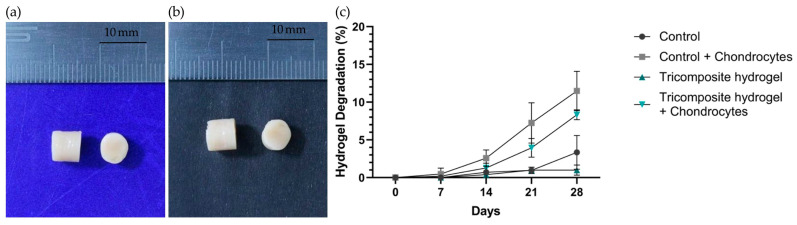 Figure 1
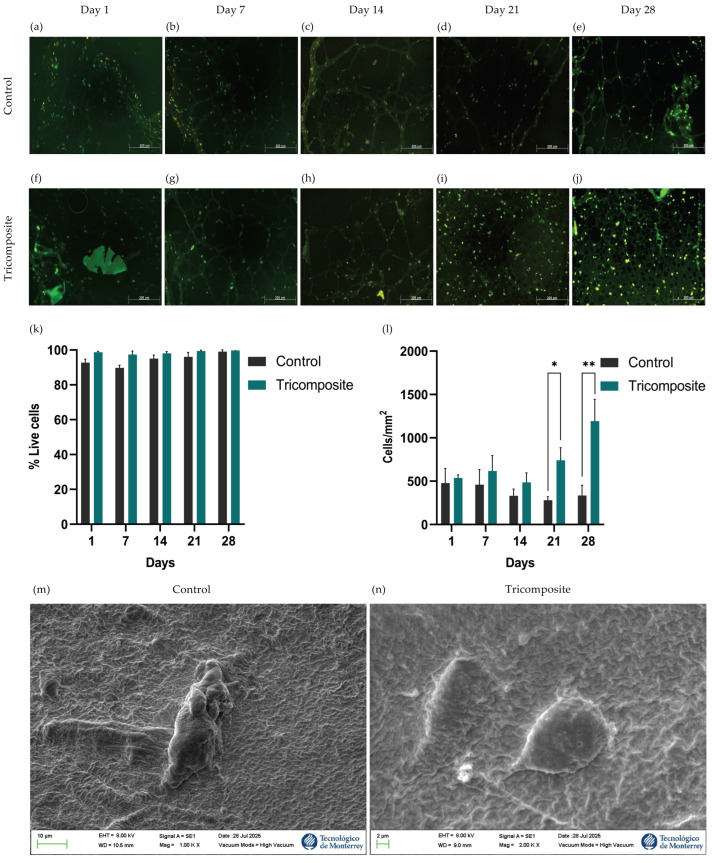 Figure 2
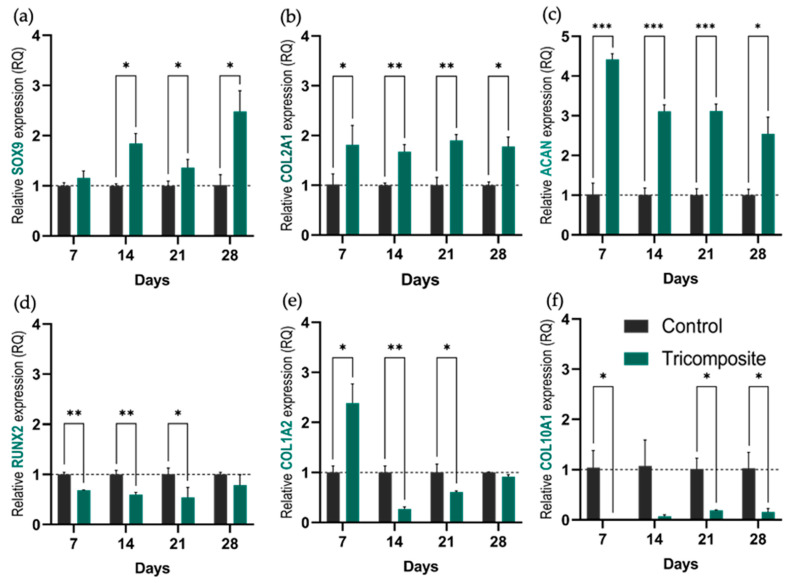 Figure 3
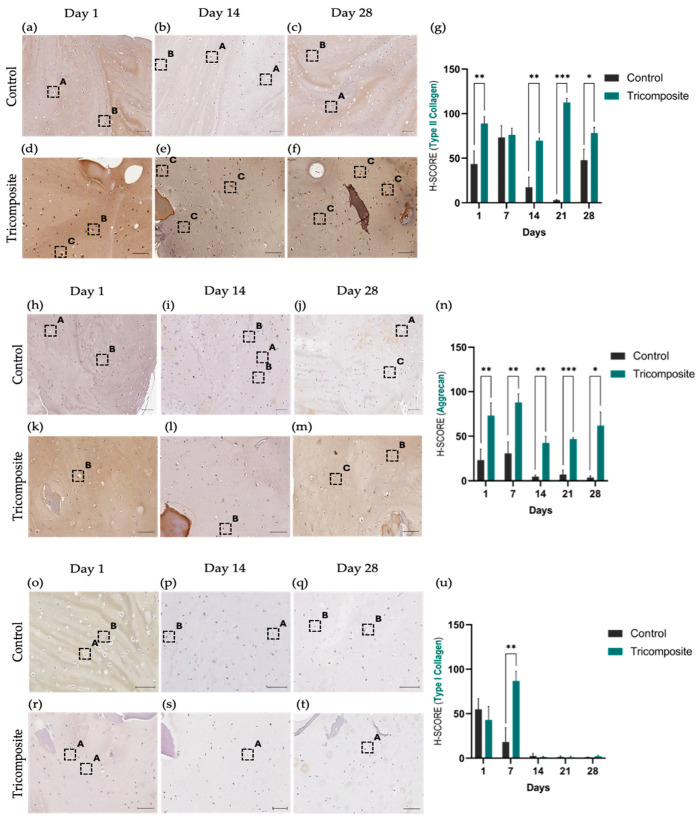 Figure 4
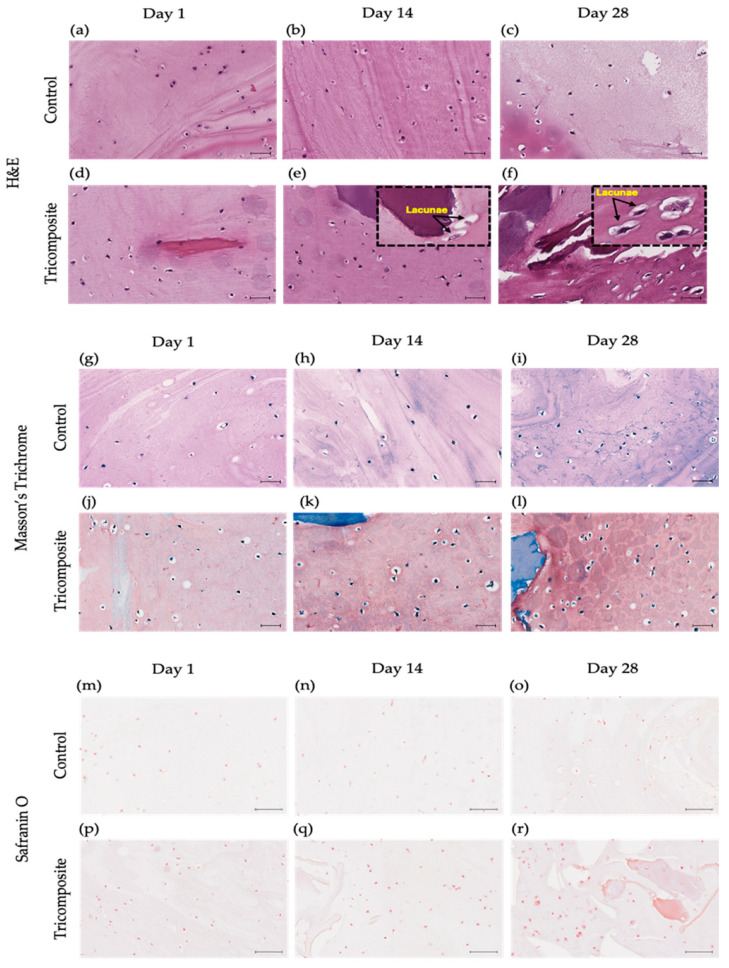 Figure 5
Peer Reviews
No public reviews on file for this paper yet. If you reviewed it on a platform where reviews are public (OpenReview, ICLR, NeurIPS, ICML), you can paste yours below so the community can read it here.
Videos
No videos yet. Explain this paper in a talk, walkthrough, or lecture? Add one.
Taxonomy
TopicsOsteoarthritis Treatment and Mechanisms · Tissue Engineering and Regenerative Medicine · Hydrogels: synthesis, properties, applications