Who Am I? Eyebrow Follicles Minimize Donor-Derived DNA for Germline Testing After Hematopoietic Stem Cell Transplantation
Matthias Mertens, Mona Sadlo, Jörn-Sven Kühl, Klaus Metzeler, Louisa Zschenderlein, Jeanett Edelmann, Claudia Lehmann, Sarah Thull, Mert Karakaya, Clara Velmans, Theresa Tumewu, Matthias Böhme, Christina Klötzer, Anne Weigert, Vladan Vucinic, Julia Hentschel, Mareike Mertens

TL;DR
Eyebrow follicles contain less donor DNA than other tissues, making them ideal for accurate germline testing after blood stem cell transplants.
Contribution
The study identifies eyebrow follicles as a reliable tissue source for minimizing donor DNA contamination in germline testing after HSCT.
Findings
Eyebrow follicles had median donor DNA of 1% (NGS) and 3% (STR), significantly lower than buccal swabs and nails.
STR assays detected higher donor DNA fractions than NGS at low-level chimerism.
Matched-related donors and perfect HLA matches were associated with lower donor DNA contamination.
Abstract
Germline genetic testing plays a critical role in diagnosing inherited predispositions and increasingly guides therapeutic and surveillance choices—but becomes technically challenging after allogeneic hematopoietic stem cell transplantation (HSCT), when donor-derived DNA contaminates host tissues. To address this, we compared donor-derived DNA across three accessible tissues—buccal swab, nail, and eyebrow follicles—in recipients after hematopoietic stem cell transplantation using two orthogonal assays (34-SNP next-generation sequencing and a 27-marker short tandem repeat panel) and modeled clinical covariates that influence chimerism. Eyebrow follicles showed consistently low donor DNA (median 1% by NGS; 3% by STR) whereas buccal swabs and nails carried substantially higher donor fractions (+25 and +22 percentage points versus eyebrow, respectively; both p < 0.01). Across methods, STR…
Click any figure to enlarge with its caption.
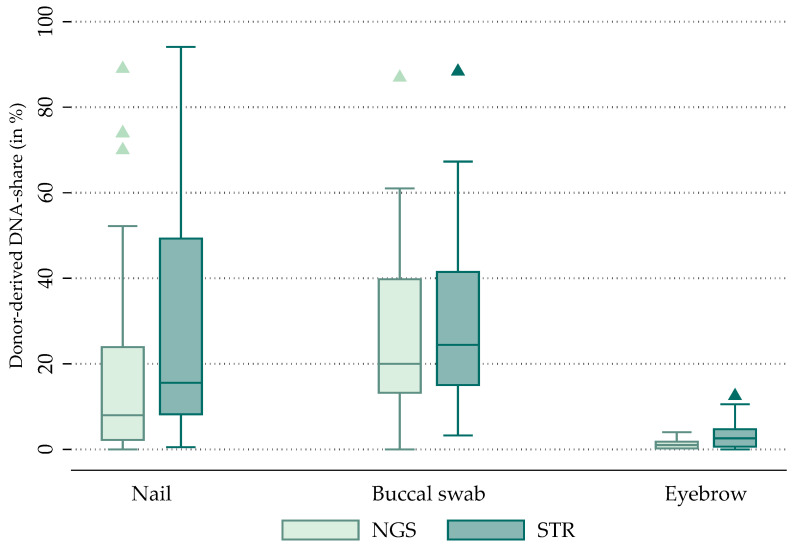 Figure 1
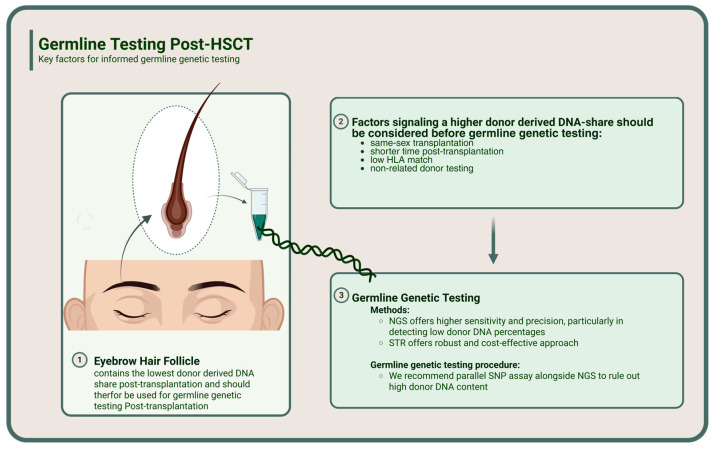 Figure 2
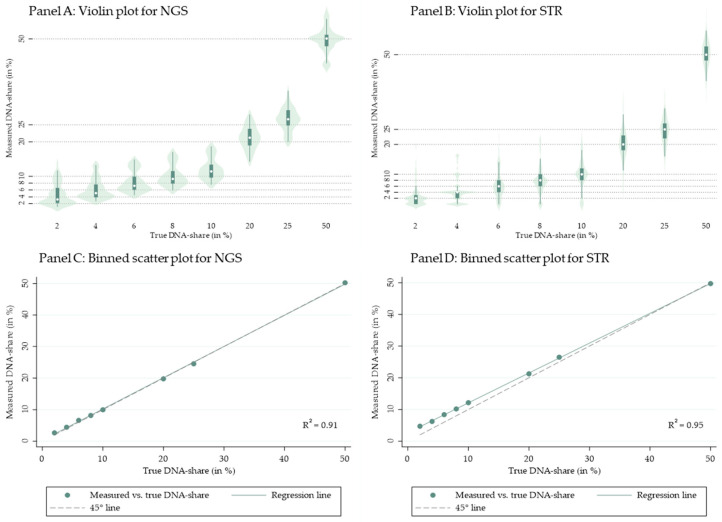 Figure 3
Peer Reviews
No public reviews on file for this paper yet. If you reviewed it on a platform where reviews are public (OpenReview, ICLR, NeurIPS, ICML), you can paste yours below so the community can read it here.
Videos
No videos yet. Explain this paper in a talk, walkthrough, or lecture? Add one.
Taxonomy
TopicsHematopoietic Stem Cell Transplantation · Cancer Genomics and Diagnostics · Genomic variations and chromosomal abnormalities