Antioxidant and Aromatic Properties of Aqueous Extracts of Pleurotus nebrodensis as Potential Food Ingredients
Fortunato Cirlincione, Francesca Vurro, Alexandra-Mihaela Ailoaiei, Saba Shahrivari-Baviloliaei, Graziana Difonzo, Agnieszka Viapiana, Alina Plenis, Antonella Pasqualone, Maria Letizia Gargano

TL;DR
This study compares two methods for extracting bioactive compounds from Pleurotus nebrodensis mushrooms, finding that each method affects antioxidant and aroma properties differently.
Contribution
The study introduces a comparison of freeze–thaw and ultrasound-assisted extraction methods for preserving both antioxidant and aromatic qualities in Pleurotus nebrodensis.
Findings
Ultrasound-assisted extraction yields higher phenolics and flavonoids but lower procyanidins and ascorbic acid compared to freeze–thaw extraction.
Freeze–thaw extraction better preserves volatile alcohols and aldehydes like 1-octen-3-ol and hexanal.
Gallic acid is the most abundant phenolic compound in all P. nebrodensis extracts.
Abstract
Pleurotus nebrodensis has raised the interest of the food and nutraceutical industry due to its valuable organoleptic characteristics coupled with antibacterial and antitumor properties. Given this interest, this study aimed to identify effective, cheap, and eco-friendly technologies to prepare extracts able to convey the bioactive compounds while retaining the typical mushroom aroma. Two aqueous extracts were prepared based on a freeze–thaw (FT) and ultrasound-assisted (UA) method. The extracts, both in liquid and lyophilized form, were analyzed by HPLC to determine the phenolic compounds. Moreover, the volatile organic compounds, total phenolics, total flavonoids, total phenolic acids, procyanidins, and ascorbic acid were determined, while the antioxidant activity was assessed by DPPH (2,2-diphenyl-1-picrylhydrazyl) and ABTS radical scavenging activity, ferric-reducing/antioxidant…
Genes, proteins, chemicals, diseases, species, mutations and cell lines named across the full text — each resolved to its canonical identifier and authoritative record.
Click any figure to enlarge with its caption.
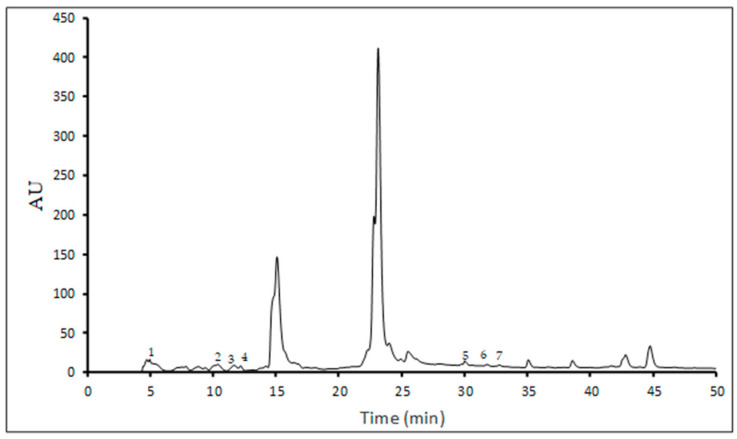 Figure 1
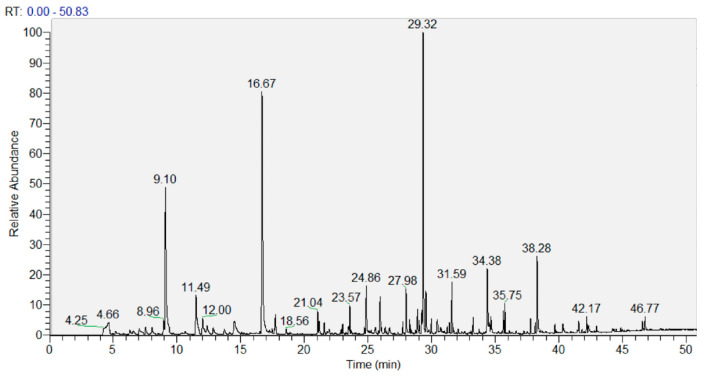 Figure 2
Peer Reviews
No public reviews on file for this paper yet. If you reviewed it on a platform where reviews are public (OpenReview, ICLR, NeurIPS, ICML), you can paste yours below so the community can read it here.
Videos
No videos yet. Explain this paper in a talk, walkthrough, or lecture? Add one.
Taxonomy
TopicsFungal Biology and Applications · Fermentation and Sensory Analysis · Phytochemicals and Antioxidant Activities