Isolation and Characterization of Brevibacillus parabrevis S09T2, a Novel Ochratoxin A-Degrading Strain with Application Potential
Jinqi Xiao, Qingping Wu, Junhui Wu, Xin Wang, Shixuan Huang, Xiaojuan Yang, Xianhu Wei, Youxiong Zhang, Xiuying Kou, Yuwei Wu, Ling Chen

TL;DR
A new bacteria, Brevibacillus parabrevis S09T2, was found to effectively break down a harmful food contaminant called ochratoxin A, making it a potential tool for improving food safety.
Contribution
The discovery and characterization of a novel OTA-degrading strain, Brevibacillus parabrevis S09T2, with high detoxification efficiency and safety profile.
Findings
Brevibacillus parabrevis S09T2 degraded over 93% of OTA within 24 hours at 37°C.
Degradation products were identified as OTα and phenylalanine via UPLC-HRMS.
The enzyme showed thermostability, degrading OTA at 50°C within 6 hours.
Abstract
Ochratoxin A (OTA), a fungal secondary metabolite, is frequently detected in grains, herbal products, and other agricultural commodities, posing potential food safety risks. Among existing detoxification strategies, biological degradation is considered both specific and environmentally sustainable. In this study, a novel OTA-degrading bacterium, Brevibacillus parabrevis S09T2, was isolated from soil using OTA as the sole carbon source. The strain exhibited no hemolytic activity and carried no virulence or antibiotic resistance genes, indicating a favorable safety profile. S09T2 efficiently degraded OTA, removing over 93% of 5–8 μg/mL OTA within 24 h at 37 °C, and almost completely degrading OTA concentrations up to 10 μg/mL within 72 h. UPLC-HRMS analysis identified ochratoxin α (OTα) and phenylalanine as the only degradation products, confirming detoxification via amide bond…
Genes, proteins, chemicals, diseases, species, mutations and cell lines named across the full text — each resolved to its canonical identifier and authoritative record.
Click any figure to enlarge with its caption.
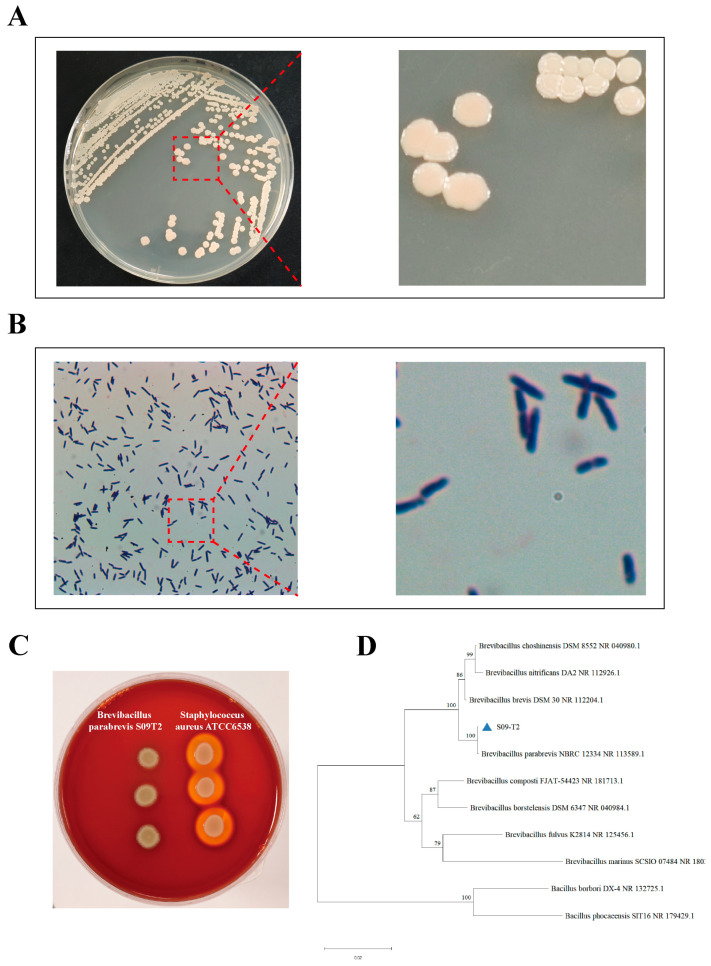 Figure 1
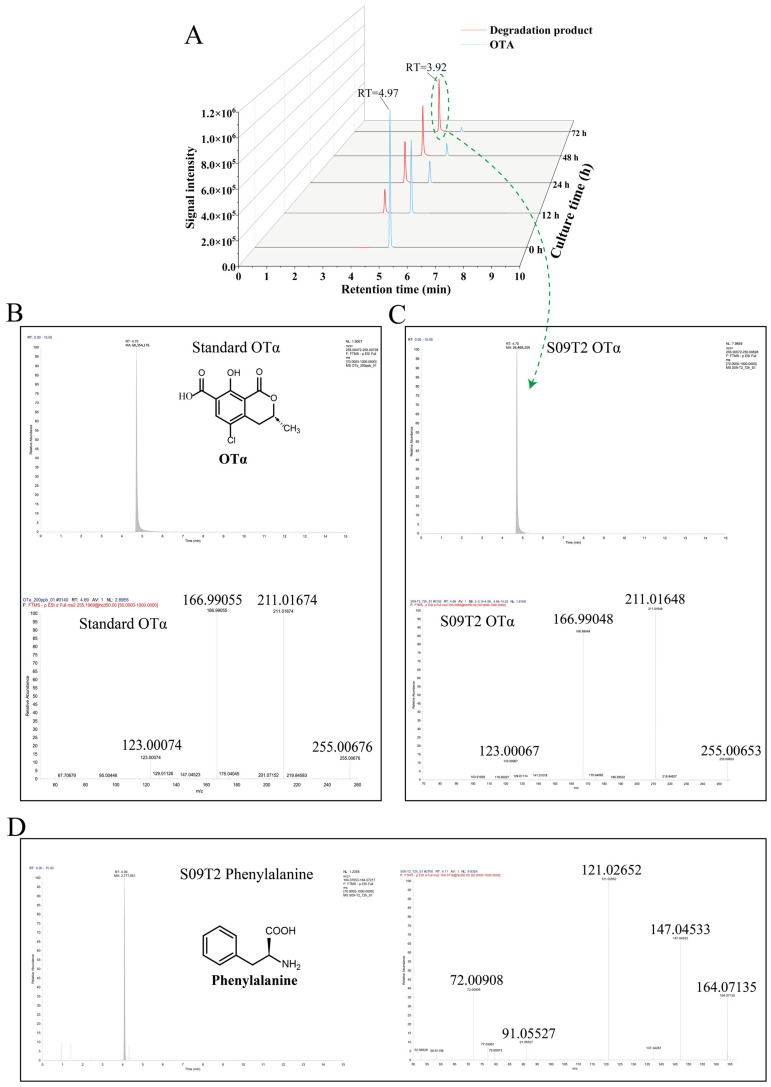 Figure 2
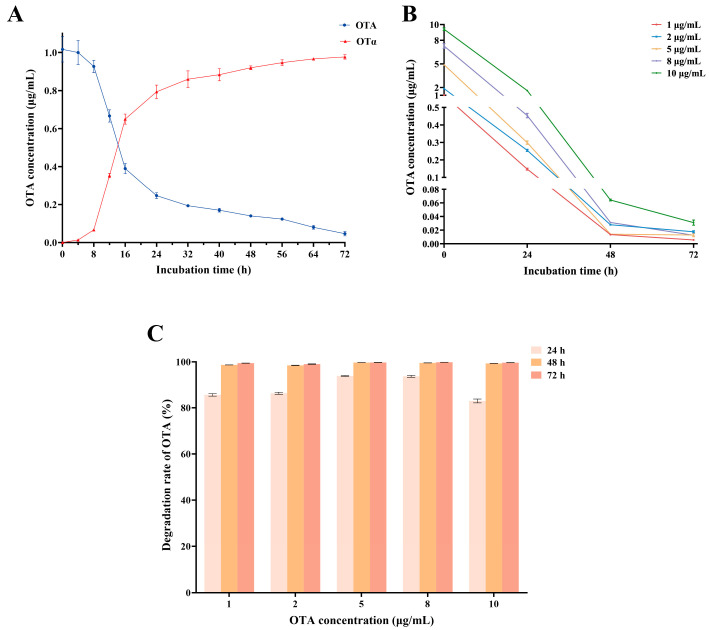 Figure 3
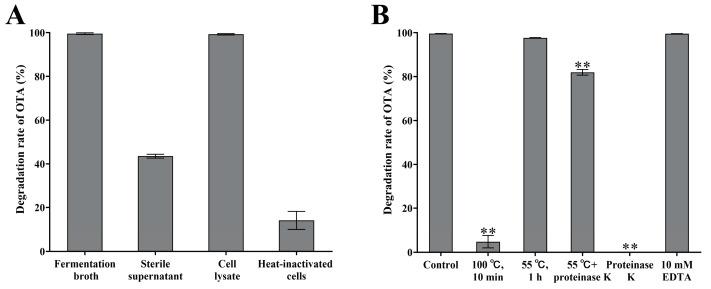 Figure 4
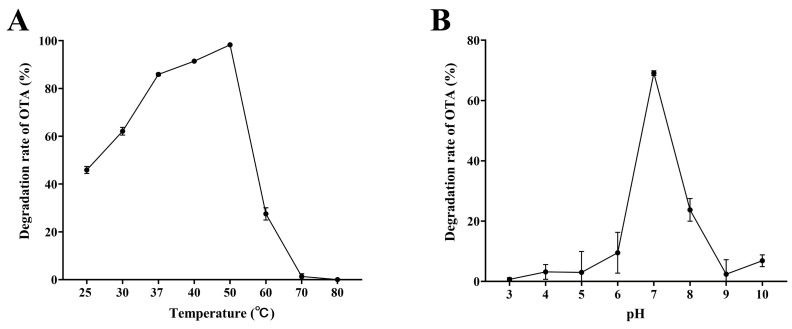 Figure 5
Peer Reviews
No public reviews on file for this paper yet. If you reviewed it on a platform where reviews are public (OpenReview, ICLR, NeurIPS, ICML), you can paste yours below so the community can read it here.
Videos
No videos yet. Explain this paper in a talk, walkthrough, or lecture? Add one.
Taxonomy
TopicsMycotoxins in Agriculture and Food · Insect Resistance and Genetics · Potato Plant Research