SIADH as an Underrecognized Manifestation of Porphyria-like Crises in Hereditary Tyrosinemia Type 1: Clinical and Pathophysiological Insights
Eleonora Saraceno, Ilaria Serra, Beatrice Bracci, Veronica Pagliardini, Michele Pinon, Gerdi Tuli, Antonia Versace, Claudia Bondone, Marco Spada

TL;DR
This case study shows that SIADH can be an overlooked symptom of metabolic crises in a rare genetic disorder called Hereditary Tyrosinemia Type 1.
Contribution
The paper identifies SIADH as a novel and underrecognized manifestation of porphyria-like crises in HT1.
Findings
A patient with HT1 presented with SIADH during a metabolic crisis, marked by hyponatremia and elevated urinary ALA.
Optimizing NTBC therapy and fluid management led to full recovery, supporting a link between heme pathway disruption and SIADH.
FAA and SA likely contribute to SIADH through oxidative stress, mitochondrial dysfunction, and renal impairment.
Abstract
Hereditary tyrosinemia type 1 (HT1) is a rare metabolic disorder caused by fumarylacetoacetate hydrolase deficiency, leading to the accumulation of toxic metabolites such as fumarylacetoacetate (FAA) and succinylacetone (SA). We report an 11-year-old boy with poorly controlled HT1 who presented with a severe neurovisceral crisis after suboptimal adherence to nitisinone (NTBC) therapy, characterized by abdominal pain, hypertension, paralytic ileus, seizures, and profound hyponatremia. Biochemical evaluation revealed markedly elevated urinary δ-aminolevulinic acid (ALA), consistent with a porphyria-like metabolic decompensation, together with inappropriately increased plasma copeptin in the setting of hypotonic hyponatremia and clinical euvolemia, fulfilling diagnostic criteria for the syndrome of inappropriate antidiuretic hormone secretion (SIADH). Optimization of NTBC therapy combined…
Genes, proteins, chemicals, diseases, species, mutations and cell lines named across the full text — each resolved to its canonical identifier and authoritative record.
Click any figure to enlarge with its caption.
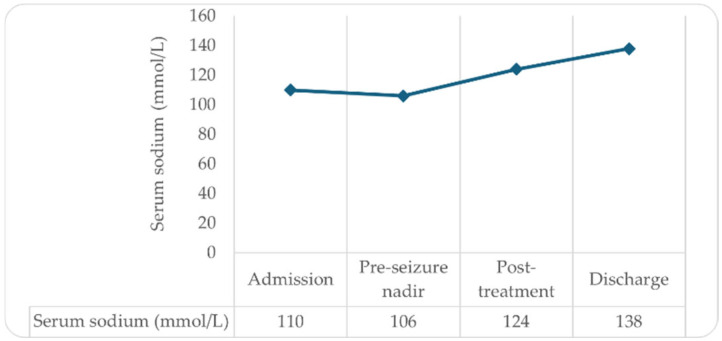 Figure 1
 Figure 2
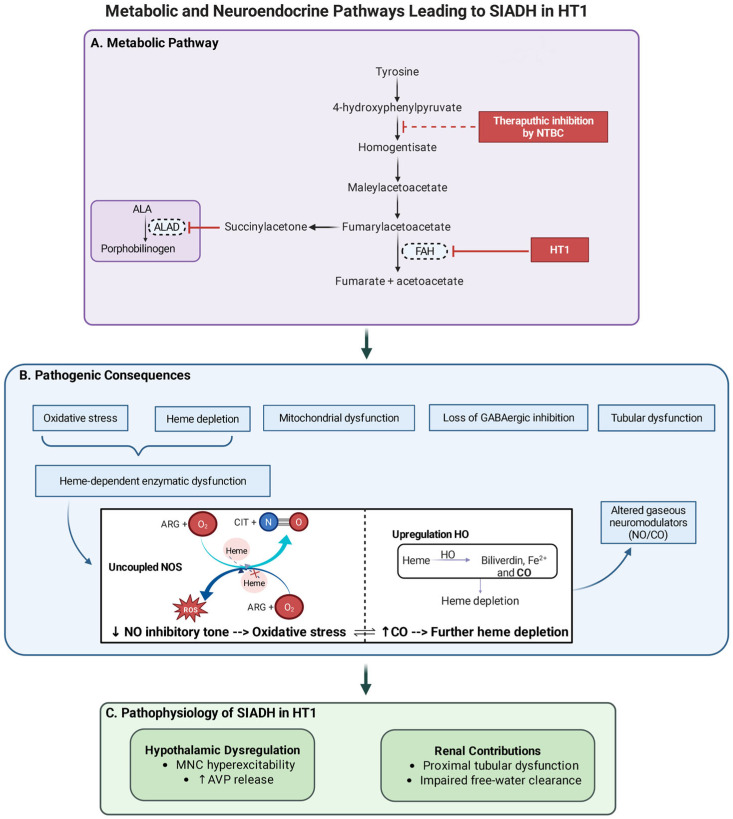 Figure 3
Peer Reviews
No public reviews on file for this paper yet. If you reviewed it on a platform where reviews are public (OpenReview, ICLR, NeurIPS, ICML), you can paste yours below so the community can read it here.
Videos
No videos yet. Explain this paper in a talk, walkthrough, or lecture? Add one.
Taxonomy
TopicsMetabolism and Genetic Disorders · Porphyrin Metabolism and Disorders · Biochemical and Molecular Research