Early Detection of Pacing-Induced Cardiomyopathy Using MicroRNA-208b-3p and MicroRNA-9: A Prospective Cohort Analysis
Onoufrios Malikides, Aleksi Sallo, Andria Papazachariou, Ioannis Kopidakis, Angeliki Alifragki, Joanna Kontaraki, Konstantinos Fragkiadakis, Gregory Chlouverakis, Eleftherios Kallergis, Emmanuel Simantirakis, Maria Marketou

TL;DR
This study shows that changes in specific microRNAs in blood cells can predict heart damage caused by pacemaker use before symptoms appear.
Contribution
Identifies miR-208b-3p and miR-9 as early predictive biomarkers for pacing-induced cardiomyopathy using peripheral blood mononuclear cells.
Findings
11.1% of patients developed pacing-induced cardiomyopathy (PiCM) after pacemaker implantation.
Dynamic changes in miR-208b-3p and miR-9 at 3 months predicted PiCM development.
Early LV-GLS deterioration and miRNA changes preceded overt heart dysfunction.
Abstract
Background/Objectives: Pacing-induced cardiomyopathy (PiCM) is a recognized complication of chronic right ventricular pacing (RVP), characterized by left ventricular (LV) dysfunction, adverse remodeling, and progression to heart failure. MicroRNAs (miRs) regulate gene expression and play an important role in ventricular remodeling. This study aimed to observe whether dynamic changes in miRs according to a novel peripheral blood mononuclear cell (PBMC)-based approach could serve as early predictive biomarkers of PiCM. Methods: A prospective, single-center cohort study was conducted in adult patients undergoing pacemaker implantation. Clinical characteristics, echocardiographic parameters and expression levels of miR-208b-3p and miR-9 were assessed immediately and 3 months post-pacemaker implantation. PiCM was defined as a ≥10% reduction in LVEF at one year, with no alternative cause.…
Genes, proteins, chemicals, diseases, species, mutations and cell lines named across the full text — each resolved to its canonical identifier and authoritative record.
Click any figure to enlarge with its caption.
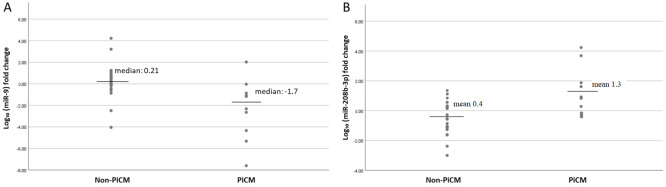 Figure 1
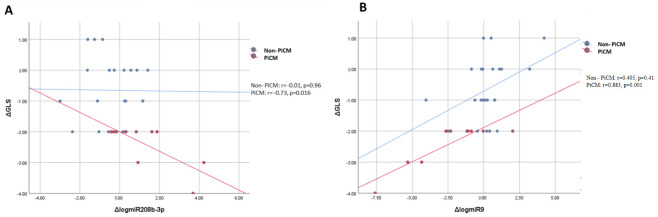 Figure 2
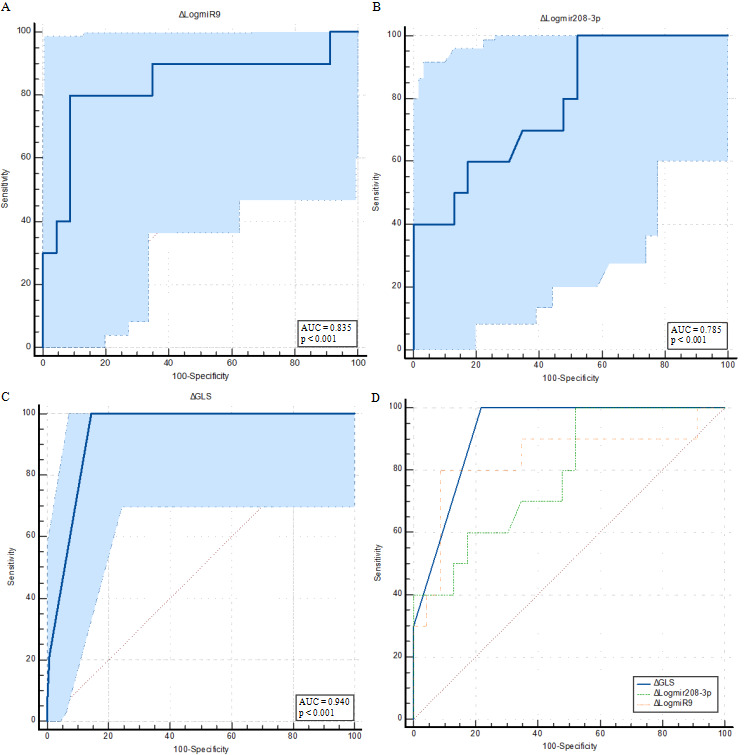 Figure 3
Peer Reviews
No public reviews on file for this paper yet. If you reviewed it on a platform where reviews are public (OpenReview, ICLR, NeurIPS, ICML), you can paste yours below so the community can read it here.
Videos
No videos yet. Explain this paper in a talk, walkthrough, or lecture? Add one.
Taxonomy
TopicsCardiac pacing and defibrillation studies · Cardiac Structural Anomalies and Repair · Transplantation: Methods and Outcomes