Enhanced Bone Regeneration by Scaffold-Free Three-Dimensional Constructs of Human Dental Pulp Stem Cells in a Rat Mandibular Defect Model
Monika Nakano, Yasuyuki Fujii, Yuri Matsui-Chujo, Kazuhiro Nishimaki, Yudai Miyazaki, Yoko Torii, Yurika Ikeda-Dantsuji, Ayano Hatori, Tatsuya Shimizu, Nobuyuki Kaibuchi, Daichi Chikazu, Shizuka Akieda, Yoko Kawase-Koga

TL;DR
This study shows that 3D-printed human dental pulp stem cell constructs can regenerate bone in rat jaw defects, offering a promising alternative to traditional bone grafting.
Contribution
The study introduces scaffold-free 3D-printed DPSC constructs as a novel method for bone regeneration in maxillofacial defects.
Findings
3D constructs showed significantly greater bone volume and mineral density compared to controls.
Histological analysis confirmed new bone formation from transplanted DPSCs.
Scaffold-free constructs outperformed traditional methods in osteogenic potential.
Abstract
Bone defects in the maxillofacial region severely impair patient function and esthetics. Free autologous bone grafting remains the gold-standard treatment; however, surgical intervention at donor sites limits clinical applicability. Treatment using artificial materials also presents challenges, including insufficient bone regeneration and poor biocompatibility. Bio three-dimensional (3D) printing, which enables the fabrication of scaffold-free 3D constructs from cellular spheroids has emerged as a promising regenerative approach. This study investigated the osteogenic potential of scaffold-free constructs composed of human dental pulp stem cell (DPSC) spheroids in a rat mandibular defect model. DPSCs isolated from extracted human teeth were used to generate spheroids, which were assembled into 3D constructs using a Bio 3D printer. The spheroids exhibited higher mRNA expression of stem…
Genes, proteins, chemicals, diseases, species, mutations and cell lines named across the full text — each resolved to its canonical identifier and authoritative record.
Click any figure to enlarge with its caption.
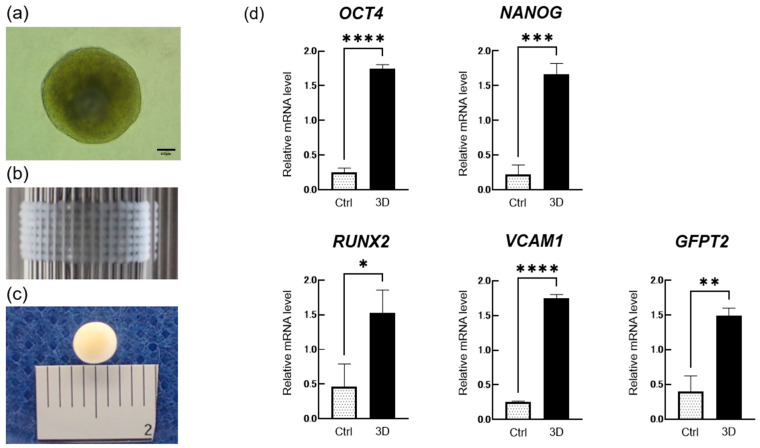 Figure 1
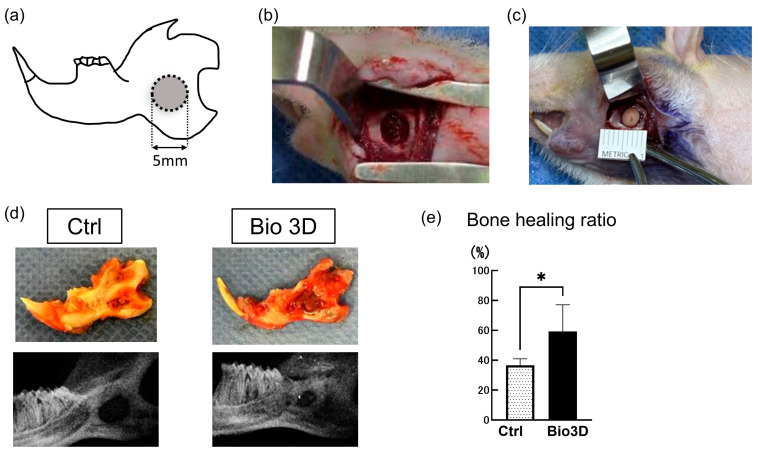 Figure 2
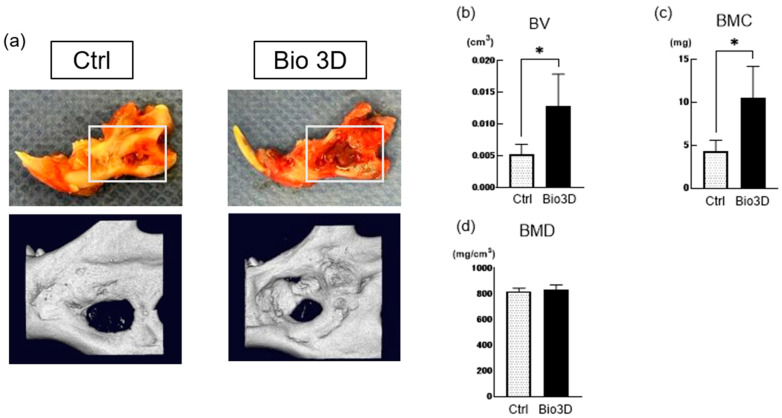 Figure 3
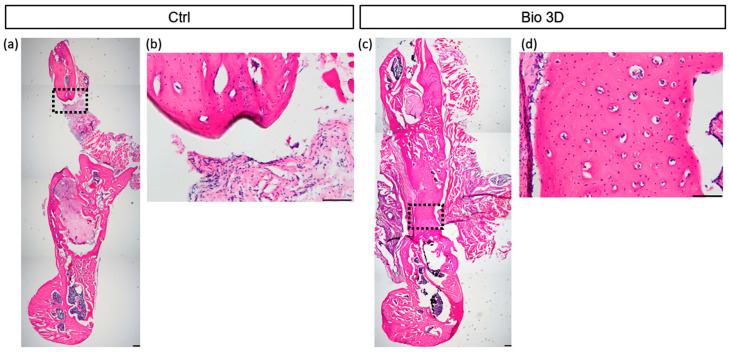 Figure 4
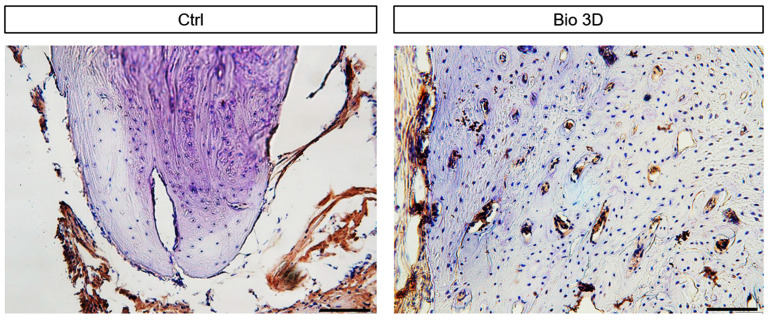 Figure 5
Peer Reviews
No public reviews on file for this paper yet. If you reviewed it on a platform where reviews are public (OpenReview, ICLR, NeurIPS, ICML), you can paste yours below so the community can read it here.
Videos
No videos yet. Explain this paper in a talk, walkthrough, or lecture? Add one.
Taxonomy
TopicsMesenchymal stem cell research · 3D Printing in Biomedical Research · Bone Tissue Engineering Materials