Deep Eutectic Solvents Mediated Extraction of a Pectin Polysaccharide from Processed Sweet Potato By-Products: Optimization and Characterization Studies
Wenting Zhang, Ke Liu, Jian Sun, Xiaoxue Liang, Juntao Guo, Qiang Li, Chanmin Liu

TL;DR
This study shows that using deep eutectic solvents to extract pectin from sweet potato waste is more efficient and produces a unique pectin with potential anti-inflammatory properties.
Contribution
A novel method for extracting pectin from sweet potato residue using deep eutectic solvents, achieving higher yields and unique structural properties.
Findings
Optimal extraction conditions achieved a 5.6% yield, 2.4 times higher than hot-water extraction.
DESP had a lower molecular weight and distinct monosaccharide composition compared to other pectins.
DESP showed anti-inflammatory activity, suggesting potential functional applications.
Abstract
In this study, a pectin polysaccharide named DESP was extracted using a deep eutectic solvent (DES) from sweet potato residue (SPR) and the extract was optimized through response surface methodology (RSM). The DESP, based on choline chloride–urea (ChCl-Ur), was characterized for yield, molecular weight (Mw), and monosaccharide composition. Fourier-transform infrared spectroscopy (FT-IR), X-ray diffraction (XRD), 1H-nuclearmagnetic resonance (1H-NMR), and scanning electron microscopy (SEM) were used to analyze the structure. Optimal extraction conditions for DESP were ChCl-Ur in a molar ratio of 1:2, water content of 75 wt.%, extraction time of 125.7 min, extraction temperature of 83.2 °C, and a liquid-to-solid ratio of 37.0 mL·g−1. The optimized extraction yield was 5.6% ± 0.09%, which was 2.4 times higher than that of hot-water-extracted sweet potato pectin (HWSP, 2.32%). The…
Genes, proteins, chemicals, diseases, species, mutations and cell lines named across the full text — each resolved to its canonical identifier and authoritative record.
Click any figure to enlarge with its caption.
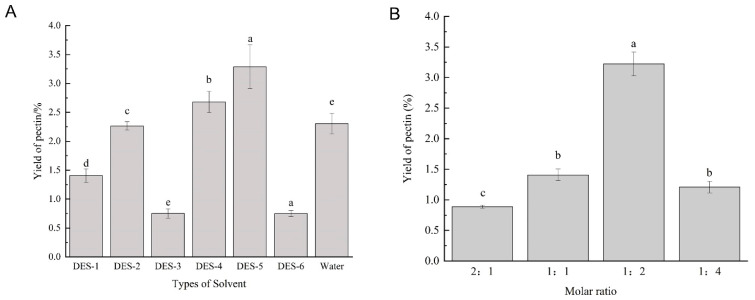 Figure 1
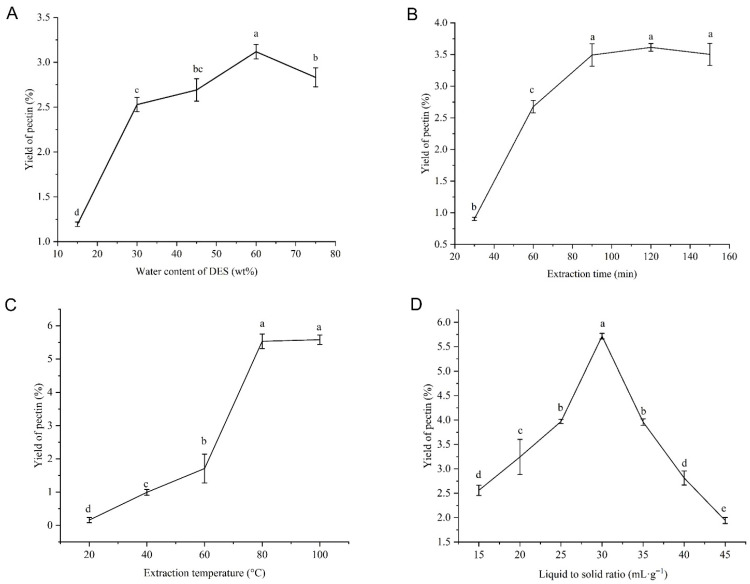 Figure 2
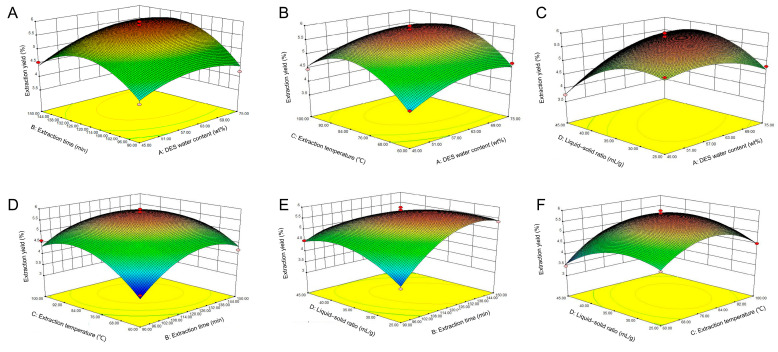 Figure 3
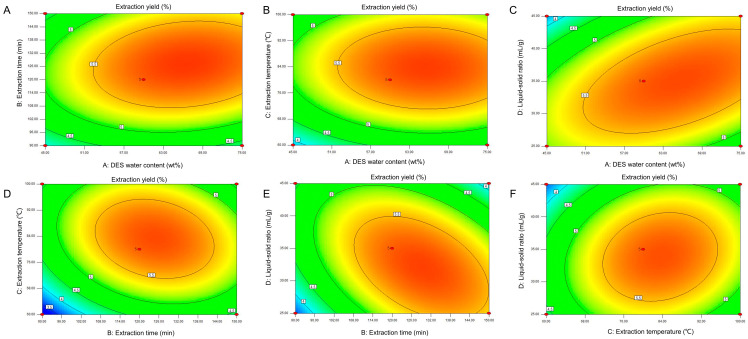 Figure 4
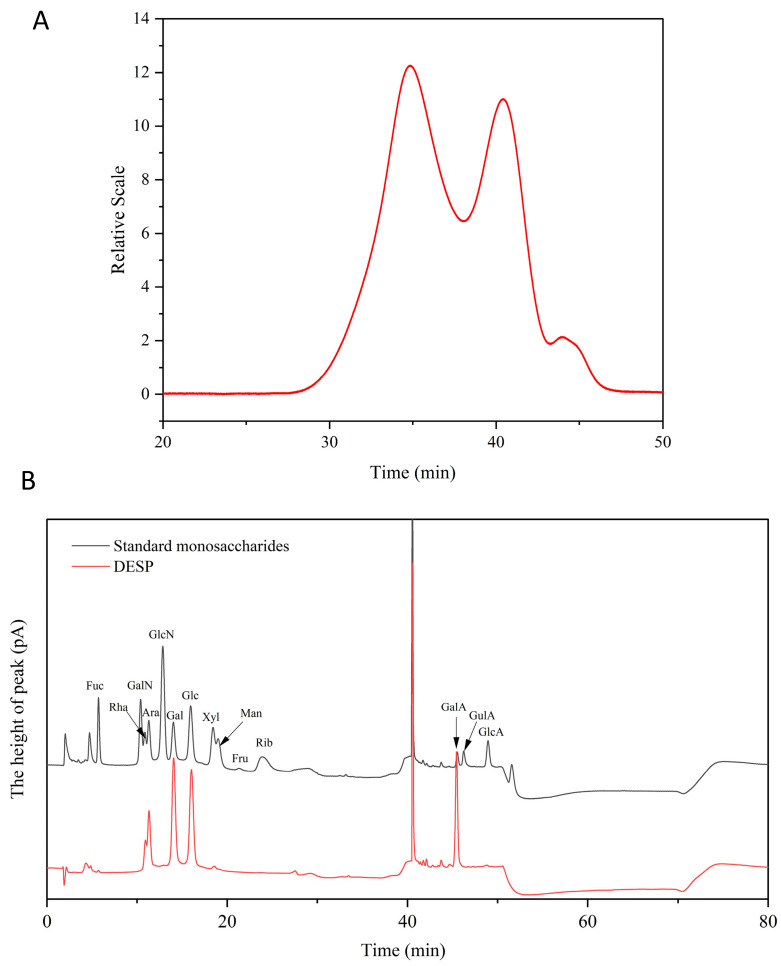 Figure 5
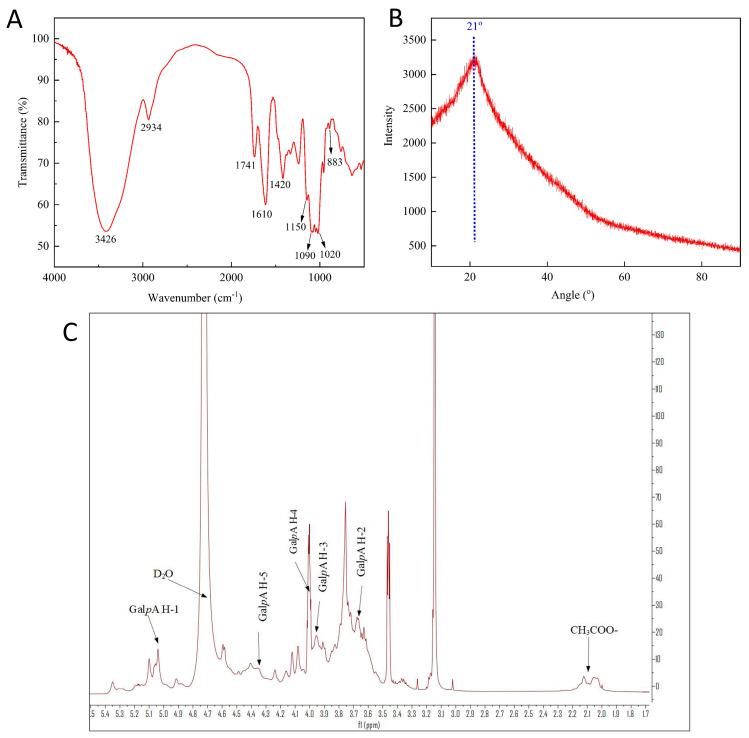 Figure 6
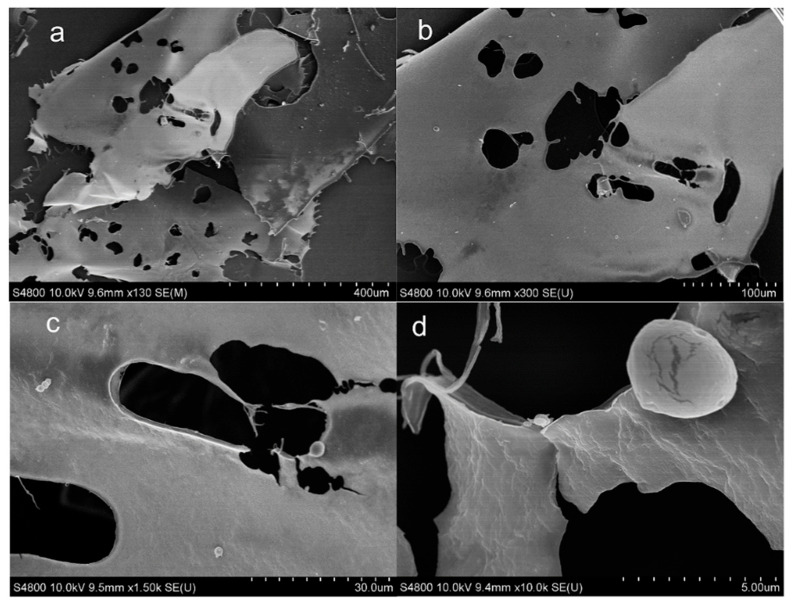 Figure 7
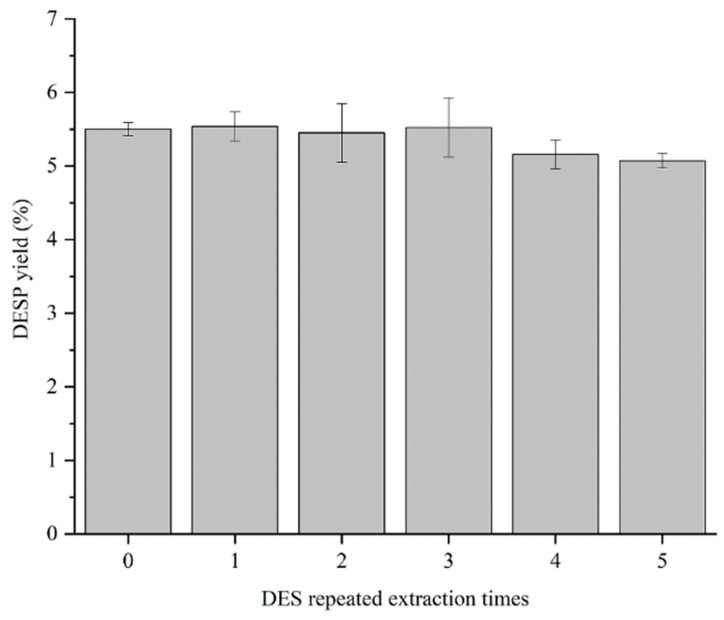 Figure 8
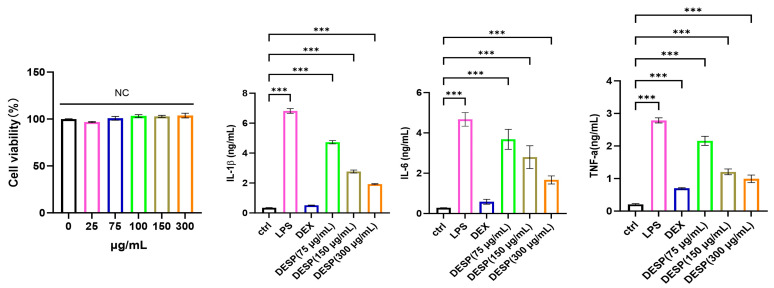 Figure 9
Peer Reviews
No public reviews on file for this paper yet. If you reviewed it on a platform where reviews are public (OpenReview, ICLR, NeurIPS, ICML), you can paste yours below so the community can read it here.
Videos
No videos yet. Explain this paper in a talk, walkthrough, or lecture? Add one.
Taxonomy
TopicsPolysaccharides and Plant Cell Walls · Advanced Cellulose Research Studies · Nanocomposite Films for Food Packaging