Transcriptome- and Epigenome-Wide Association Studies of Tic Spectrum Disorder in Discordant Monozygotic Twins
Jonas Dalsberg, Cathrine Jespersgaard, Amanda M. Levy, Anna Maria Asplund, Frederik Otzen Bagger, Nanette M. Debes, Qihua Tan, Zeynep Tümer, Mathis Hildonen

TL;DR
This study explores how environmental factors may influence gene expression and epigenetic changes in individuals with tic spectrum disorder using twin pairs.
Contribution
The study identifies environmentally influenced gene expression and epigenetic changes in TSD using monozygotic twins.
Findings
Differential expression analysis found a dozen genes, including long non-coding RNAs and pseudogenes, associated with TSD.
Gene set enrichment analysis showed downregulation in pathways related to translation, RNA processing, and neurobiological functions.
The RNA gene RNY1 expression was linked to tic severity, indicating immune-related processes.
Abstract
Background: Tic spectrum disorder (TSD), encompassing Tourette syndrome and chronic tic disorder, is a childhood-onset neurodevelopmental condition with complex genetic and environmental contributions. Heritable components have been implicated in TSD, but no clear genetic mechanisms have been identified. Significant aspects of TSD etiology remain unclear, with key uncertainties concerning the role of environmental influences in its development. In this study, we aimed to identify environmentally induced epigenomic and transcriptomic changes contributing to TSD pathology by investigating genetically similar monozygotic twins discordant for TSD. Methods: To investigate environmentally driven mechanisms, we analyzed peripheral blood from eleven monozygotic twin pairs, either discordant or concordant for TSD, using RNA sequencing and DNA methylation analysis. Results: Differential…
Genes, proteins, chemicals, diseases, species, mutations and cell lines named across the full text — each resolved to its canonical identifier and authoritative record.
Click any figure to enlarge with its caption.
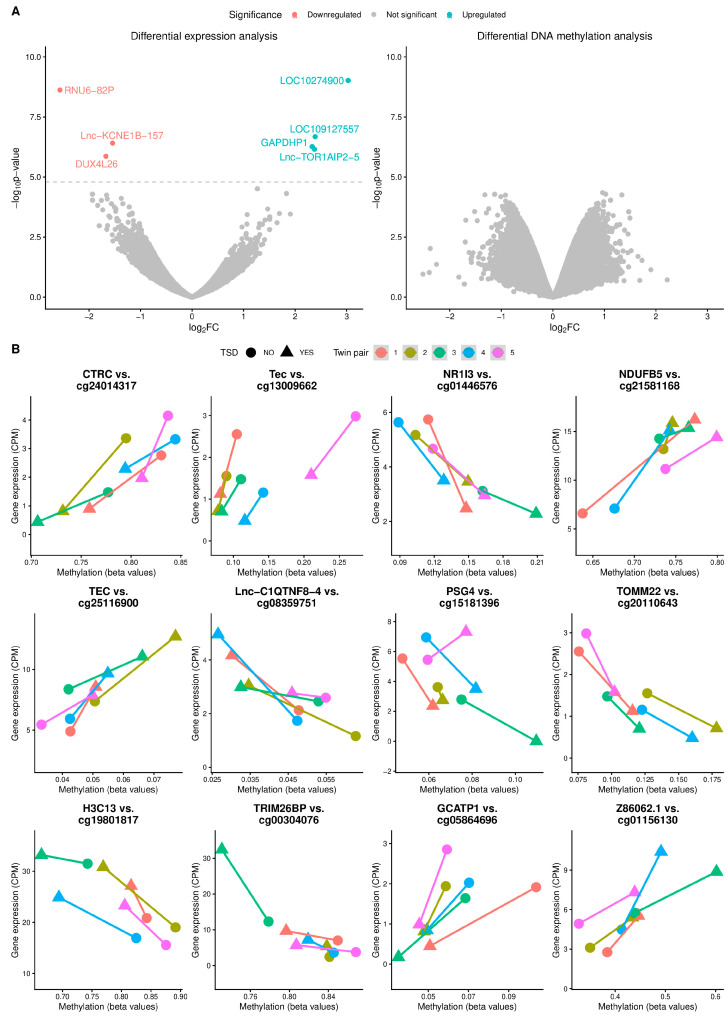 Figure 1
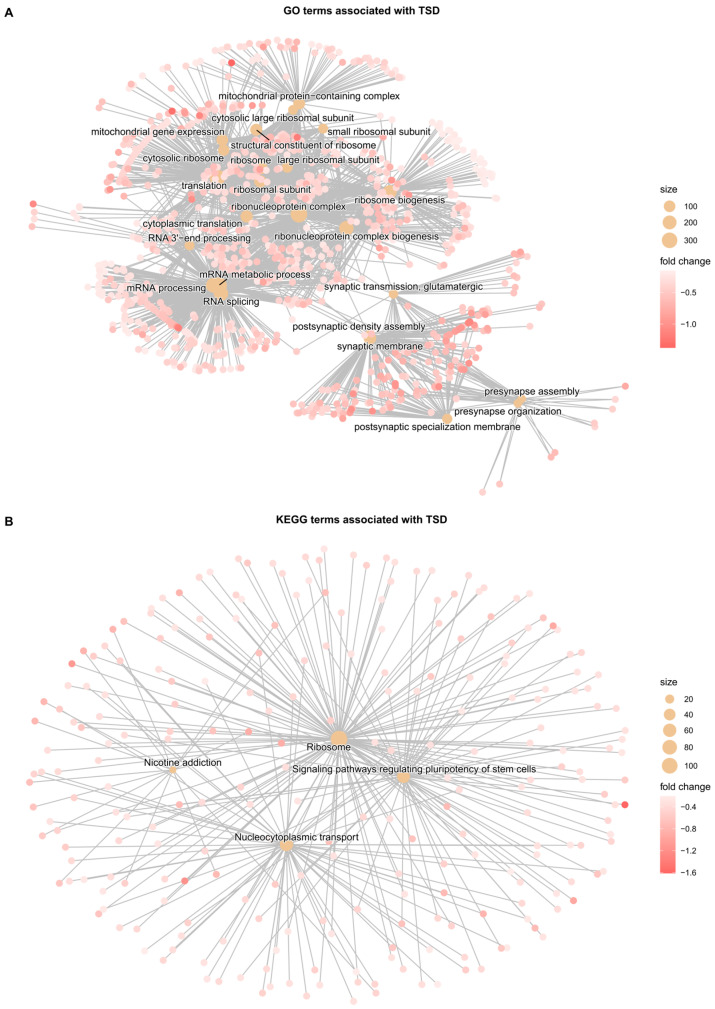 Figure 2
Peer Reviews
No public reviews on file for this paper yet. If you reviewed it on a platform where reviews are public (OpenReview, ICLR, NeurIPS, ICML), you can paste yours below so the community can read it here.
Videos
No videos yet. Explain this paper in a talk, walkthrough, or lecture? Add one.
Taxonomy
TopicsObsessive-Compulsive Spectrum Disorders · Tryptophan and brain disorders · Genetics and Neurodevelopmental Disorders