Hydrazine-Induced Sulfur Vacancies Promote Interfacial Charge Redistribution in ZnS/Gel-Derived TiO2 for Enhanced CO2 Activation and Methanation
Zhongwei Zhang, Shuai Liu, Jiefeng Yan, Yang Meng, Dongming Hu, Fuyan Gao

TL;DR
This study shows how creating sulfur vacancies in a ZnS/TiO2 photocatalyst improves CO2 conversion into methane by enhancing charge separation and CO2 activation.
Contribution
The novel use of hydrazine-induced sulfur vacancies to synergistically enhance interfacial charge redistribution and CO2 methanation selectivity.
Findings
The ZnS/gel-derived TiO2-0.48 composite achieved 6.76 μmol·g−1·h−1 CH4 and 14.47 μmol·g−1·h−1 CO yields with 31.8% CH4 selectivity.
Sulfur vacancies reduced the energy barrier for *COOH formation from +0.51 eV to +0.21 eV, promoting CO2 activation.
A Z-scheme-compatible charge migration model was proposed to explain the enhanced redox potentials and CO2 methanation.
Abstract
Defect engineering in semiconductor heterojunctions offers a promising route for enhancing the selectivity of photocatalytic CO2 conversion. In this work, a ZnS/gel-derived TiO2 photocatalyst featuring sulfur vacancies introduced via hydrazine hydrate (N2H4) treatment is developed. XRD, HRTEM, and XPS analyses confirm the formation of a crystalline heterointerface and a defect-rich ZnS surface, enabling effective interfacial electronic modulation. The optimized ZnS/gel-derived TiO2-0.48 composite achieves CH4 and CO yields of 6.76 and 14.47 μmol·g−1·h−1, respectively, with a CH4 selectivity of 31.8% and an electron selectivity of 65.1%, clearly outperforming pristine TiO2 and the corresponding single-component catalysts under identical conditions. Photoluminescence quenching, enhanced photocurrent response, and reduced charge-transfer resistance indicate significantly improved…
Genes, proteins, chemicals, diseases, species, mutations and cell lines named across the full text — each resolved to its canonical identifier and authoritative record.
Click any figure to enlarge with its caption.
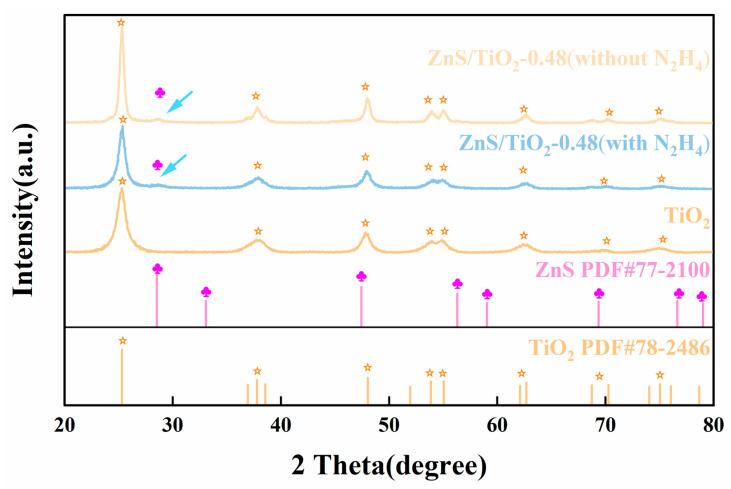 Figure 1
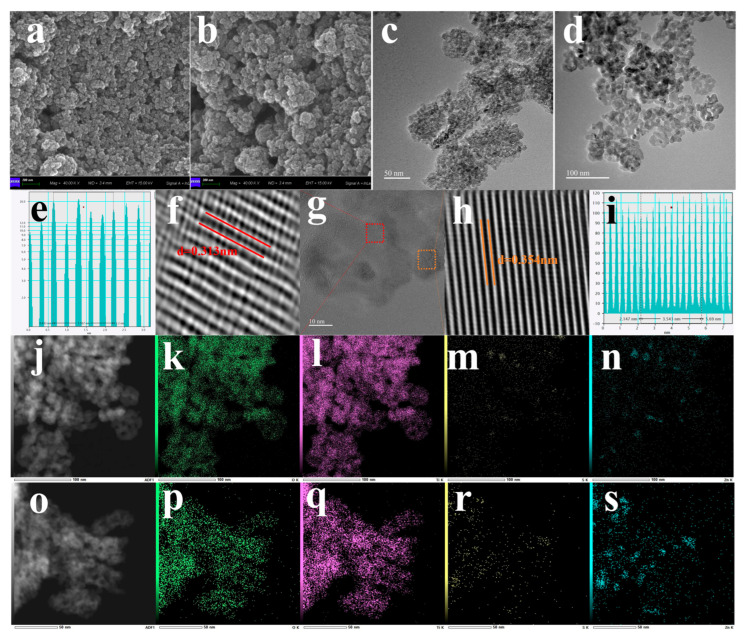 Figure 2
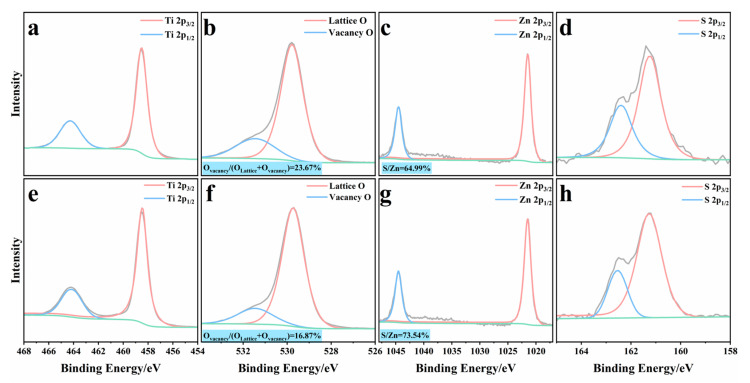 Figure 3
 Figure 4
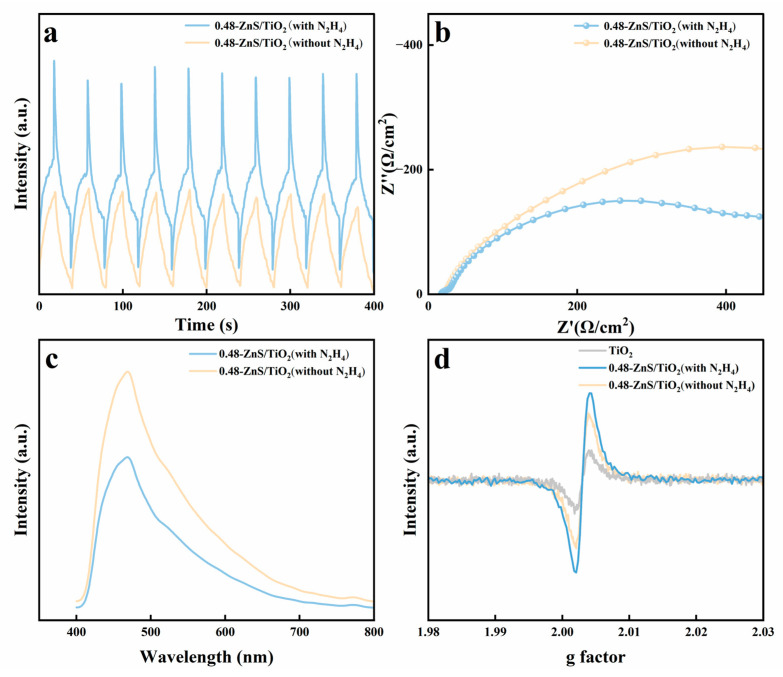 Figure 5
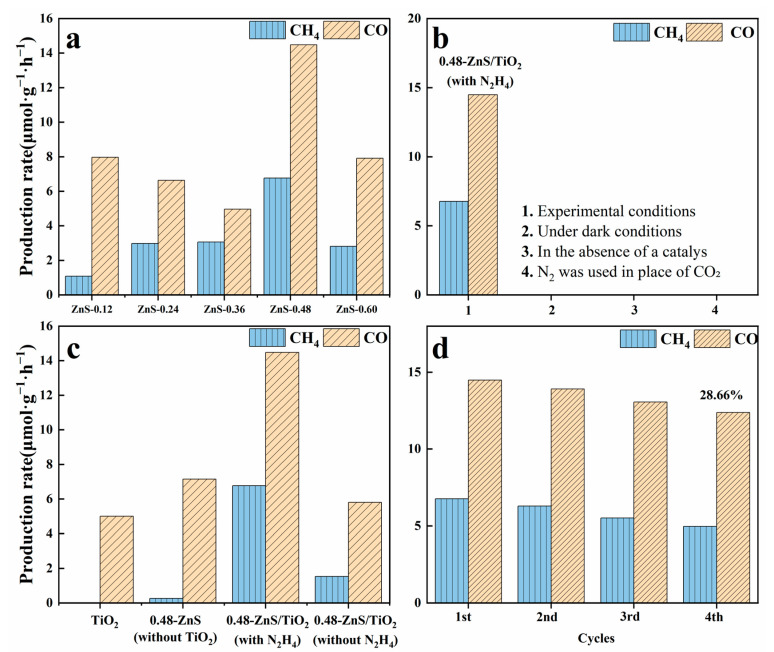 Figure 6
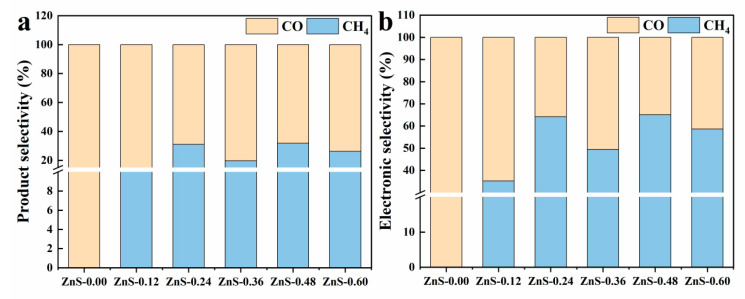 Figure 7
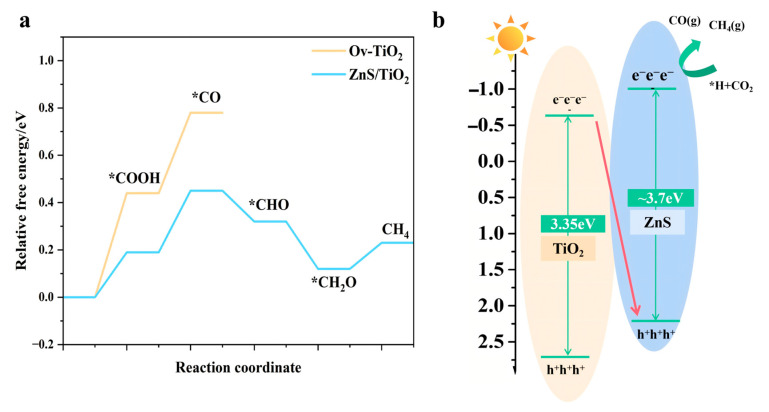 Figure 8
Peer Reviews
No public reviews on file for this paper yet. If you reviewed it on a platform where reviews are public (OpenReview, ICLR, NeurIPS, ICML), you can paste yours below so the community can read it here.
Videos
No videos yet. Explain this paper in a talk, walkthrough, or lecture? Add one.
Taxonomy
TopicsAdvanced Photocatalysis Techniques · TiO2 Photocatalysis and Solar Cells · CO2 Reduction Techniques and Catalysts