Development of Calcium Alginate Hydrogels with Chlorella, Carob (Ceratonia siliqua L.) and Encapsulated Probiotics in Edible Jelly-Gums with Enhanced Bioactivity
Katerina Pyrovolou, Eleni Charalampia Panopoulou, Christina Tsogka, Alexandra Sklavou, Eleni Gogou, Irini F. Strati, Spyros J. Konteles, Anthimia Batrinou

TL;DR
Researchers created edible jelly gums with probiotics and plant-based ingredients that have better antioxidant properties and probiotic survival than commercial products.
Contribution
A novel edible jelly gum formulation using encapsulated probiotics, Chlorella, and carob with enhanced bioactivity and probiotic viability is introduced.
Findings
Encapsulated jelly gums showed higher phenolic content and antioxidant activity compared to commercial products.
Microencapsulation improved probiotic survival by 14% reduction in Logcfu/mL after 18 h of simulated digestion.
The jelly gums had favorable texture and sensory characteristics with non-perceptible bead presence.
Abstract
This study aimed to develop functional calcium alginate hydrogels incorporating Chlorella vulgaris, carob (Ceratonia siliqua L.), and encapsulated Lactobacillus acidophilus in edible jelly gums with enhanced bioactivity and probiotic viability. Laboratory-prepared jellies containing encapsulated probiotics (encapsulated LAB-Jelly) and those with free cells (LAB-Jelly) were compared with a commercial jelly sample. The formulations were evaluated for phenolic content, antioxidant capacity and antiradical activity, texture, sensory characteristics, and probiotic survival under simulated gastrointestinal conditions. The encapsulated LAB-Jelly exhibited significantly higher total phenolic content (4.6 ± 0.1 mg GAE/g) and antioxidant activity (25.9 ± 0.1 mg Fe+2/g) compared to the commercial product, mainly due to the presence of carob and Chlorella. Texture analysis showed lower hardness…
Genes, proteins, chemicals, diseases, species, mutations and cell lines named across the full text — each resolved to its canonical identifier and authoritative record.
Click any figure to enlarge with its caption.
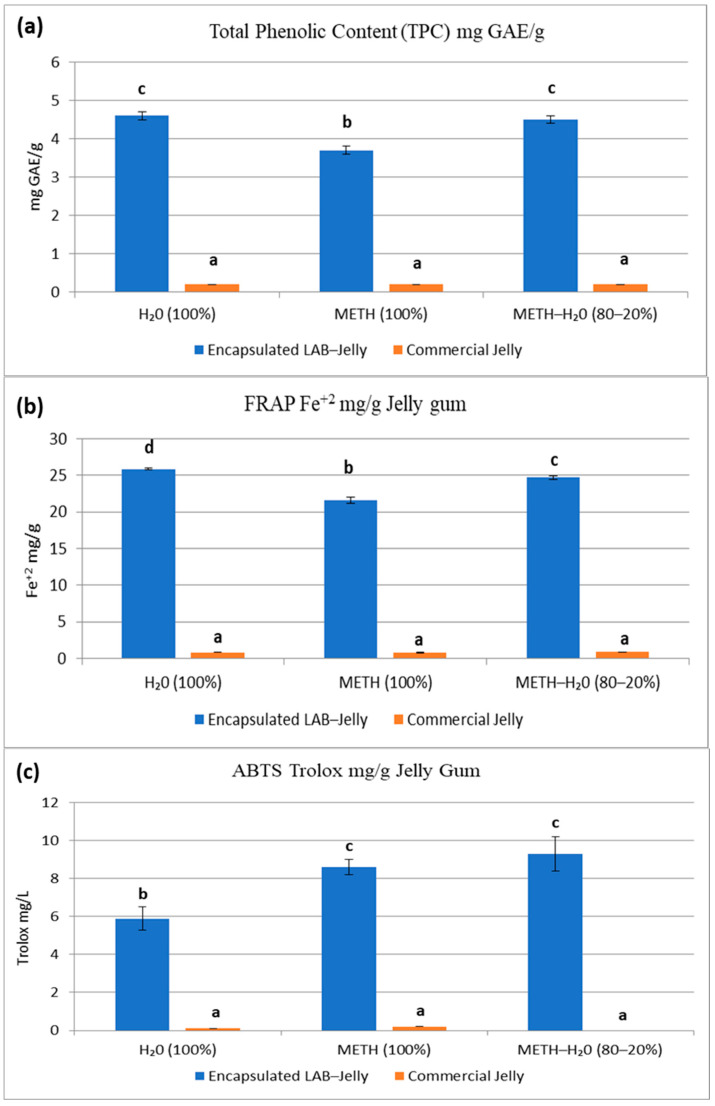 Figure 1
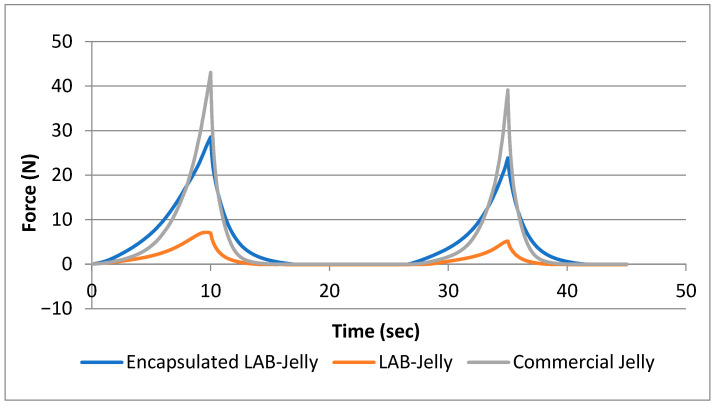 Figure 2
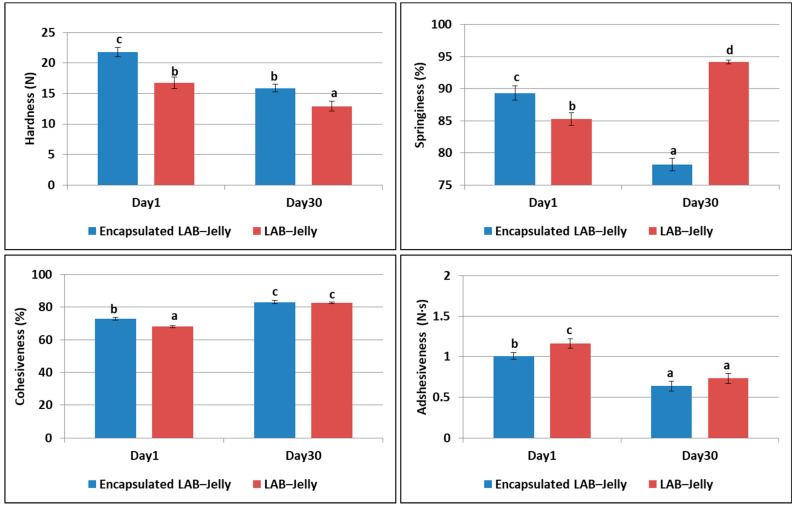 Figure 3
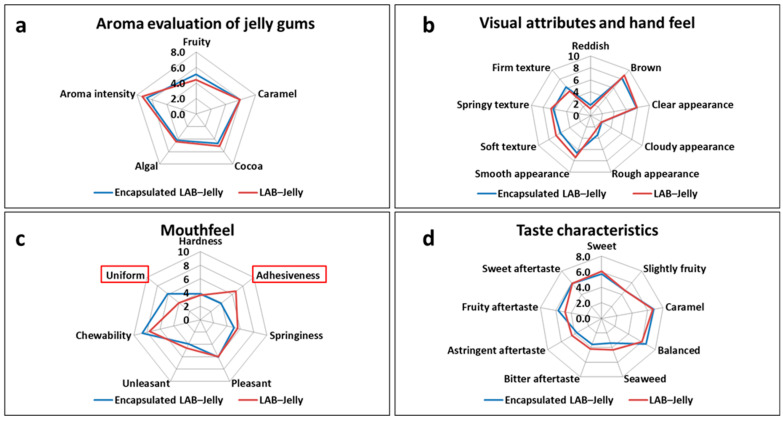 Figure 4
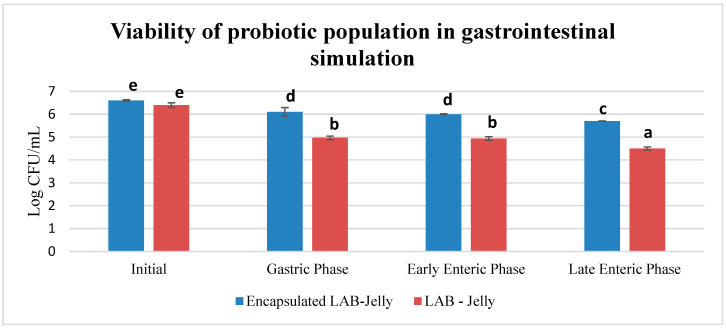 Figure 5
 Figure 6
 Figure 7
 Figure 8
Peer Reviews
No public reviews on file for this paper yet. If you reviewed it on a platform where reviews are public (OpenReview, ICLR, NeurIPS, ICML), you can paste yours below so the community can read it here.
Videos
No videos yet. Explain this paper in a talk, walkthrough, or lecture? Add one.
Taxonomy
TopicsPolysaccharides Composition and Applications · Probiotics and Fermented Foods · Microencapsulation and Drying Processes