Anticancer Activity of 2,3′-Dihydroxy-5′-Methoxystilbene Against NSCLC Cell Lines Through AKT-Dependent Mechanisms: A Comprehensive In Vitro and Computational Analysis
Phisit Pouyfung, Nonthalert Lertnitikul, Noriyoshi Ogino, Achitphol Chookaew, Varisa Pongrakhananon, Piriya Chonsut, Natthaporn Sueangoen, Suwichak Chaisit

TL;DR
A new compound shows strong anticancer effects on lung cancer cells by targeting the AKT pathway and has low toxicity to normal cells.
Contribution
The study identifies a selective AKT-targeting stilbene with context-dependent chemosensitizing activity in NSCLC cells.
Findings
The compound significantly reduced the viability of NSCLC cells with minimal toxicity to normal fibroblasts.
It induced apoptosis and suppressed proliferation, migration, and colony formation in a dose-dependent manner.
Molecular studies showed AKT-dependent activity, with reduced p-AKT and p-GSK3β levels in treated cells.
Abstract
Lung cancer remains a major clinical challenge, with therapy resistance in non-small-cell lung cancer (NSCLC) driving the search for novel selective agents. This study demonstrates that 2,3′-dihydroxy-5′-methoxystilbene exhibits significant anticancer activity in NSCLC cell lines (A549, H23, and H460) while displaying substantially lower toxicity toward normal NIH/3T3 fibroblasts. The compound reduced the viability of H23 and H460 cells after 48 h. (IC50: 23.39 ± 3.27 μM and 24.20 ± 2.61 μM, respectively), with NIH/3T3 cells remaining comparatively resistant (IC50 > 100 μM). At 25 μM, it suppressed proliferation by approximately 40% in H23, 30% in H460, and 20% in A549 cells, and dose-dependently impaired colony formation and migration, leading to near-complete migration arrest in H460 cells. Apoptosis induction peaked at 19% in H23, 17% in H460, and 8% in A549 cells at 25 μM.…
Genes, proteins, chemicals, diseases, species, mutations and cell lines named across the full text — each resolved to its canonical identifier and authoritative record.
Click any figure to enlarge with its caption.
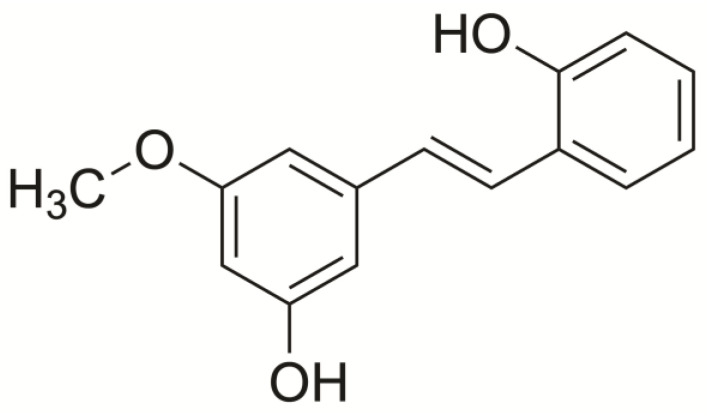 Figure 1
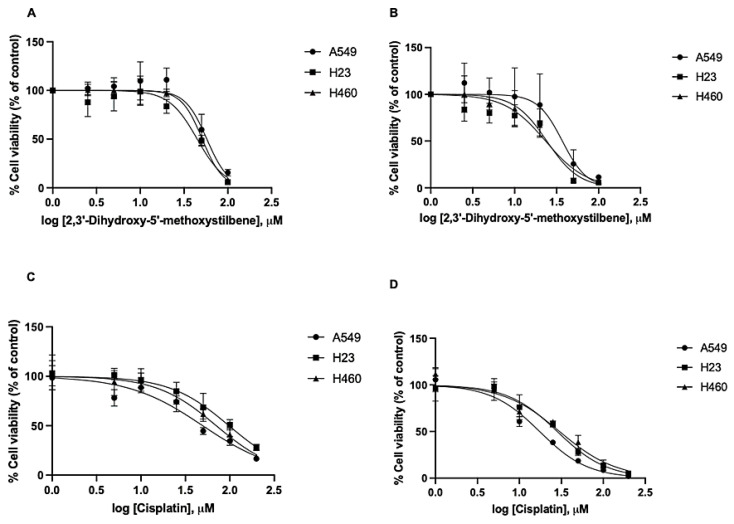 Figure 2
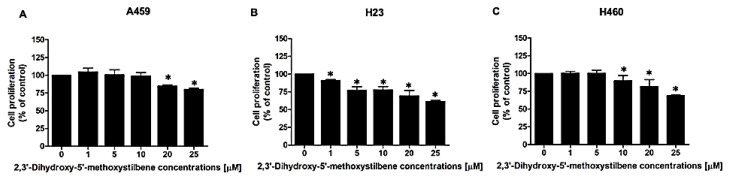 Figure 3
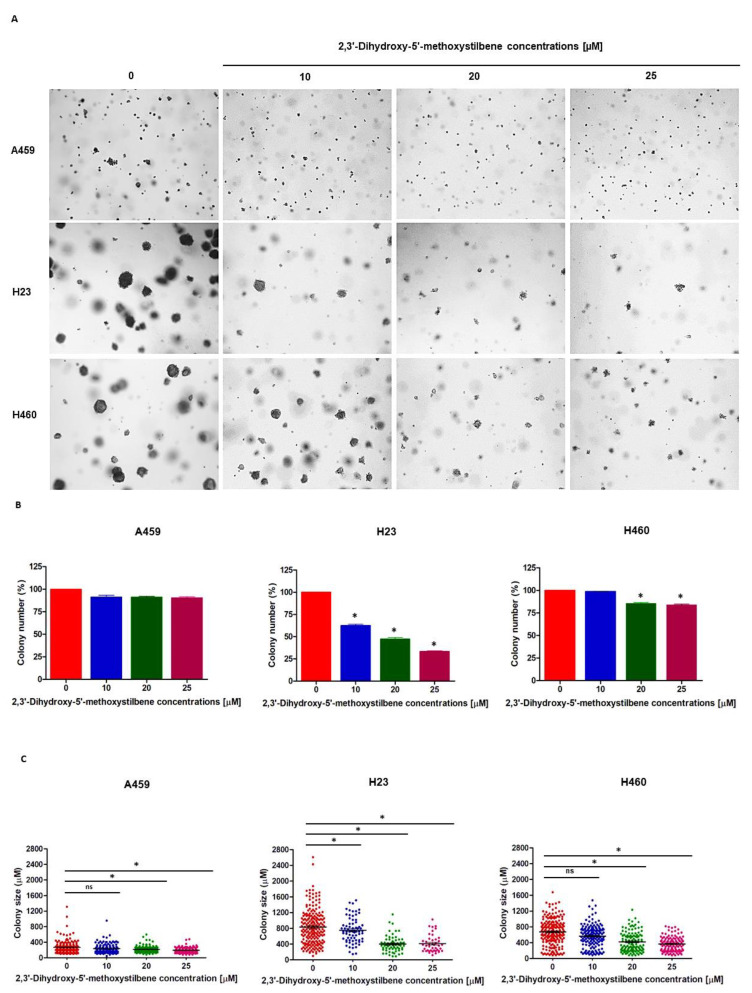 Figure 4
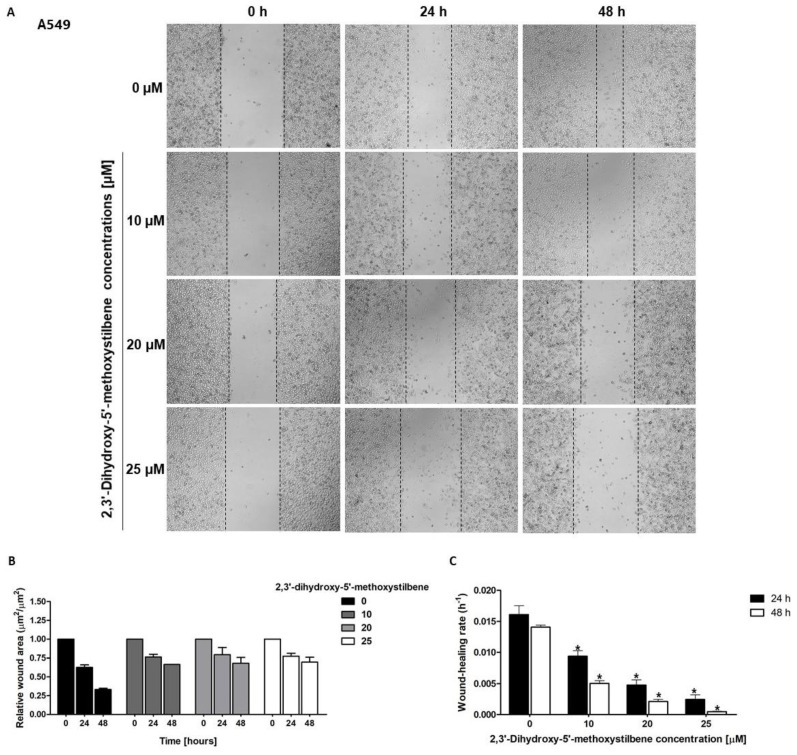 Figure 5
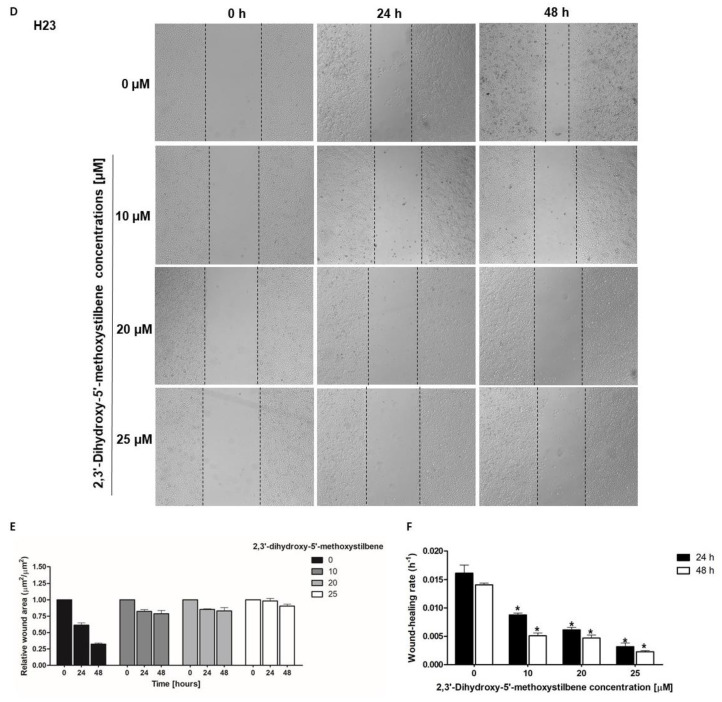 Figure 6
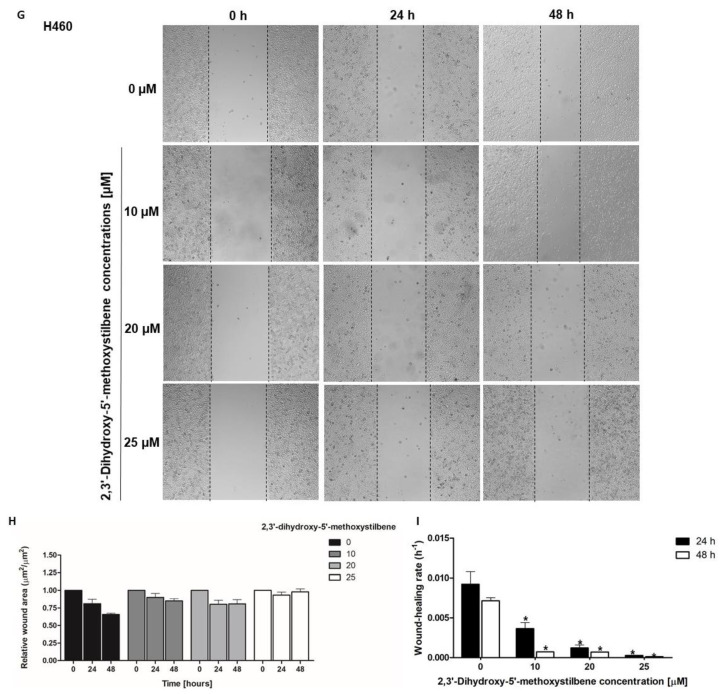 Figure 7
 Figure 8
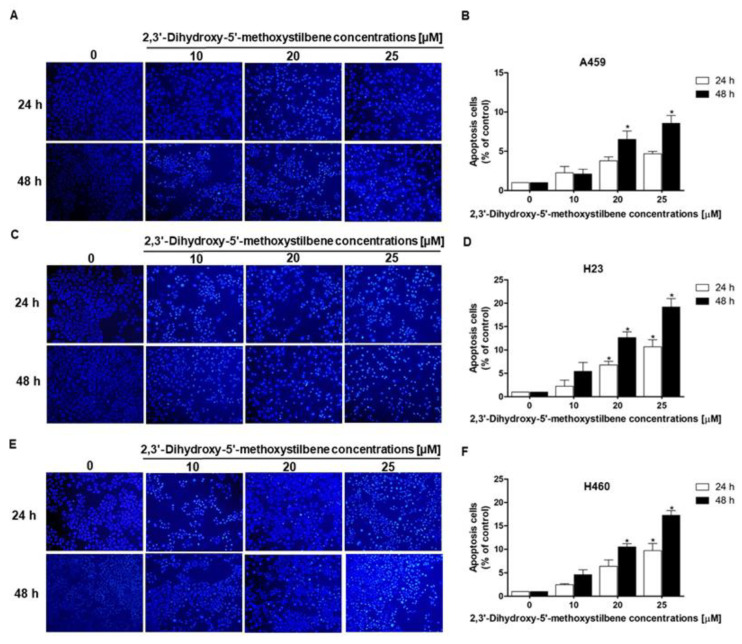 Figure 9
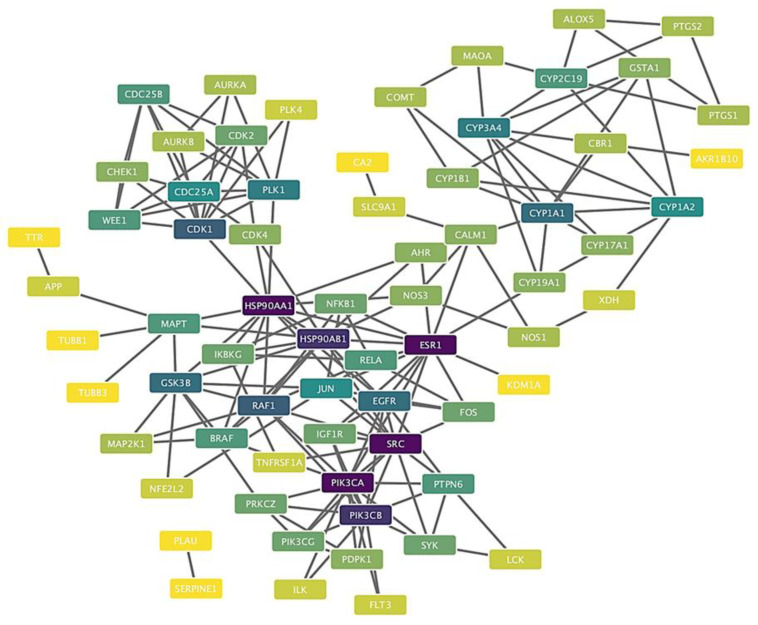 Figure 10
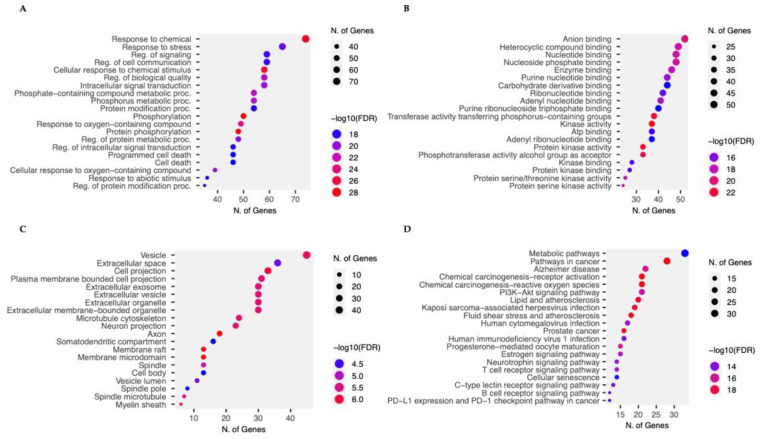 Figure 11
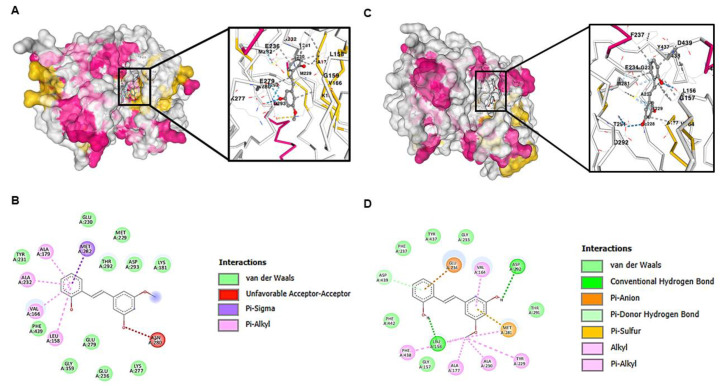 Figure 12
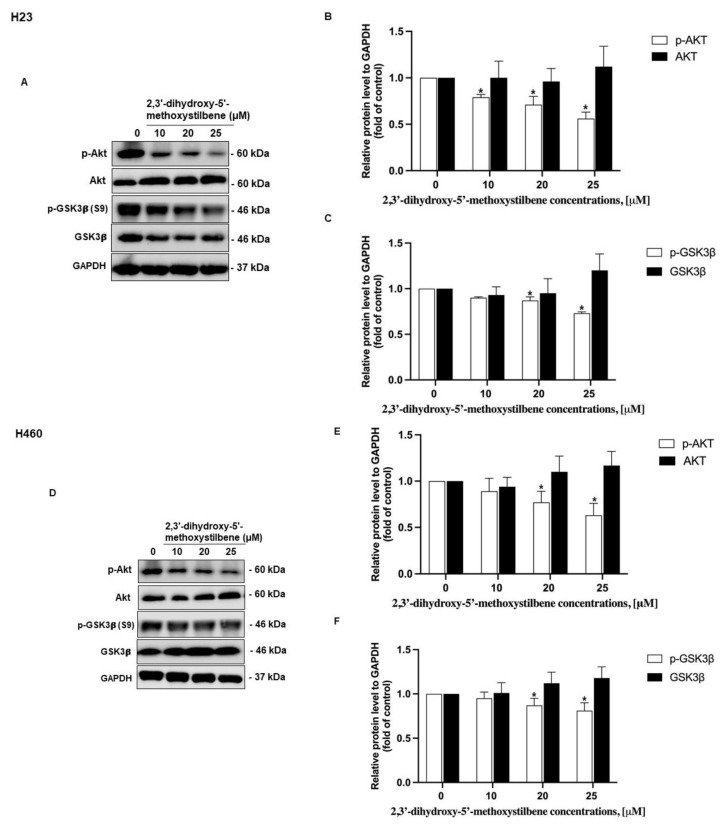 Figure 13
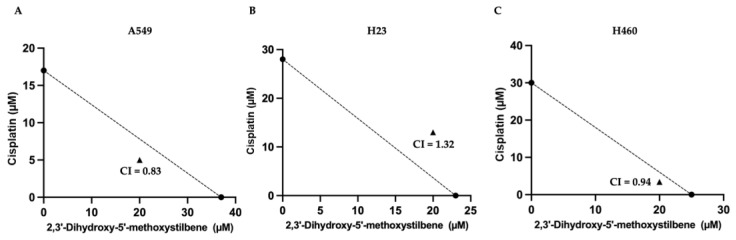 Figure 14
Peer Reviews
No public reviews on file for this paper yet. If you reviewed it on a platform where reviews are public (OpenReview, ICLR, NeurIPS, ICML), you can paste yours below so the community can read it here.
Videos
No videos yet. Explain this paper in a talk, walkthrough, or lecture? Add one.
Taxonomy
TopicsSirtuins and Resveratrol in Medicine · Histone Deacetylase Inhibitors Research · Protein Degradation and Inhibitors