NLRP3 Inflammasome and Polycystic Ovary Syndrome (PCOS): A Novel Profile in Adipose Tissue
Salih Atalah Alenezi, Khalid Alshammari, Raheela Khan, Saad Amer

TL;DR
This study explores the role of the NLRP3 inflammasome in polycystic ovary syndrome (PCOS) by analyzing gene and protein expression in adipose tissue.
Contribution
The study reveals unexpected patterns of NLRP3 inflammasome components in PCOS, suggesting a more complex role than previously assumed.
Findings
CASP-1 gene expression was significantly higher in non-PCOS participants across all adipose depots.
NLRP3 protein levels were upregulated in visceral adipose tissue from non-PCOS individuals.
No significant differences were observed in NLRP3, IL-1β, or PYCARD gene expression between PCOS and non-PCOS groups.
Abstract
Polycystic ovary syndrome (PCOS) is a common endocrine disorder characterized by chronic low-grade inflammation. The NLRP3 inflammasome has been implicated in various inflammatory conditions, but its role in PCOS remains unclear. This study aimed to investigate whether the NLRP3 inflammasome and its associated components, IL-1β, CASP-1, and PYCARD, are involved in the pathogenesis of PCOS. Gene and protein expression levels of NLRP3, IL-1β, CASP-1, and PYCARD were assessed in adipose tissue samples (visceral and subcutaneous) from women with and without PCOS using qPCR and Western blotting. Contrary to our initial hypothesis, CASP-1 gene expression was significantly higher in non-PCOS participants across all adipose depots examined. Similarly, NLRP3 protein levels were significantly upregulated in visceral adipose tissue (VAT) and in combined adipose samples from the non-PCOS group. No…
Genes, proteins, chemicals, diseases, species, mutations and cell lines named across the full text — each resolved to its canonical identifier and authoritative record.
Click any figure to enlarge with its caption.
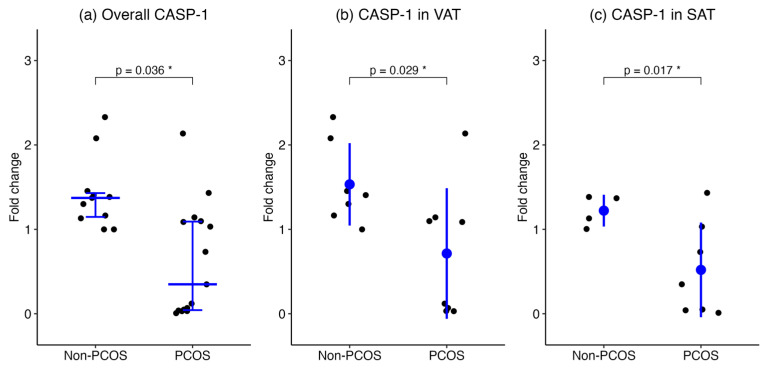 Figure 1
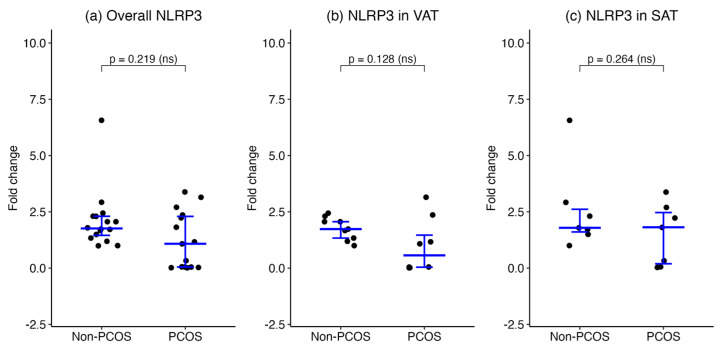 Figure 2
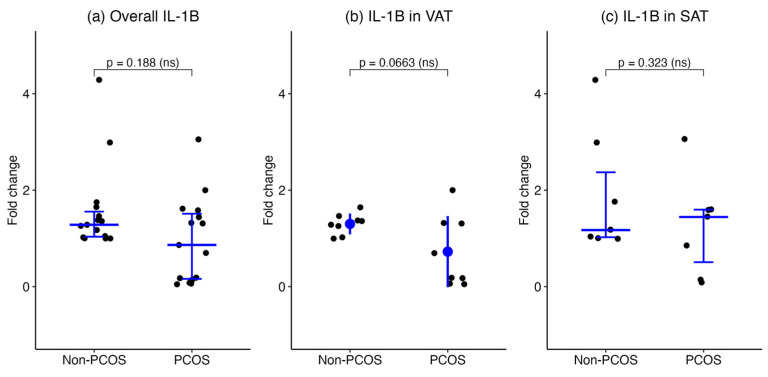 Figure 3
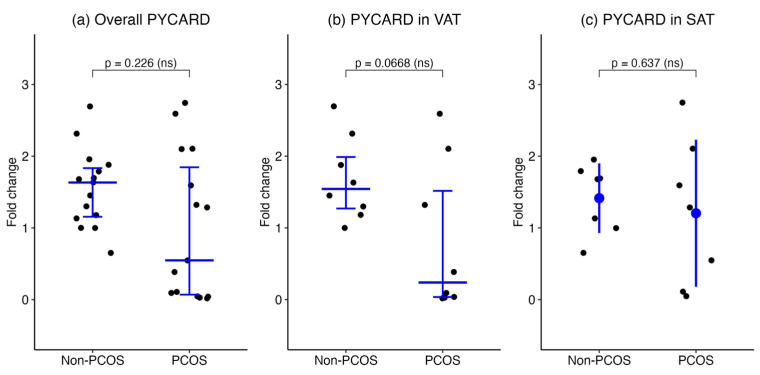 Figure 4
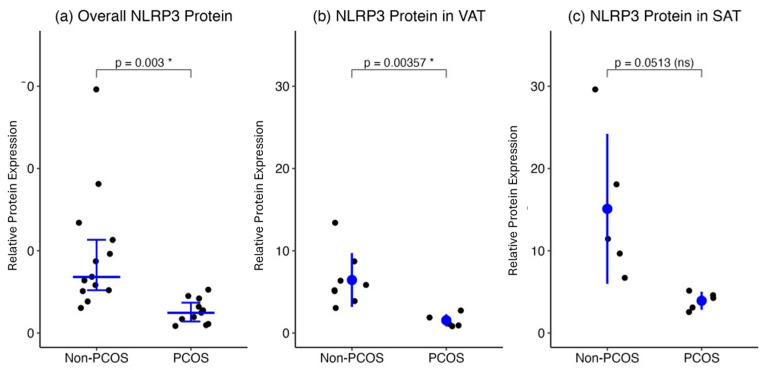 Figure 5
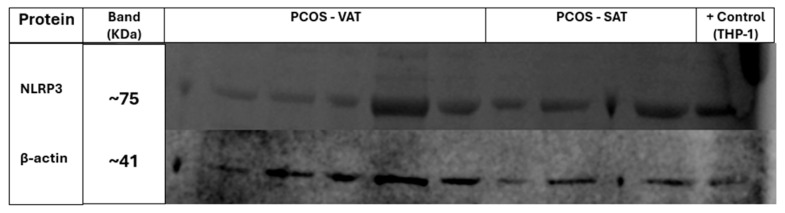 Figure 6
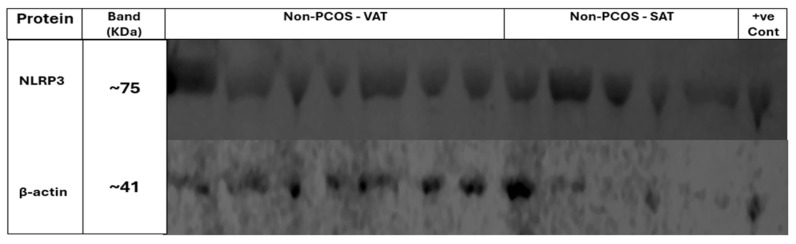 Figure 7
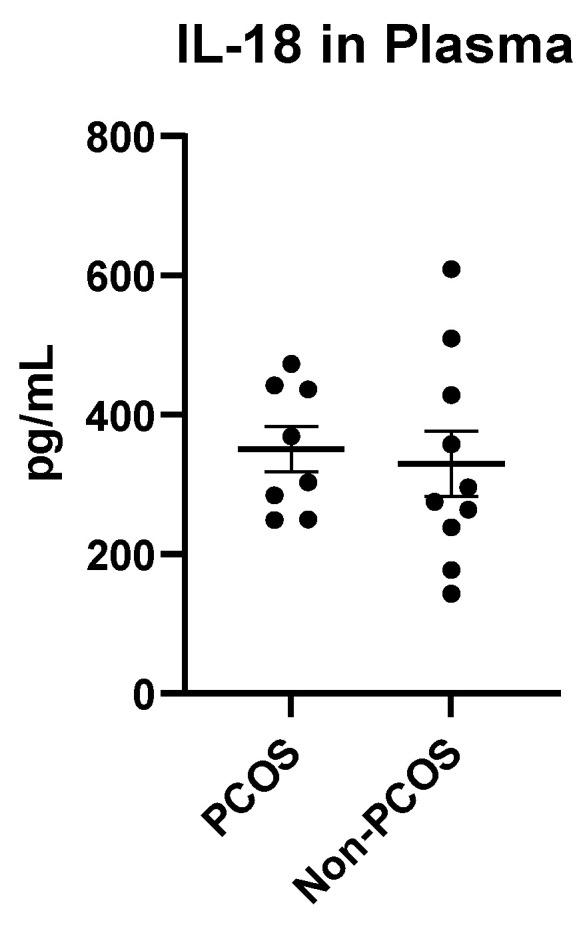 Figure 8
Peer Reviews
No public reviews on file for this paper yet. If you reviewed it on a platform where reviews are public (OpenReview, ICLR, NeurIPS, ICML), you can paste yours below so the community can read it here.
Videos
No videos yet. Explain this paper in a talk, walkthrough, or lecture? Add one.
Taxonomy
TopicsOvarian function and disorders · Adipokines, Inflammation, and Metabolic Diseases · Reproductive Biology and Fertility