Temperature-Dependent Fungal Diversity, Storage Quality, and Processing Quality of High-Moisture Wheat During Post-Harvest Storage
Yanfei Li, Zihang He, Yan Zhao, Haoxin Lv, Ge Han

TL;DR
This study examines how temperature affects the storage and quality of high-moisture wheat, finding that lower temperatures help maintain quality and reduce mold growth.
Contribution
The study provides new insights into the safe storage of high-moisture wheat by analyzing fungal diversity and quality changes under different temperatures.
Findings
Wheat stored at 15 °C and 20 °C maintained stable storage and processing quality.
Fungal communities shifted from Bipolaris to Cladosporium at lower temperatures and to Aspergillus at higher temperatures.
Mycotoxin levels remained below regulatory limits across all storage temperatures.
Abstract
Higher moisture content in wheat benefits processing but impairs storage stability. Current research on quality changes in high-moisture wheat under varying storage temperatures remains limited. This study systematically evaluated wheat with 14% moisture content stored at 15 °C, 20 °C, 25 °C, and 30 °C over 180 d, assessing quality parameters, mycotoxin levels, and fungal community composition. Results indicated that wheat stored at 15 °C and 20 °C maintained stable storage and processing quality. Meanwhile, the concentrations of aflatoxin B1, deoxynivalenol, and zearalenone in wheat across all storage temperatures remained below their respective regulatory limits of 5.00 μg/kg, 1.00 mg/kg, and 60.00 μg/kg. No visible mold appeared in wheat stored at 15 °C, 20 °C, or 25 °C for 180 d, whereas initial mold characteristics emerged at 30 °C. Fungal community analysis revealed that at 15 °C…
Genes, proteins, chemicals, diseases, species, mutations and cell lines named across the full text — each resolved to its canonical identifier and authoritative record.
Click any figure to enlarge with its caption.
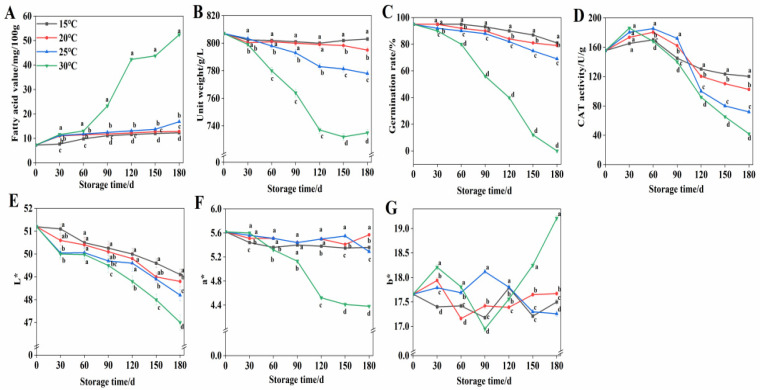 Figure 1
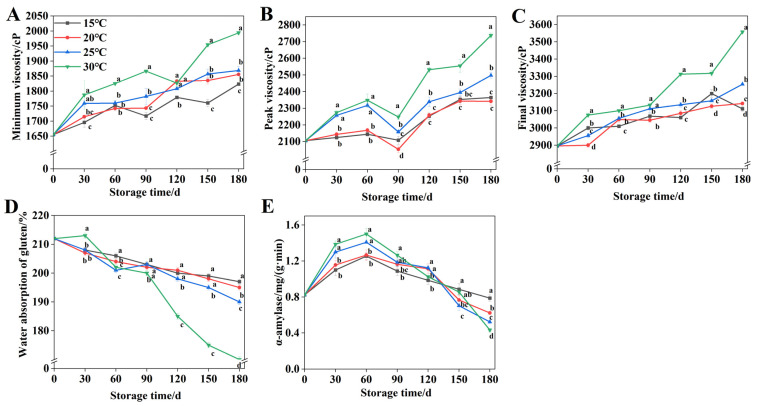 Figure 2
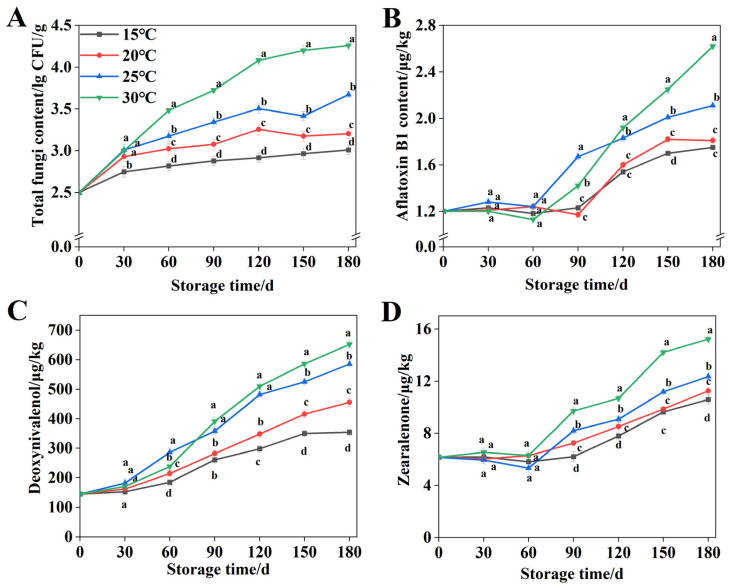 Figure 3
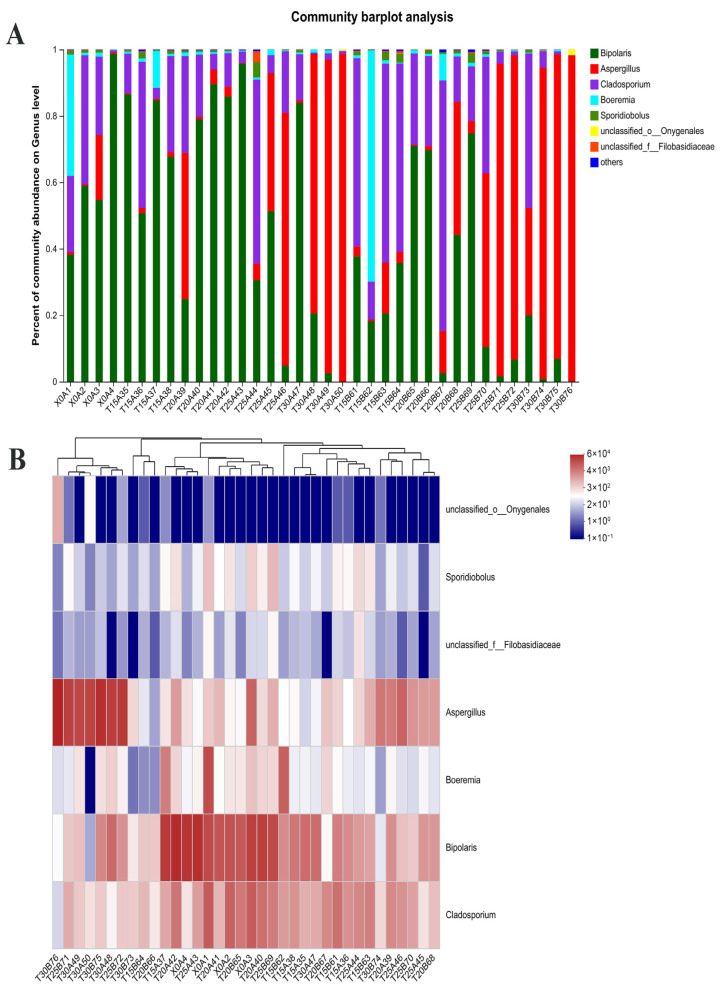 Figure 4
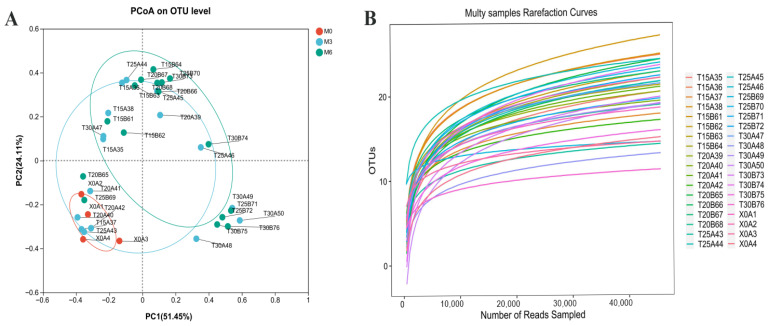 Figure 5
Peer Reviews
No public reviews on file for this paper yet. If you reviewed it on a platform where reviews are public (OpenReview, ICLR, NeurIPS, ICML), you can paste yours below so the community can read it here.
Videos
No videos yet. Explain this paper in a talk, walkthrough, or lecture? Add one.
Taxonomy
TopicsMycotoxins in Agriculture and Food · Listeria monocytogenes in Food Safety · Food composition and properties