Path Selective Photoinduced Energy and Electron Transfer in a Bis(acridinium‐Zn(II) Porphyrin)‐tetrapyridyl Porphyrin Host‐Guest Complex
Federica Ruani, Daniele Veclani, Daniel Sanchez‐Resa, Amy Edo‐Osagie, Geordie Creste, Andrea Barbieri, Valérie Heitz, Henri‐Pierre Jacquot de Rouville, Nicola Armaroli, Barbara Ventura

TL;DR
This paper explores how energy and electron transfer processes in a complex molecule can be controlled by changing the solvent environment.
Contribution
The study reveals how solvent polarity tunes distinct energy and electron transfer pathways in a host-guest complex.
Findings
Polar solvents enable parallel intramolecular and intermolecular electron transfer.
Apolar solvents allow rare energy transfer from the guest to the host's emissive state.
Four distinct excited states were identified and visualized using an inverted pyramid diagram.
Abstract
The 1:1 complex of a bis(acridinium‐Zn(II)porphyrin) host and a tetrapyridyl free‐base porphyrin guest shows a remarkable interplay of energy and electron transfer (eT) processes, finely tuned by the solvent polarity or the selection of the photoexcited component. A more polar environment (CH2Cl2) favors uncommon parallel intramolecular and intermolecular eT processes, while in an apolar solvent (toluene) the intermolecular eT process is hampered. Notably, the apolar environment also enables a rare energy transfer process from the porphyrin guest toward the charge‐transfer emissive state of the tweezer host. In total, no less than four different excited states were probed, which can be sketched by an inverted pyramid diagram highlighting directional path selection. Tuning unusual energy and eT processes in a bis(acridinium‐Zn(II) porphyrin)‐tetrapyridyl porphyrin host‐guest complex.
Genes, proteins, chemicals, diseases, species, mutations and cell lines named across the full text — each resolved to its canonical identifier and authoritative record.
Click any figure to enlarge with its caption.
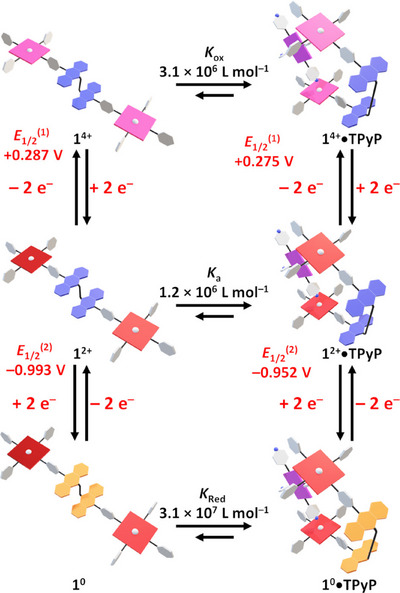 Figure 1
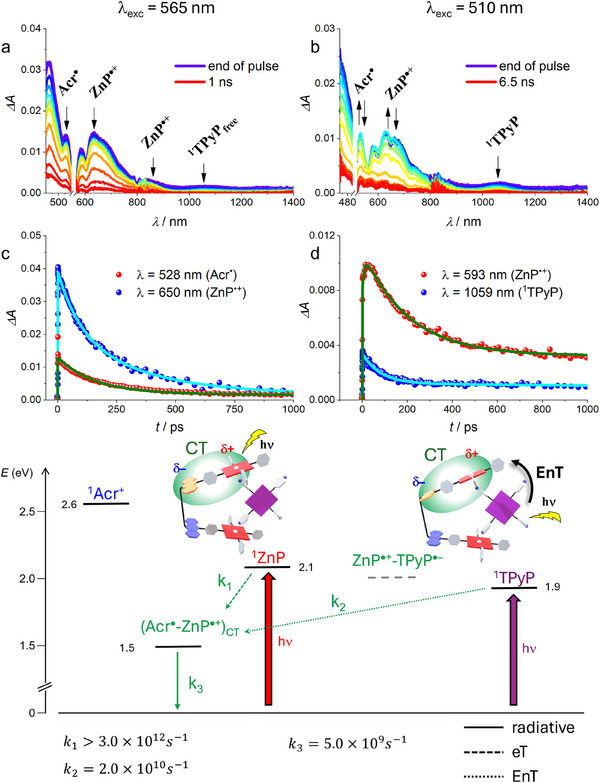 Figure 2
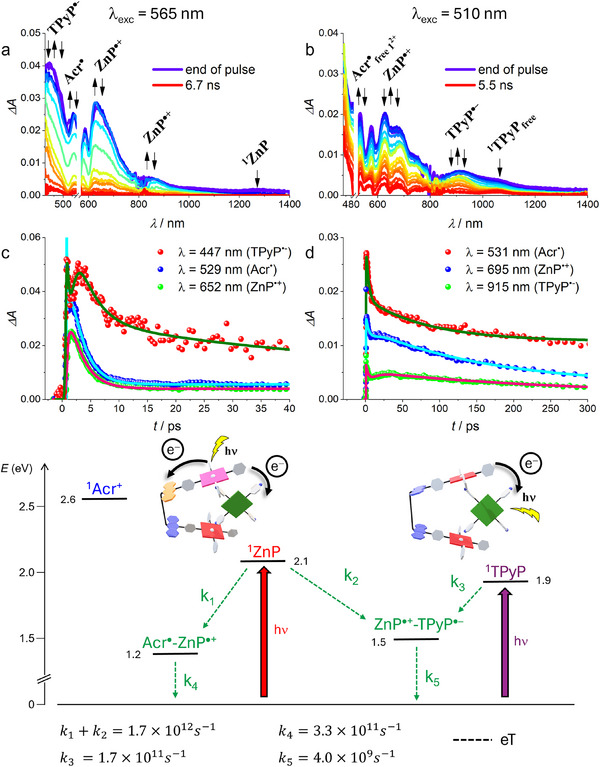 Figure 3
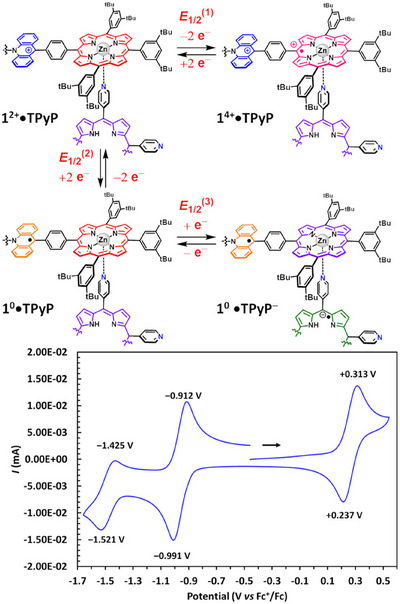 Figure 4
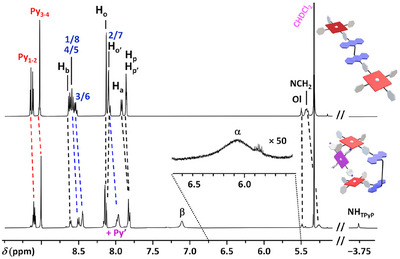 Figure 5
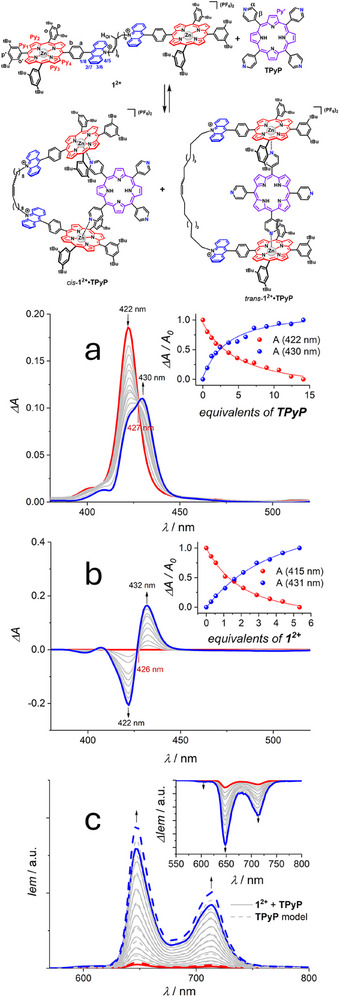 Figure 6
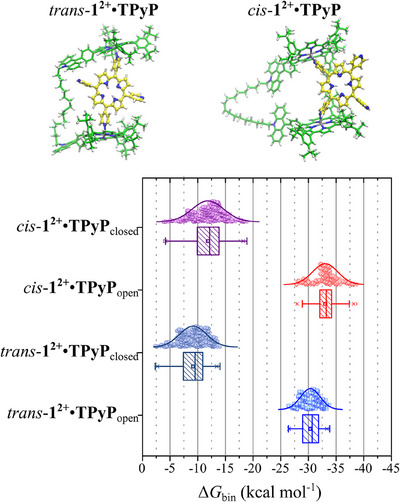 Figure 7
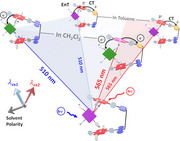 Figure 8
Peer Reviews
No public reviews on file for this paper yet. If you reviewed it on a platform where reviews are public (OpenReview, ICLR, NeurIPS, ICML), you can paste yours below so the community can read it here.
Videos
No videos yet. Explain this paper in a talk, walkthrough, or lecture? Add one.
Taxonomy
TopicsPorphyrin and Phthalocyanine Chemistry · Photosynthetic Processes and Mechanisms · Photochemistry and Electron Transfer Studies