Identification and Validation of Tissue-Specific Housekeeping Markers for the Amazon River Prawn Macrobrachium amazonicum (Heller, 1862)
Gabriel Monteiro de Lima, Mônica Andressa Leite Rodrigues, Rômulo Veiga Paixão, Ítalo Lutz, Manoel Alessandro Borges Aviz, Janieli do Socorro Amorim da Luz Sousa, Bruna Ramalho Maciel, Luciano Domingues Queiroz, Carlos Murilo Tenório Maciel, Iracilda Sampaio

TL;DR
This study identifies and validates tissue-specific housekeeping genes for the Amazon River prawn, improving accuracy in gene expression analysis.
Contribution
The study provides the first validated set of tissue-specific housekeeping genes for Macrobrachium amazonicum.
Findings
RPL18 and 18S were the most stable housekeeping genes across tissues.
GAPDH performed poorly as a reference gene in most tissues.
β-actin was most suitable only for ovarian tissue.
Abstract
Background/Objectives: The selection and validation of species-specific housekeeping genes (HKGs) have become increasingly common in functional genomics, with application of quantitative Polymerase Chain Reaction (qPCR) or cDNA-based qPCR (RT-qPCR). Despite the Macrobrachium amazonicum having RNA-seq studies available, there are still no data on the most stable and consistent HKGs for use in relative gene expression analyses. Therefore, the present study aimed to identify and validate seven HKGs in M. amazonicum: Eukaryotic Translation Initiation Factor (EIF), 18S ribosomal RNA (18S), Ribosomal Protein L18 (RPL18), β-actin, α-tubulin (α-tub), Elongation Factor 1-α (EF-1α), and Glyceraldehyde-3-phosphate Dehydrogenase (GAPDH). Methods: The HKGs were identified in the M. amazonicum transcriptome, characterized for identity confirmation, and compared against public databases. Subsequently,…
Genes, proteins, chemicals, diseases, species, mutations and cell lines named across the full text — each resolved to its canonical identifier and authoritative record.
Click any figure to enlarge with its caption.
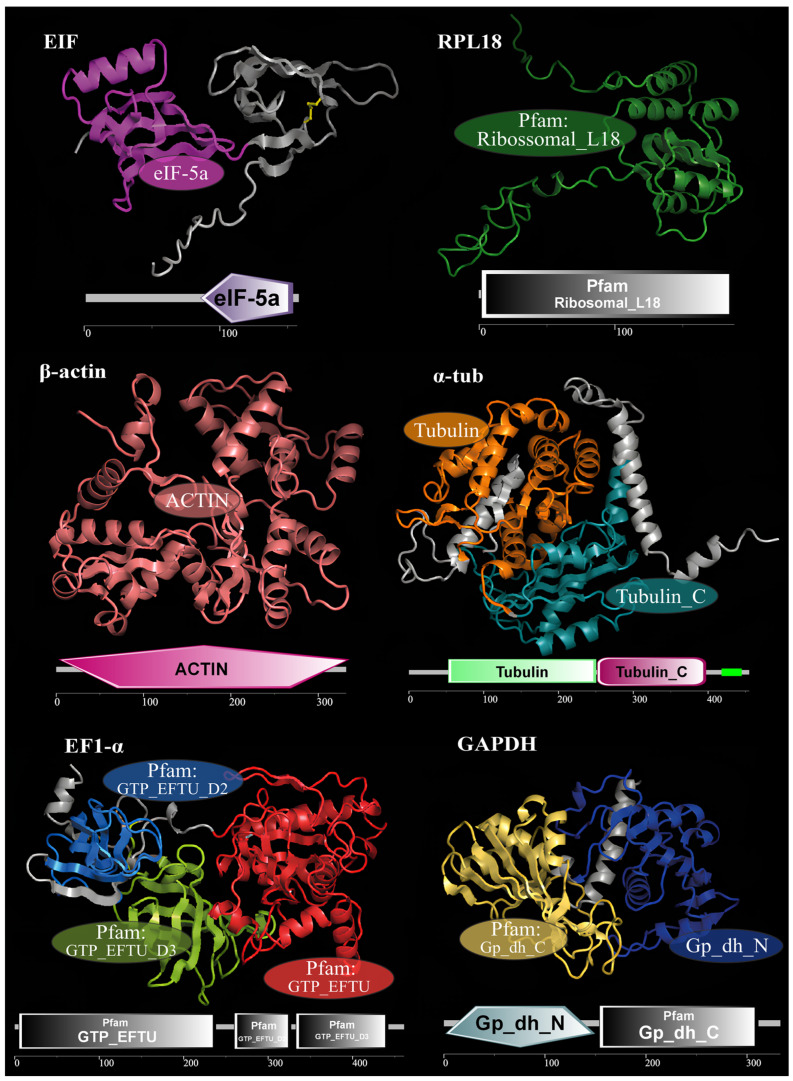 Figure 1
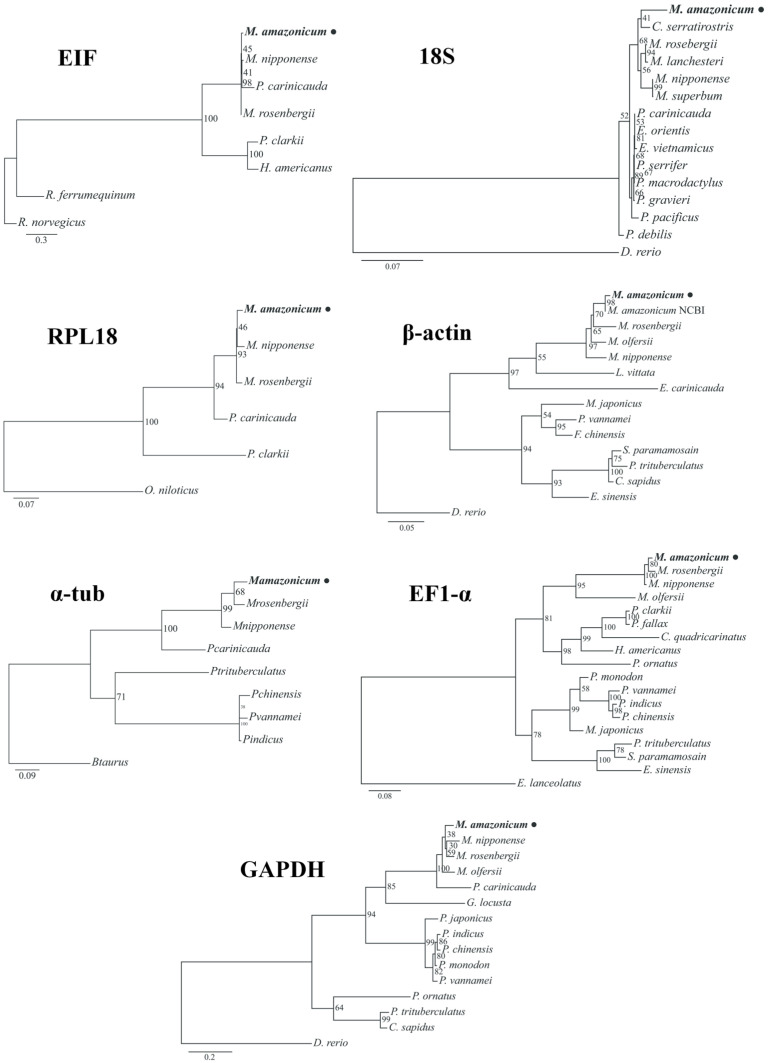 Figure 2
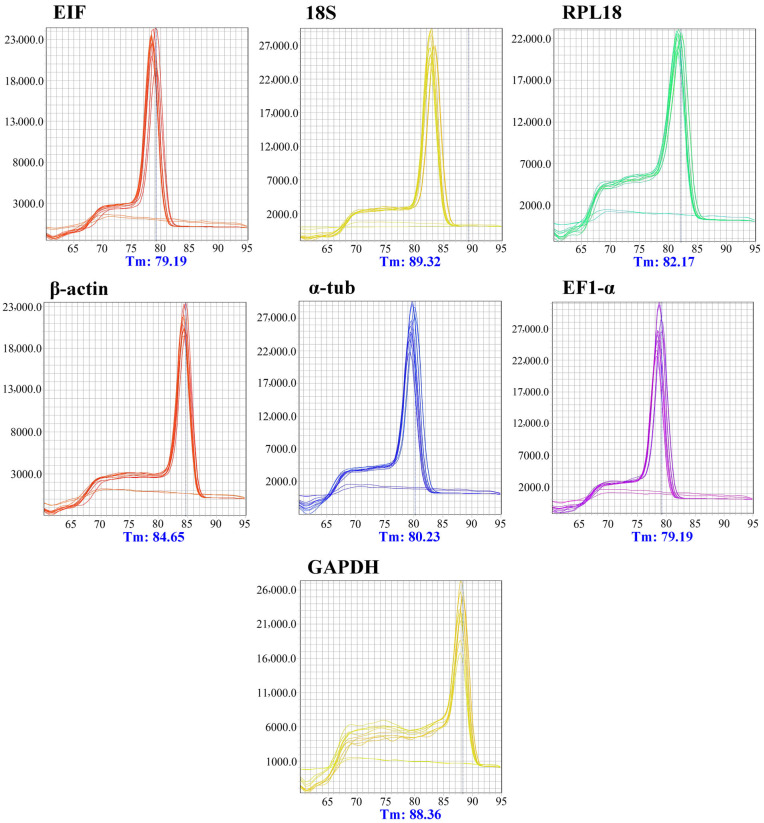 Figure 3
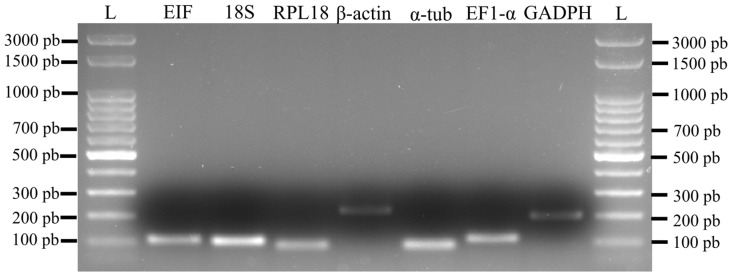 Figure 4
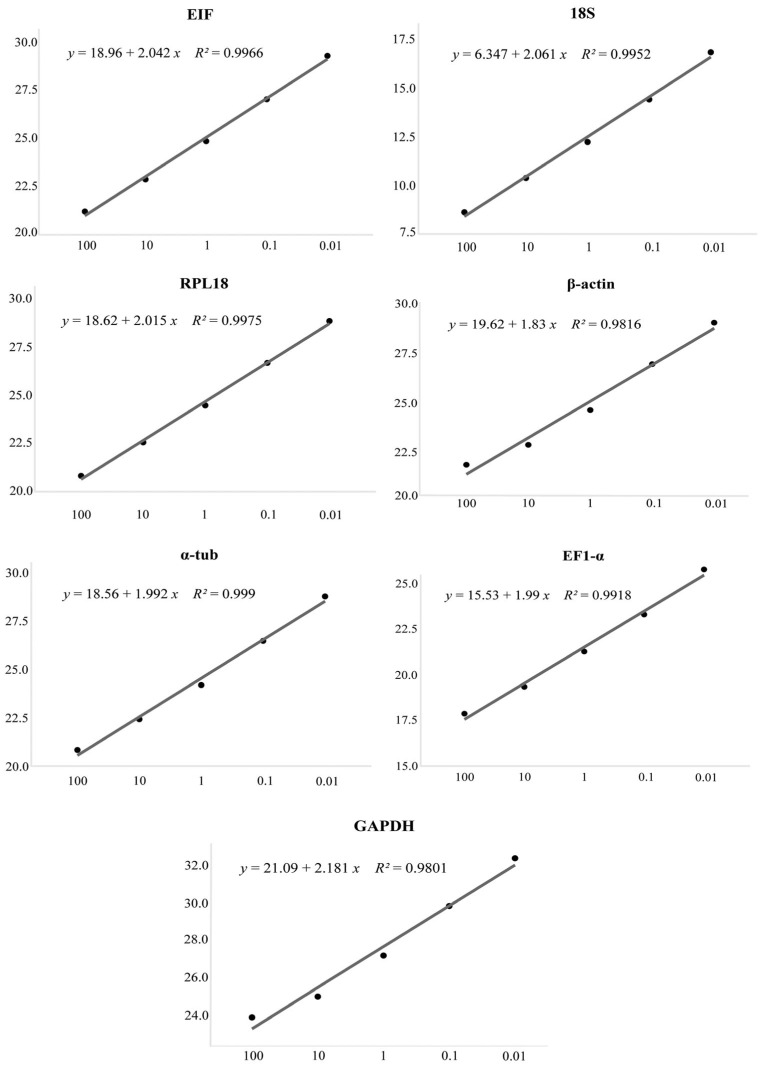 Figure 5
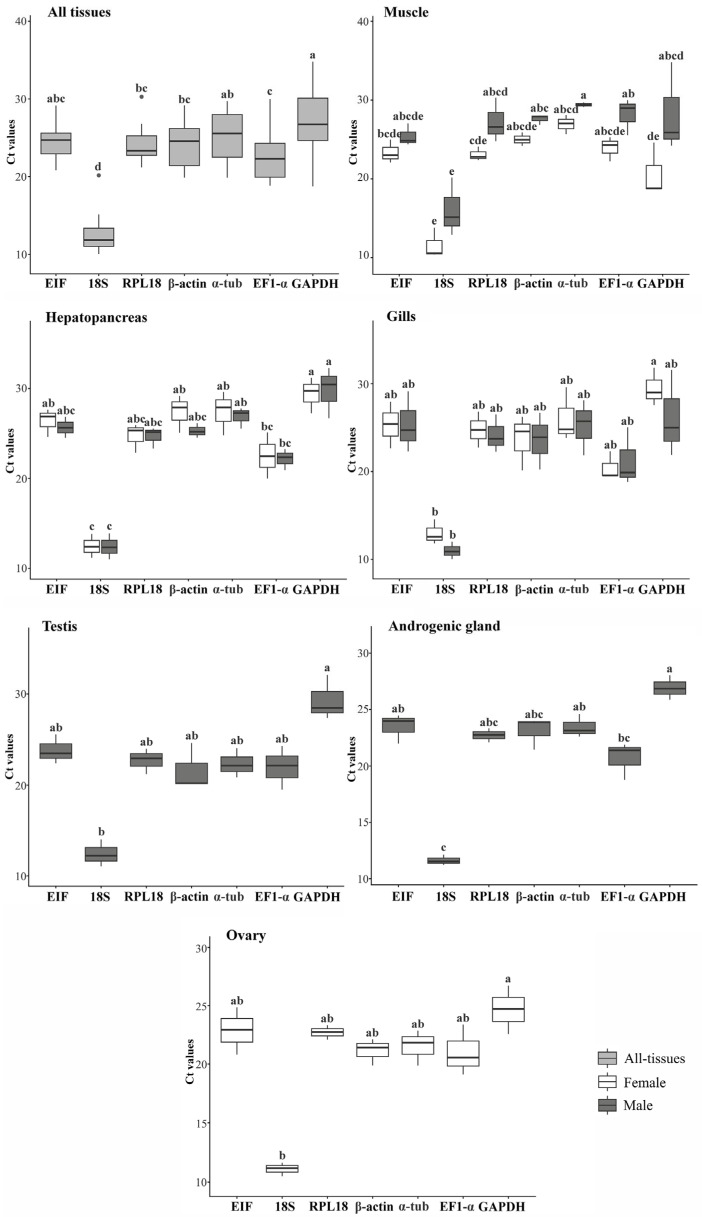 Figure 6
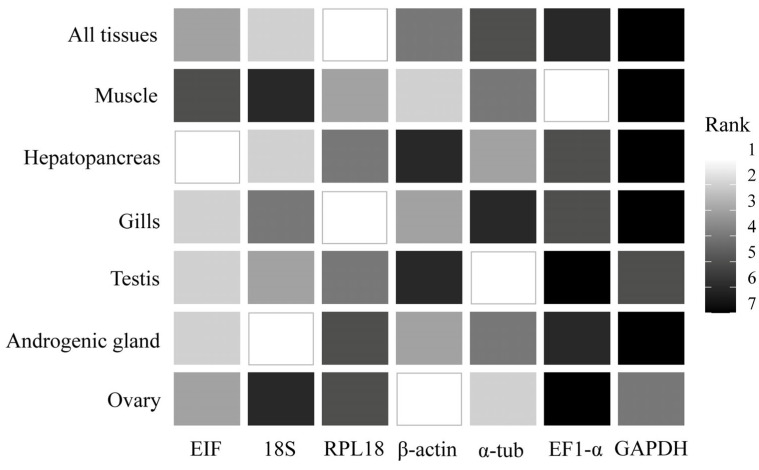 Figure 7
Peer Reviews
No public reviews on file for this paper yet. If you reviewed it on a platform where reviews are public (OpenReview, ICLR, NeurIPS, ICML), you can paste yours below so the community can read it here.
Videos
No videos yet. Explain this paper in a talk, walkthrough, or lecture? Add one.
Taxonomy
TopicsIdentification and Quantification in Food · Molecular Biology Techniques and Applications · Environmental DNA in Biodiversity Studies