Perceptions of Individuals/Patients with Temporomandibular Disorders About Their Diagnosis, Information Seeking and Treatment Expectations: A Comparative Qualitative Study of Brazilian and Spanish Individuals
Luana Maria Ramos Mendes, María Palacios-Ceña, Domingo Palacios-Ceña, María-Luz Cuadrado, Farzin Falahat, Miguel Alonso-Juarranz, Jene Carolina Silva Marçal, Milena Dietrich Deitos Rosa, Débora Bevilaqua-Grossi, Lidiane Lima Florencio

TL;DR
This study compares how Brazilian and Spanish individuals with temporomandibular disorders perceive their diagnosis, seek information, and expect treatment, highlighting cultural differences in healthcare experiences.
Contribution
The study provides new insights into cultural variations in TMD patient experiences, emphasizing the need for culturally sensitive healthcare approaches.
Findings
Brazilian participants faced uncertainty about which healthcare professional to consult and had difficulty accessing specialized care.
Spanish participants often sought physical therapists first and viewed them as primary information sources.
Perceptions of treatment effectiveness and disorder etiology varied between the two cultural groups.
Abstract
Background: Considering the significant impact on quality of life and the chronic nature of temporomandibular dysfunction (TMD), seeking healthcare is also part of the reality of individuals with this disorder. However, cultural differences and similarities in the experiences of individuals with TMD have not yet been investigated. This study aimed to describe and compare the experiences, beliefs, and sociocultural factors of Brazilian and Spanish individuals with TMD, focusing on their perceptions of the disorder, diagnostic pathways, information-seeking behaviors, and treatment expectations. Methods: A descriptive qualitative study was conducted. A purposive sample of 50 participants (25 Brazilian, 25 Spanish), aged 18–50 and diagnosed with TMD according to DC/TMD criteria, was recruited. Data were obtained through semi-structured interviews and analyzed using thematic analysis.…
Genes, proteins, chemicals, diseases, species, mutations and cell lines named across the full text — each resolved to its canonical identifier and authoritative record.
Click any figure to enlarge with its caption.
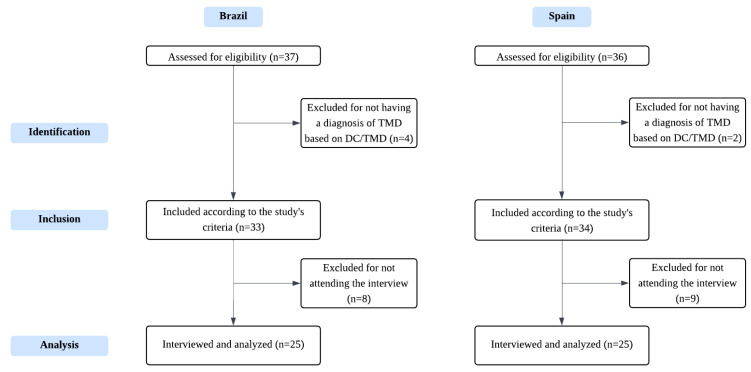 Figure 1
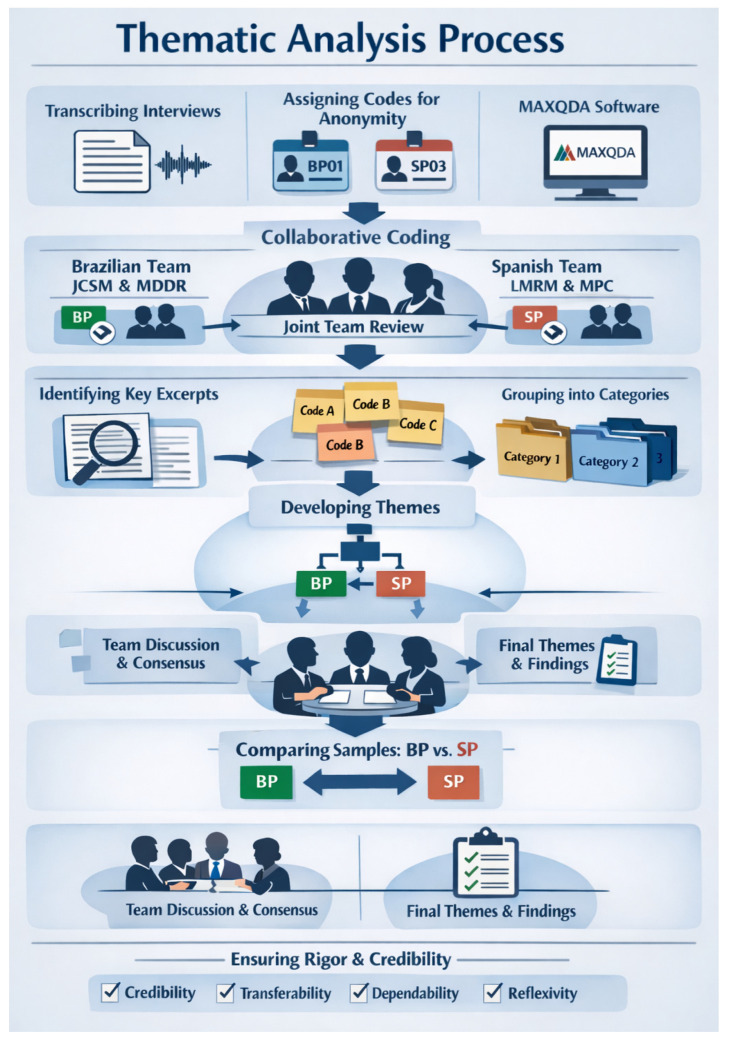 Figure 2
Peer Reviews
No public reviews on file for this paper yet. If you reviewed it on a platform where reviews are public (OpenReview, ICLR, NeurIPS, ICML), you can paste yours below so the community can read it here.
Videos
No videos yet. Explain this paper in a talk, walkthrough, or lecture? Add one.
Taxonomy
TopicsTemporomandibular Joint Disorders · Orthodontics and Dentofacial Orthopedics · Dental Research and COVID-19