From Vine to Sparkle: An Analytical and Sensory Evaluation of Sparkling Wines from Some Romanian Native Grapes
Dragoș-Florin Popa-Grosaru, Bettina-Cristina Buican, Camelia Elena Luchian, Lucia Cintia Colibaba, Elena Cristina Scutarașu, Marius Niculaua, Constantin Bogdan Nechita, George Ștefan Coman, Elena Cornelia Focea, Tiberiu Andrieș, Diana Ionela Popescu (Stegarus), Valeriu V. Cotea

TL;DR
This study evaluates the potential of three Romanian grape varieties for sparkling wine production, analyzing their physicochemical, sensory, and volatile characteristics over different aging periods.
Contribution
The study provides a detailed characterization of Romanian native grape varieties for sparkling wine using méthode champenoise and multi-attribute analysis.
Findings
Fetească regală showed the highest acidity (6.37–6.53 g/L), making it suitable for sparkling wine production.
Extended lees aging increased higher alcohols and medium-chain fatty acids, enhancing aroma complexity.
PCA analysis showed over 70% variance explained, distinguishing wines by grape variety and aging time.
Abstract
The increasing global demand for sparkling wines has encouraged the exploration of alternative grape varieties and emerging production regions. This study evaluated the potential of three indigenous Romanian grape varieties (Fetească regală, Tămâioasă românească, and Fetească albă) for sparkling wine production using the méthode champenoise, with grapes sourced from the ullu Mare region. The wines were characterized at two aging intervals (9 and 36 months on lees), with analyses performed on both disgorged and undisgorged samples to assess changes in physicochemical parameters, color attributes, volatile composition, and sensory properties. All varieties exhibited relatively high acidity (6.12–6.53 g/L), particularly Fetească regală (6.37–6.53 g/L), supporting their suitability for sparkling wine production. Extended lees aging enhanced the development of complex tertiary and quaternary…
Genes, proteins, chemicals, diseases, species, mutations and cell lines named across the full text — each resolved to its canonical identifier and authoritative record.
Click any figure to enlarge with its caption.
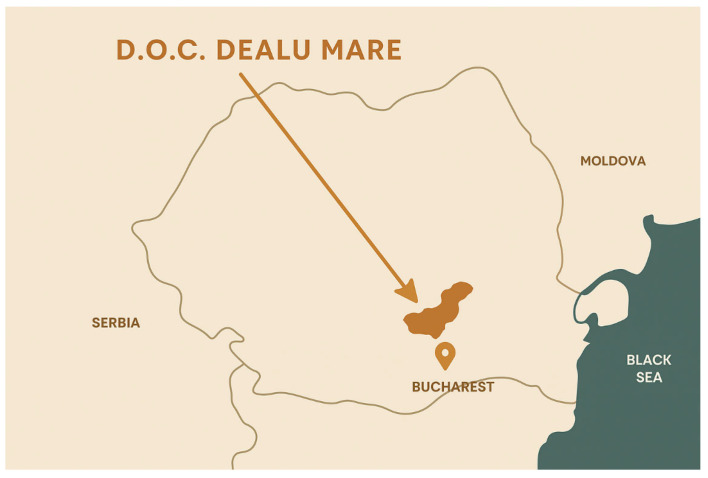 Figure 1
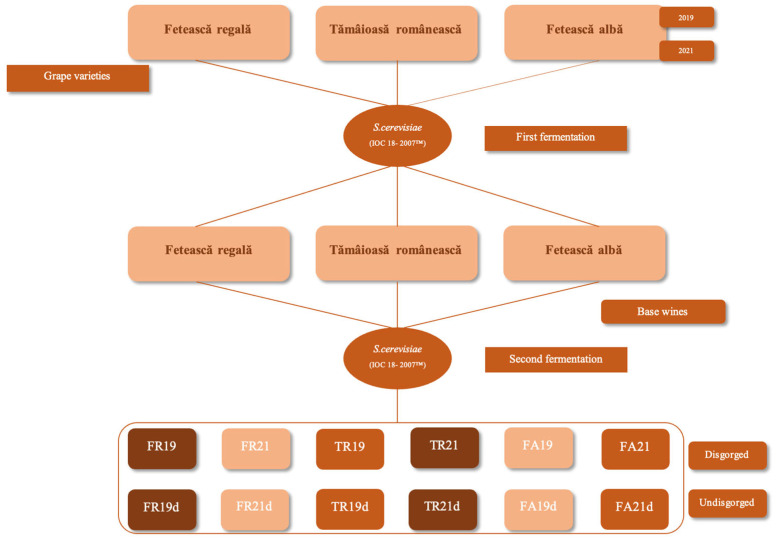 Figure 2
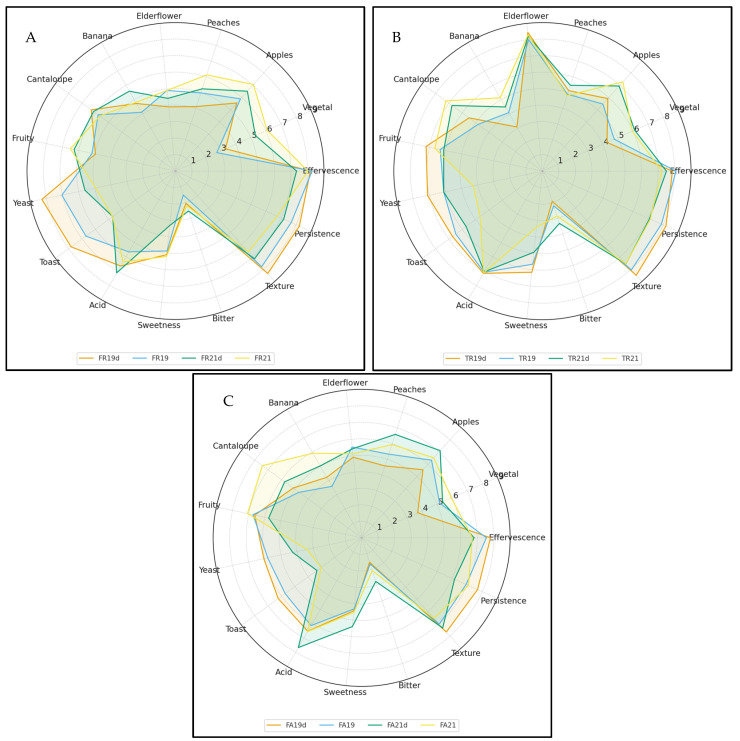 Figure 3
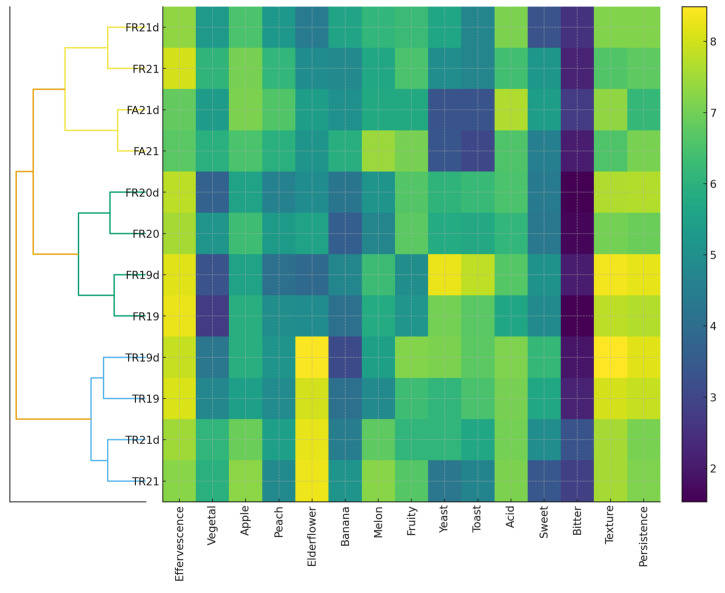 Figure 4
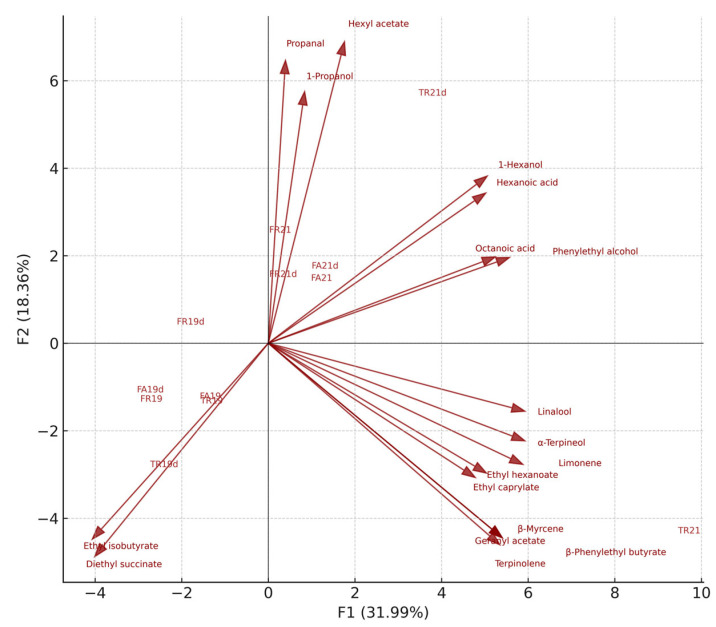 Figure 5
Peer Reviews
No public reviews on file for this paper yet. If you reviewed it on a platform where reviews are public (OpenReview, ICLR, NeurIPS, ICML), you can paste yours below so the community can read it here.
Videos
No videos yet. Explain this paper in a talk, walkthrough, or lecture? Add one.
Taxonomy
TopicsFermentation and Sensory Analysis · Horticultural and Viticultural Research · Wine Industry and Tourism