Twisting Paths: The Paradox of Fiber Branching in Muscle Regeneration
Leonit Kiriaev, Kathryn N. North, Stewart I. Head, Peter J. Houweling

TL;DR
This paper explores how muscle fiber branching can be both helpful and harmful, depending on the context, and how understanding this could lead to better treatments for muscle diseases.
Contribution
The paper provides a novel synthesis of fiber branching's dual role in muscle health and disease.
Findings
Fiber branching helps muscles adapt to stress and prevent injury in healthy conditions.
Excessive branching in diseases like Duchenne Muscular Dystrophy leads to muscle weakness and damage.
Understanding this paradox could guide new therapies that balance fiber branching's roles.
Abstract
Muscle regeneration following injury reveals a striking paradox: the same phenomenon, fiber branching, can serve as both a beneficial adaptation in healthy muscle and a pathological hallmark in disease. In healthy muscle, branched fibers emerge as an adaptive response to extreme mechanical loading, redistributing stress, enhancing hypertrophy, and protecting against injury. Conversely, in conditions such as Duchenne Muscular Dystrophy, excessive and complex branching contributes to mechanical weakness, increased susceptibility to damage, and progressive functional decline. This review explores the dichotomy of fiber branching in muscle physiology, synthesizing current research on its molecular and cellular mechanisms. By understanding the paradoxical nature of fiber branching, we aim to uncover new perspectives for therapeutic strategies that balance its adaptive and pathological roles…
Genes, proteins, chemicals, diseases, species, mutations and cell lines named across the full text — each resolved to its canonical identifier and authoritative record.
Click any figure to enlarge with its caption.
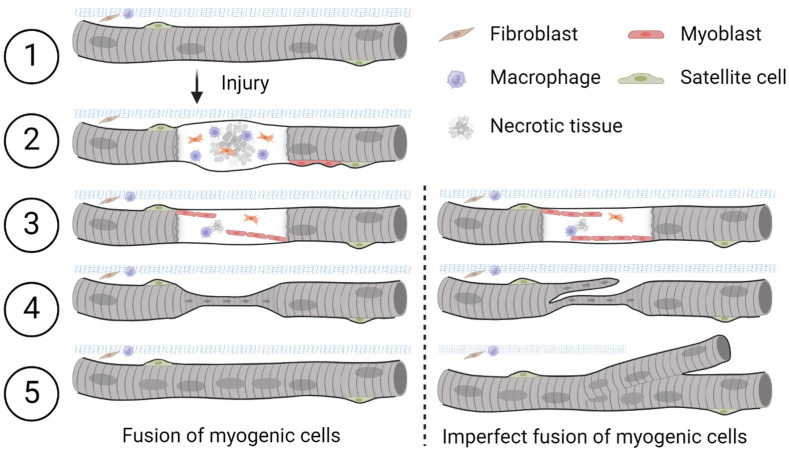 Figure 1
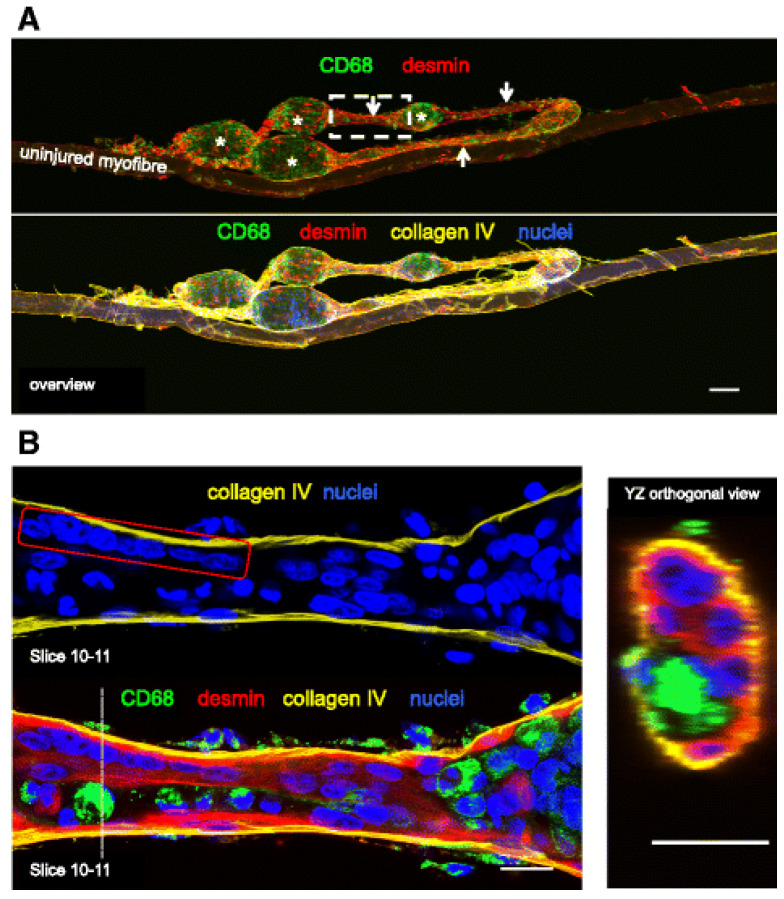 Figure 2
 Figure 3
 Figure 4
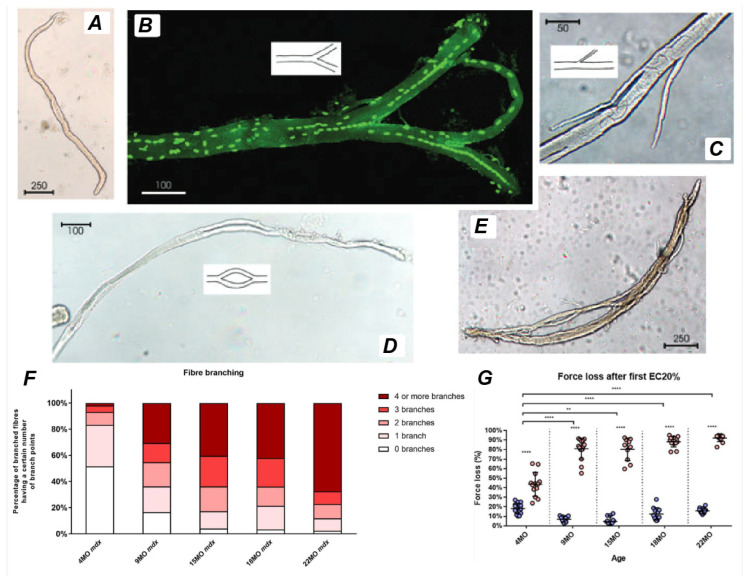 Figure 5
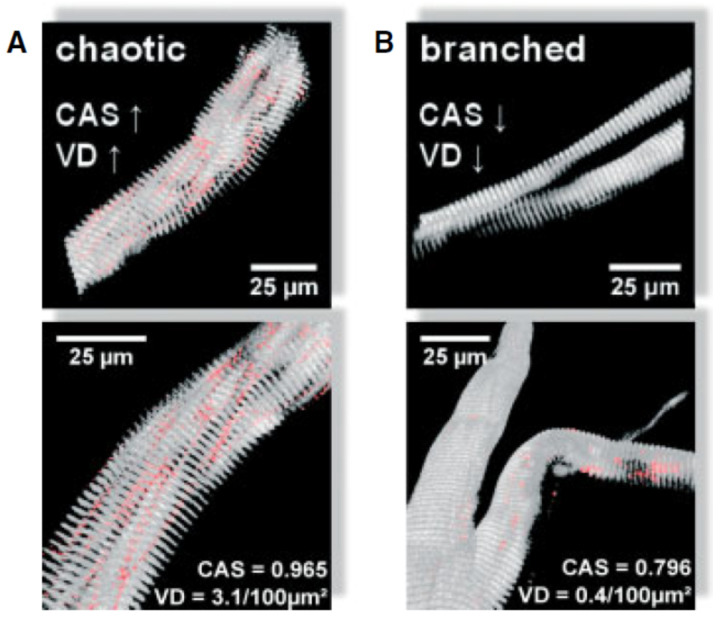 Figure 6
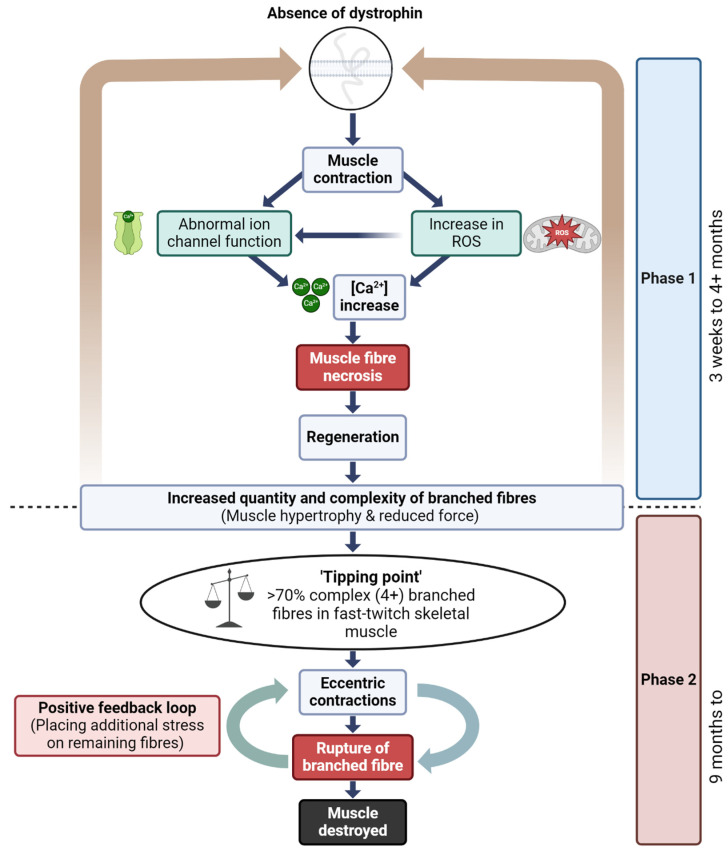 Figure 7
Peer Reviews
No public reviews on file for this paper yet. If you reviewed it on a platform where reviews are public (OpenReview, ICLR, NeurIPS, ICML), you can paste yours below so the community can read it here.
Videos
No videos yet. Explain this paper in a talk, walkthrough, or lecture? Add one.
Taxonomy
TopicsMuscle Physiology and Disorders · Cellular Mechanics and Interactions · Exercise and Physiological Responses