Experimental Mis-Splicing Assessment and ACMG/AMP-Guided Classification of 47 ATM Splice-Site Variants
Inés Llinares-Burguet, Lara Sanoguera-Miralles, Elena Bueno-Martínez, Ada Esteban-Sanchez, Daniel Romano-Medina, Lobna Ramadane-Morchadi, Alicia García-Álvarez, Pedro Pérez-Segura, Doug F. Easton, Peter Devilee, Maaike P. G. Vreeswijk, Miguel de la Hoya

TL;DR
This study experimentally assesses how 47 ATM gene splice-site variants affect RNA splicing and classifies them using clinical guidelines.
Contribution
The study introduces splicing analysis of ATM variants using minigenes and integrates findings into ACMG/AMP guidelines for variant classification.
Findings
38 out of 47 ATM splice-site variants caused aberrant splicing.
30 variants resulted in negligible expression of full-length transcripts.
Splicing assays improved classification of ATM variants as pathogenic or benign.
Abstract
Pathogenic germline variants in the ATM gene are associated with a 20–30% lifetime risk of breast cancer. Crucially, a relevant fraction of loss-of-function variants in breast cancer susceptibility genes disrupts pre-mRNA splicing. We aimed to perform splicing analysis of ATM splice-site variants identified in the large-scale sequencing project BRIDGES (Breast Cancer After Diagnostic Gene Sequencing). To this end, we bioinformatically selected 47 splice-site variants across 17 exons that were genetically engineered into three minigenes and assayed in MCF-7 cells. Aberrant splicing was observed in 38 variants. Of these, 30 variants, including 7 missense, yielded no or negligible expression of the minigene full-length (mgFL) transcript. A total of 69 different transcripts were characterized, 48 of which harboured a premature termination codon. Some variants, such as c.2922-1G>A, generated…
Genes, proteins, chemicals, diseases, species, mutations and cell lines named across the full text — each resolved to its canonical identifier and authoritative record.
Click any figure to enlarge with its caption.
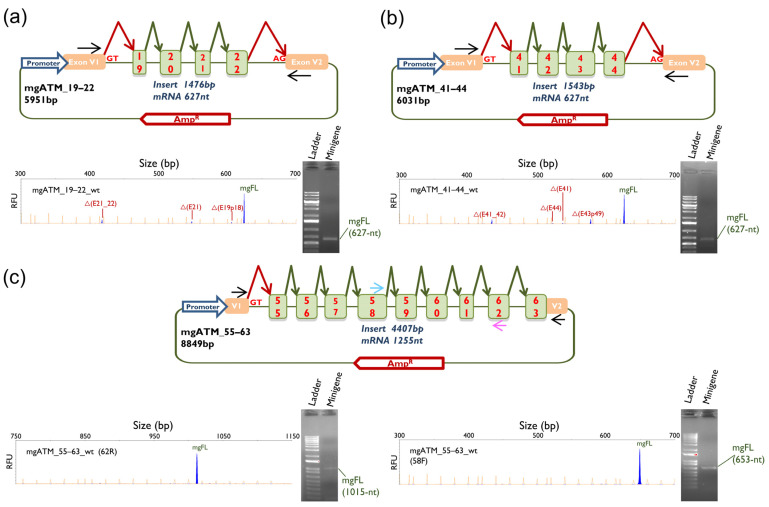 Figure 1
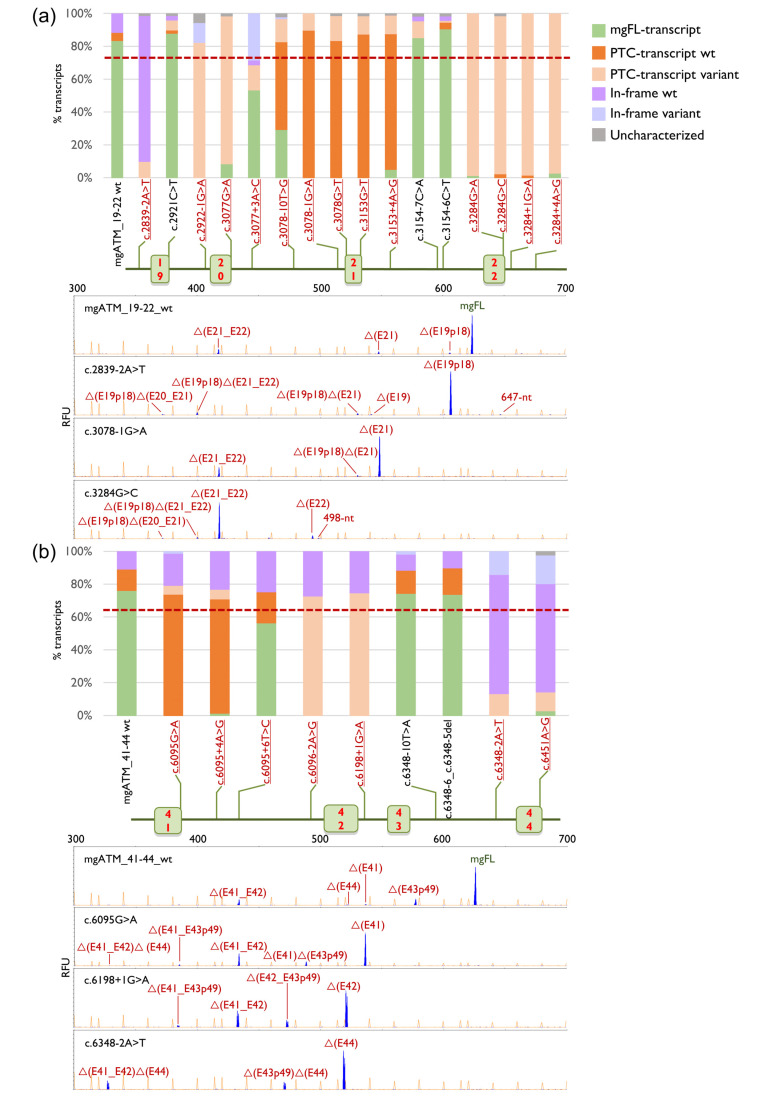 Figure 2
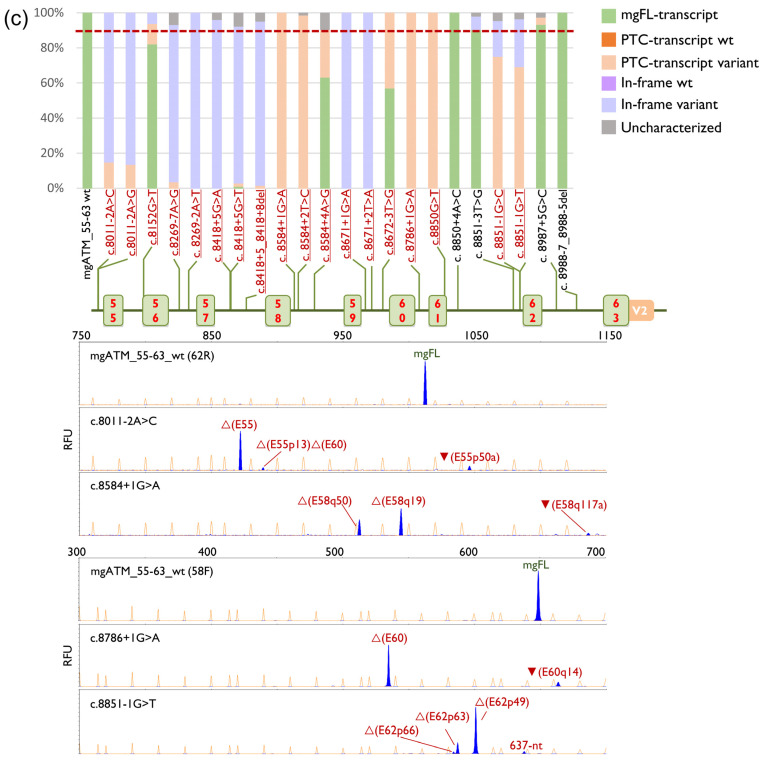 Figure 3
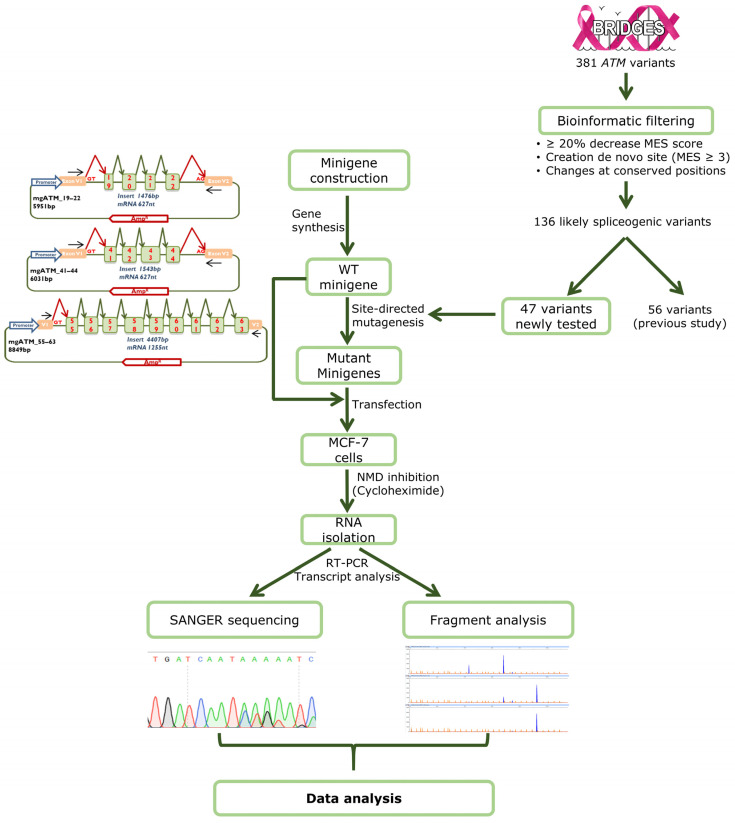 Figure 4
Peer Reviews
No public reviews on file for this paper yet. If you reviewed it on a platform where reviews are public (OpenReview, ICLR, NeurIPS, ICML), you can paste yours below so the community can read it here.
Videos
No videos yet. Explain this paper in a talk, walkthrough, or lecture? Add one.
Taxonomy
TopicsGenetic factors in colorectal cancer · BRCA gene mutations in cancer · Genomics and Rare Diseases