Genome-Wide Identification and Expression Analysis of the Hsp70 Gene Family in Hylocereus undatus Seedlings Under Heat Shock Stress
Youjie Liu, Ke Wen, Hanyao Zhang, Xiuqing Wei, Liang Li, Ping Zhou, Yajun Tang, Dong Yu, Yueming Xiong, Jiahui Xu

TL;DR
This study identifies and analyzes Hsp70 genes in Hylocereus undatus seedlings under heat stress, finding that HuHsp70-11 is a key gene involved in the plant's heat response.
Contribution
The study identifies 27 Hsp70 genes in Hylocereus undatus and highlights HuHsp70-11 as a key candidate gene for heat stress response.
Findings
Twenty-seven HuHsp70 genes were identified and classified into five subfamilies with conserved structures and motifs.
HuHsp70-11 was found to be a key gene whose expression increases with prolonged heat shock.
A model suggests HuHsp70-11 helps remove reactive oxygen species and improve cell membrane permeability under heat stress.
Abstract
Hylocereus undatus growth is limited by long-term heat stress, and heat shock protein 70 (Hsp70) is crucial in the plant’s heat stress (HS) response. In a previous study, transcriptomic data revealed that Hsp70 family members in pitaya seedlings respond to temperature changes. This study identified 27 HuHsp70 genes in pitaya, analyzed their physicochemical properties (such as molecular weight and isoelectric point), and divided them into five subfamilies with conserved gene structures, motifs (short conserved sequence patterns), and cis-acting elements (regulatory DNA sequences). The Ks value (synonymous substitution rate) ranged from 0.93~3.54, and gene duplication events occurred between 71.17 and 272.19 million years ago (Mya). Under HS, eight and nine differentially expressed genes (DEGs) were detected at 24 h and 48 h, respectively. Quantitative real-time PCR (qRT-PCR, a method for…
Genes, proteins, chemicals, diseases, species, mutations and cell lines named across the full text — each resolved to its canonical identifier and authoritative record.
Click any figure to enlarge with its caption.
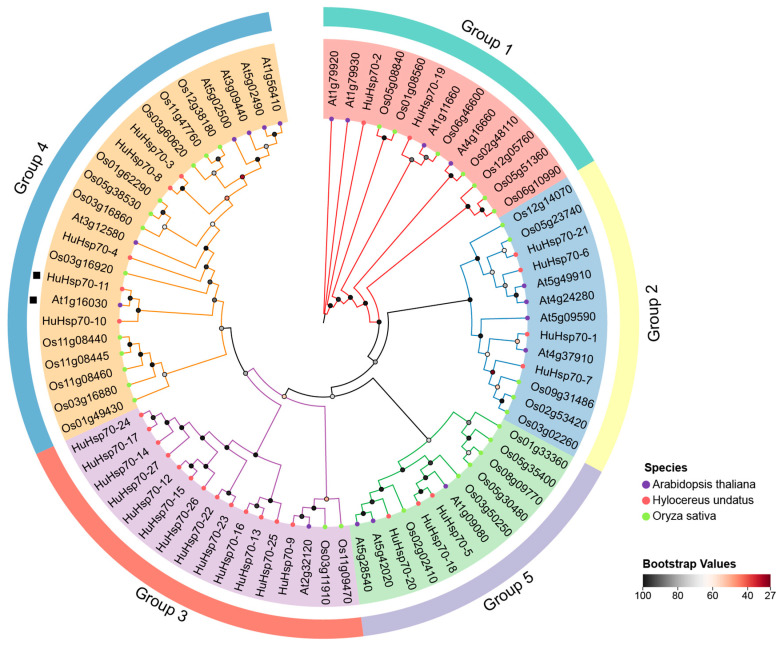 Figure 1
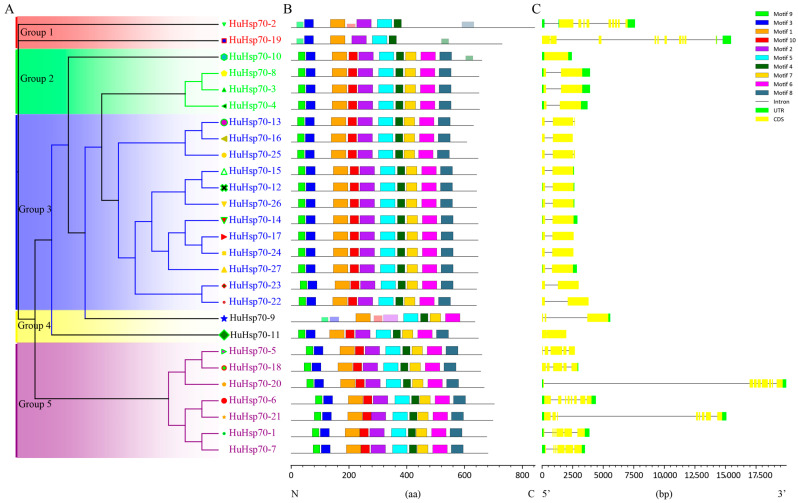 Figure 2
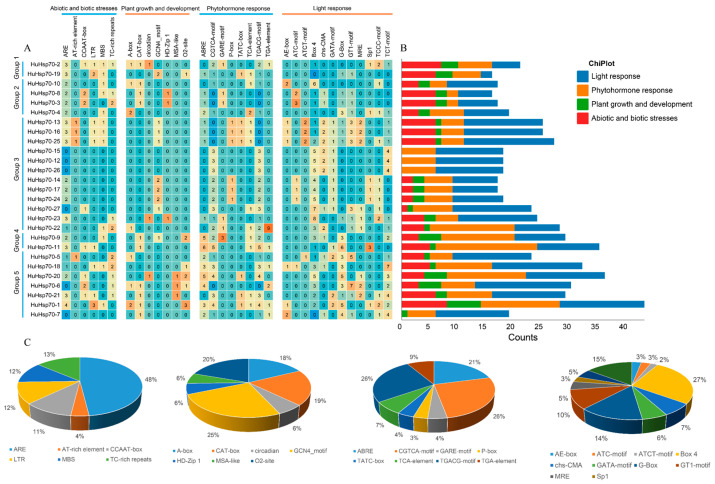 Figure 3
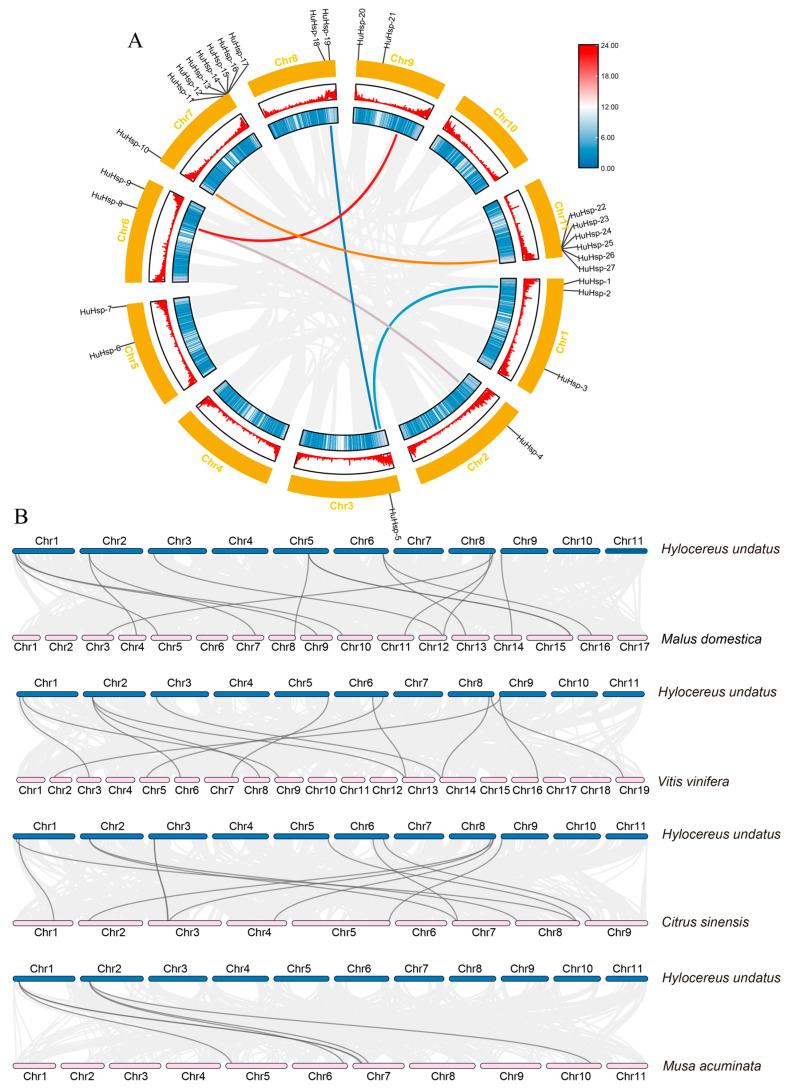 Figure 4
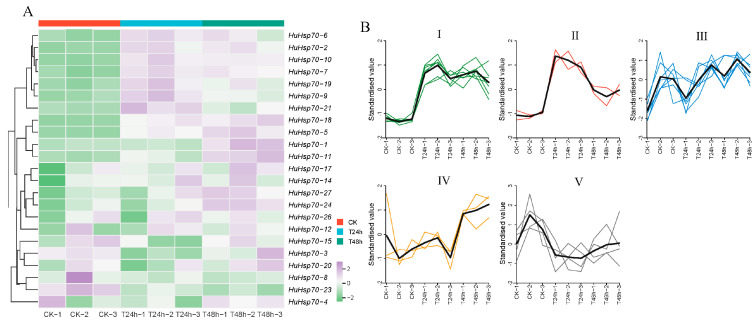 Figure 5
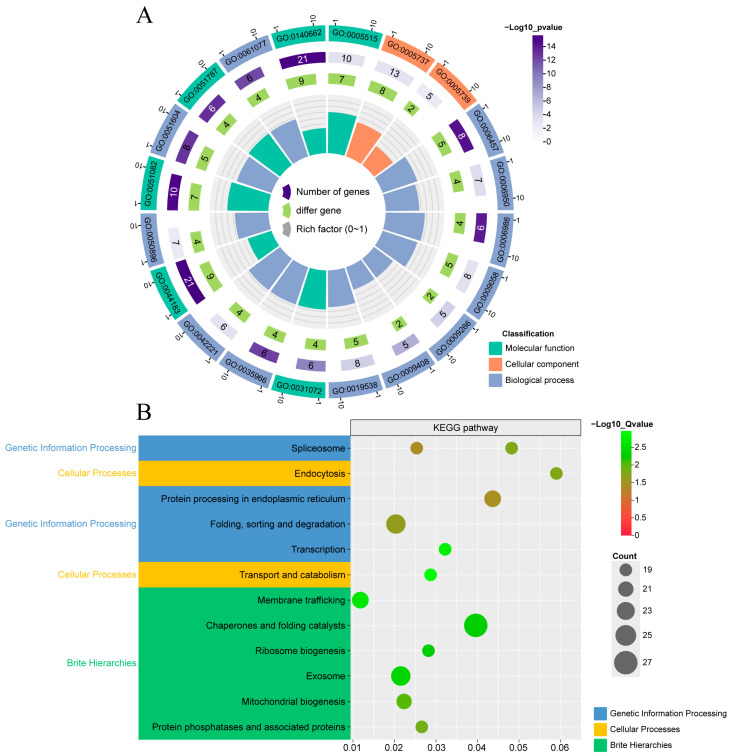 Figure 6
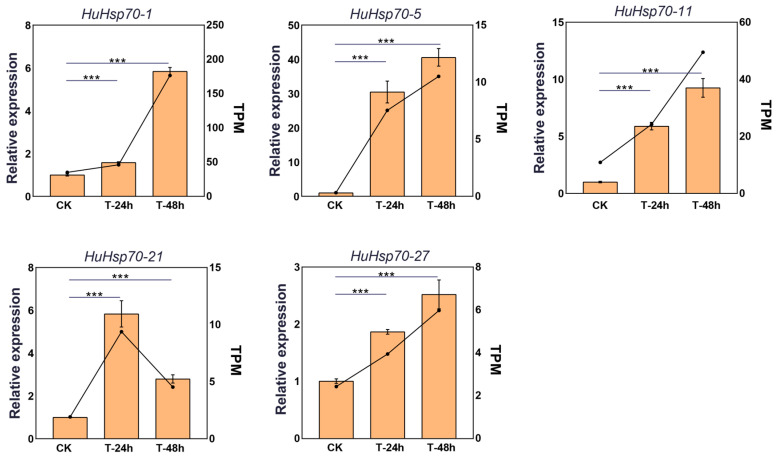 Figure 7
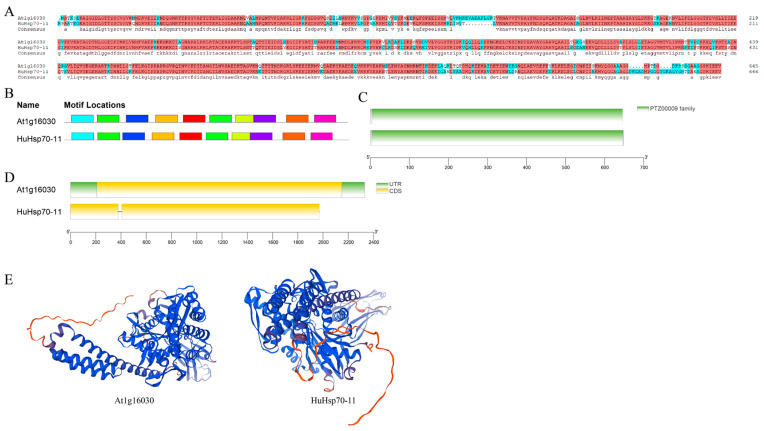 Figure 8
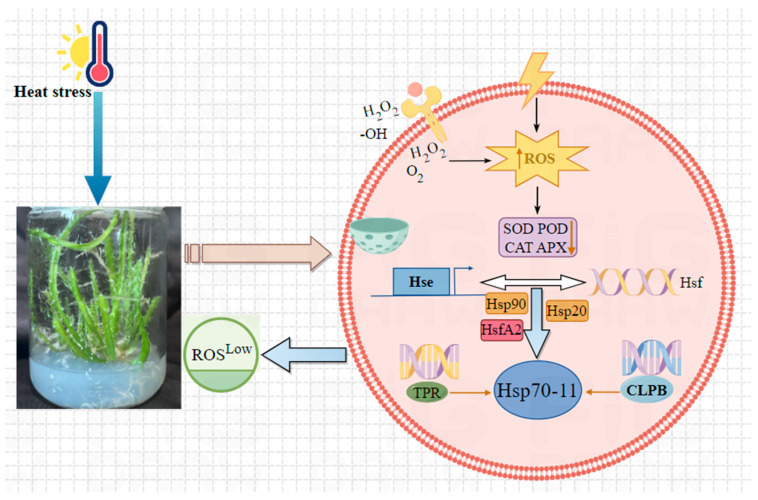 Figure 9
Peer Reviews
No public reviews on file for this paper yet. If you reviewed it on a platform where reviews are public (OpenReview, ICLR, NeurIPS, ICML), you can paste yours below so the community can read it here.
Videos
No videos yet. Explain this paper in a talk, walkthrough, or lecture? Add one.
Taxonomy
TopicsBotanical Research and Applications · Polysaccharides and Plant Cell Walls · Plant Surface Properties and Treatments