Advances in Nondestructive DNA Extraction from Teeth for Human Identification
Irena Zupanič Pajnič

TL;DR
This paper reviews nondestructive DNA extraction methods from teeth, showing they are effective for human identification in forensics and archaeology while preserving samples.
Contribution
The paper highlights advances in nondestructive dental cementum DNA extraction, offering ethical and sustainable alternatives to traditional destructive methods.
Findings
Nondestructive methods from dental cementum yield DNA comparable to traditional destructive approaches.
Cementum is a reliable DNA source in aged and degraded teeth, though the petrous bone remains optimal in extreme conditions.
Context-specific sampling strategies are needed to balance analysis and preservation of museum specimens.
Abstract
This review synthesizes advances in nondestructive DNA extraction from teeth, emphasizing their importance in forensics and archaeogenetics. Because of their mineralized structure and resistance to diagenesis, teeth remain vital for human identification when other tissues are unavailable or degraded. Modern protocols targeting dental cementum have shown high success rates in retrieving nuclear DNA while maintaining specimen integrity, supporting ethical standards, and enabling additional morphological and isotopic analyses. Nondestructive extraction methods produce DNA yields comparable to—or in some archaeological cases, greater than—those of traditional destructive approaches, while ensuring strict contamination control and minimal physical impact. Cementum is a reliable source of DNA in aged and degraded teeth, although the petrous part of the temporal bone still represents the best…
Genes, proteins, chemicals, diseases, species, mutations and cell lines named across the full text — each resolved to its canonical identifier and authoritative record.
Click any figure to enlarge with its caption.
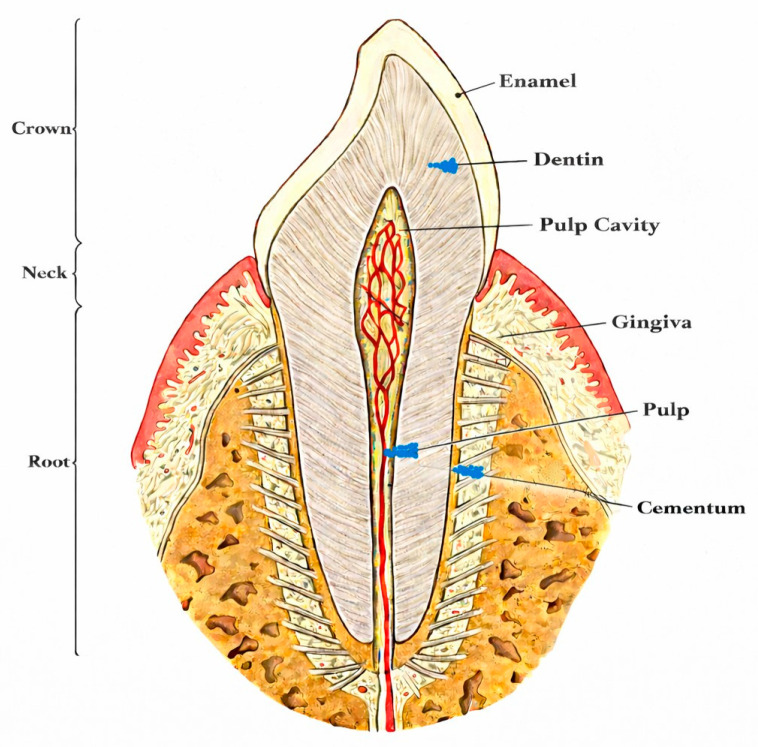 Figure 1
Peer Reviews
No public reviews on file for this paper yet. If you reviewed it on a platform where reviews are public (OpenReview, ICLR, NeurIPS, ICML), you can paste yours below so the community can read it here.
Videos
No videos yet. Explain this paper in a talk, walkthrough, or lecture? Add one.
Taxonomy
TopicsForensic and Genetic Research · Forensic Anthropology and Bioarchaeology Studies · Archaeology and ancient environmental studies