Exercise-Based Mechanotherapy: From Biomechanical Principles and Mechanotransduction to Precision Regenerative Rehabilitation
Guang-Zhen Jin

TL;DR
Exercise can be used as a precise therapy to regenerate musculoskeletal tissues by leveraging biomechanical and molecular mechanisms.
Contribution
The paper integrates biomechanical principles and mechanotransduction pathways to advance precision mechanotherapy for regenerative rehabilitation.
Findings
Mechanical loading influences musculoskeletal development and tissue remodeling through biomechanical and molecular mechanisms.
Advances in mechanoresponsive biomaterials and wearable systems enable standardized, individualized mechanotherapy.
Mechanotransduction pathways like integrin–FAK–RhoA/ROCK and Piezo channels regulate ECM remodeling and regeneration.
Abstract
Mechanical loading generated during physical activity and exercise is a fundamental determinant of musculoskeletal development, adaptation, and regeneration. Exercise-based mechanotherapy, encompassing structured movement, resistance training, stretching, and device-assisted loading, has evolved from empirical rehabilitation toward mechanism-driven and precision-oriented therapeutic strategies. At the macroscopic level, biomechanical principles governing load distribution, stress–strain relationships, and tissue-specific adaptation provide the physiological basis for exercise-induced tissue remodeling. At the molecular level, mechanical cues are transduced into biochemical signals through conserved mechanotransduction pathways, including integrin–FAK–RhoA/ROCK signaling, mechanosensitive ion channels such as Piezo, YAP/TAZ-mediated transcriptional regulation, and…
Genes, proteins, chemicals, diseases, species, mutations and cell lines named across the full text — each resolved to its canonical identifier and authoritative record.
Click any figure to enlarge with its caption.
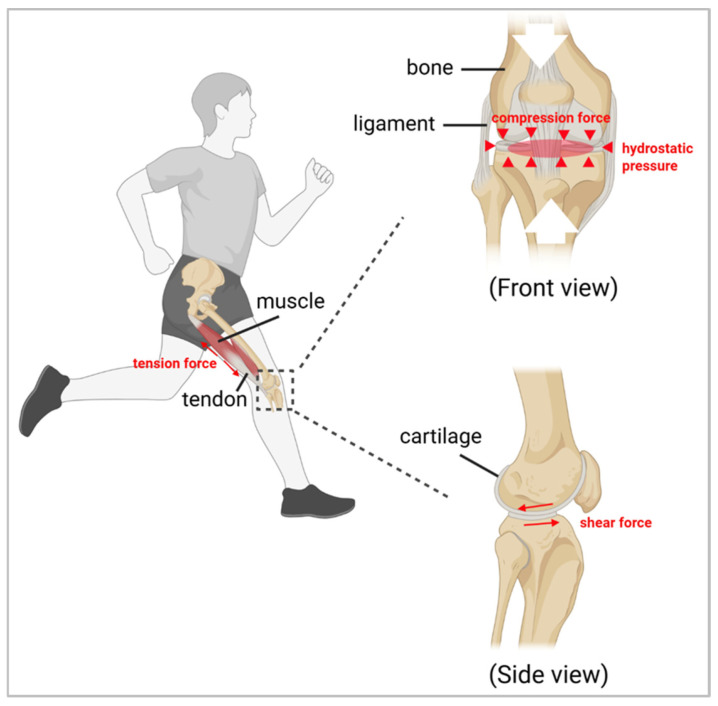 Figure 1
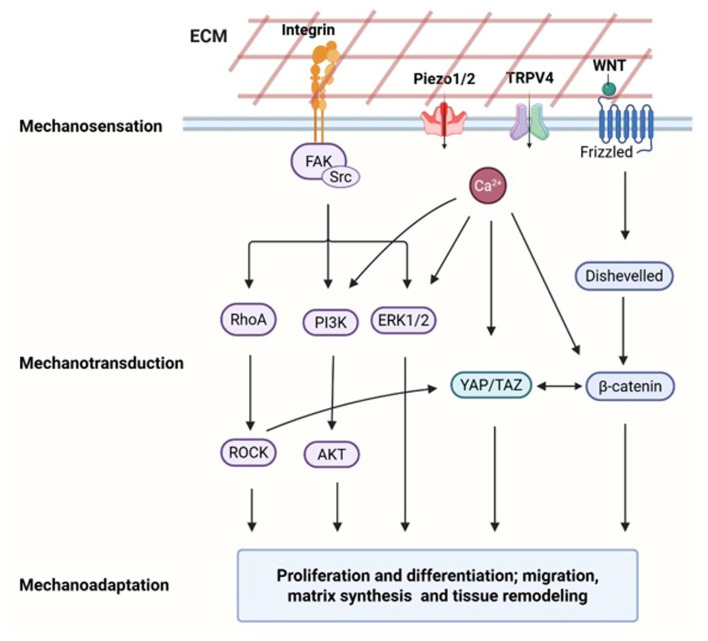 Figure 2
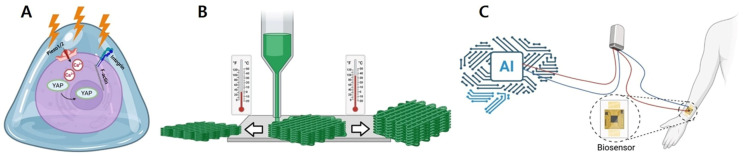 Figure 3
Peer Reviews
No public reviews on file for this paper yet. If you reviewed it on a platform where reviews are public (OpenReview, ICLR, NeurIPS, ICML), you can paste yours below so the community can read it here.
Videos
No videos yet. Explain this paper in a talk, walkthrough, or lecture? Add one.
Taxonomy
TopicsCellular Mechanics and Interactions · Tendon Structure and Treatment · Muscle Physiology and Disorders