Multiplex Editing of OsMads26, OsBsr-d1, OsELF3-2 and OsERF922 with CRISPR/Cas9 Confers Enhanced Resistance to Pathogens and Abiotic Stresses and Boosts Grain Yield in Rice (Oryza sativa)
Hailing Luo, Hengwei Zou, Shengli Lin, Jiali Liu, Geng Zhou, Lijun Gao, Jieyi Huang, Jiaxuan Li, Ju Gao, Chonglie Ma

TL;DR
Scientists used CRISPR to edit four genes in rice, making it more resistant to diseases and environmental stress while also boosting grain yield.
Contribution
A novel multiplex CRISPR strategy to enhance rice resistance and yield by targeting four negative regulator genes simultaneously.
Findings
Quadruple gene knockout increased resistance to rice blast, bacterial blight, drought, and salt stress.
Grain yield in mutants was increased by 17.35% to 21.95% compared to wildtype.
The approach offers a rapid method to improve rice varieties with multiple beneficial traits.
Abstract
Rice (Oryza sativa) is one of the world’s major staple foods. However, stable rice production is constrained by various biotic and abiotic and stresses. Breeding and cultivation of rice varieties with resistance to multiple pathogens and environmental stresses is the most effective strategy to mitigate the adverse effect of pathogen attacks and abiotic stresses. Recently, researchers have focused on the exploitation of CRISPR/Cas9 technology to manipulate some negative defense-regulator genes to generate rice varieties with broad-spectrum resistance against rice pathogens. In this study, four negative regulator genes of rice blast, OsMads26, OsBsr-1, OsELF3-2 and OsERF922, were selected as CRISPR/Cas9 targets. By simultaneously knocking out all four genes via CRISPR/Cas9 technology, we created three mads26/bsr-1/elf3-2/erf922 quadruple knockout mutants. Our results demonstrated that all…
Genes, proteins, chemicals, diseases, species, mutations and cell lines named across the full text — each resolved to its canonical identifier and authoritative record.
Click any figure to enlarge with its caption.
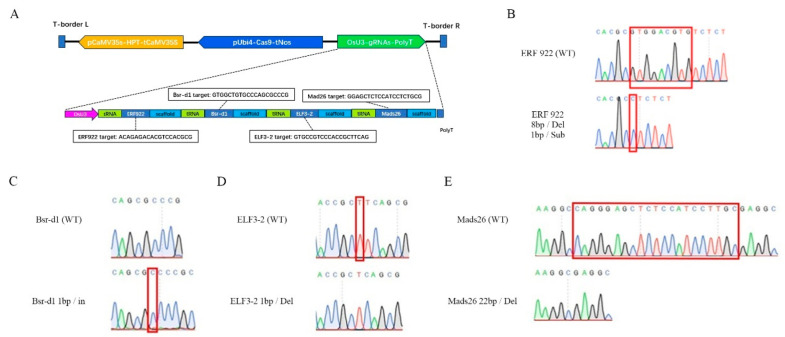 Figure 1
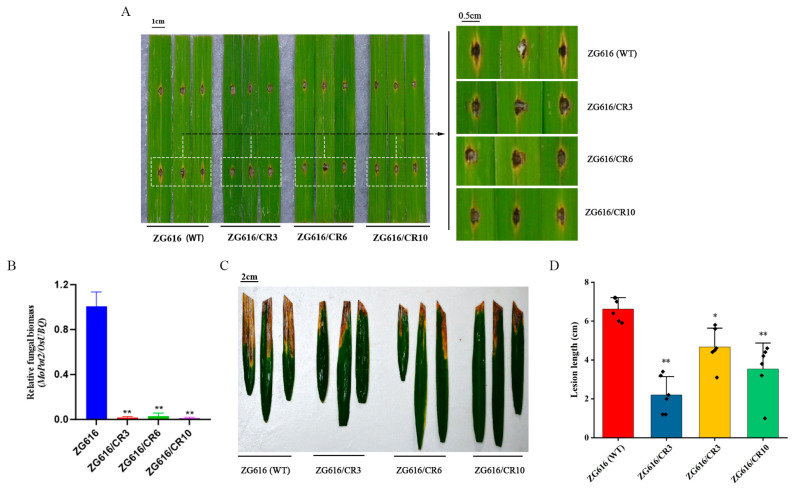 Figure 2
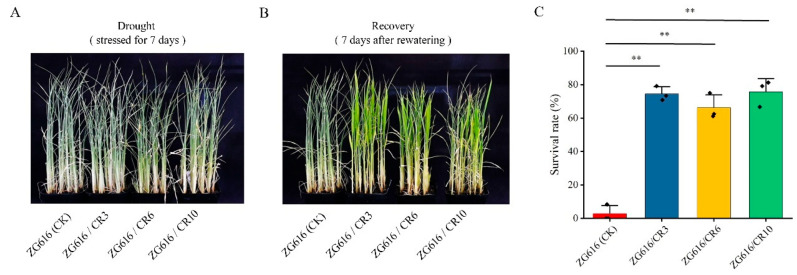 Figure 3
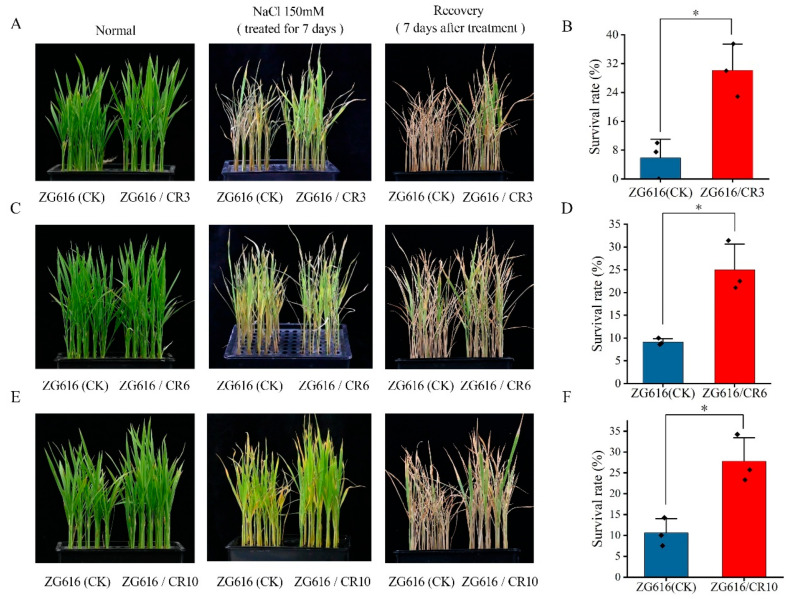 Figure 4
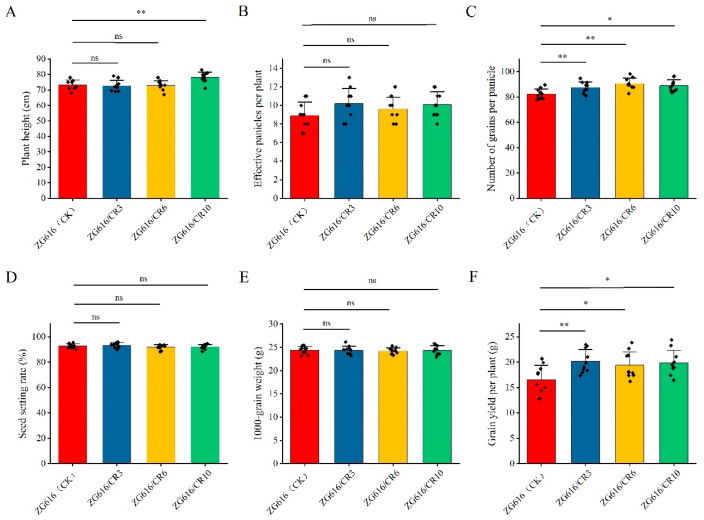 Figure 5
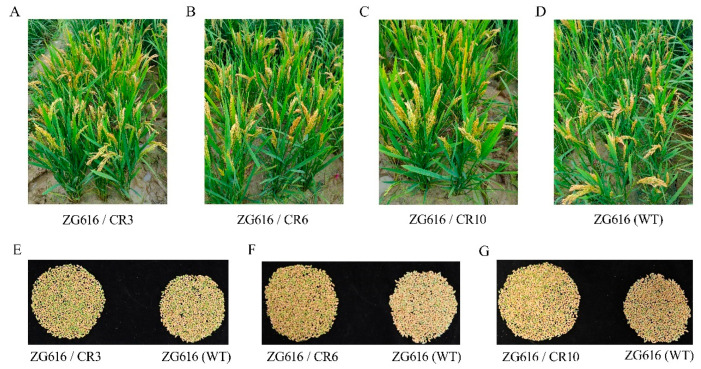 Figure 6
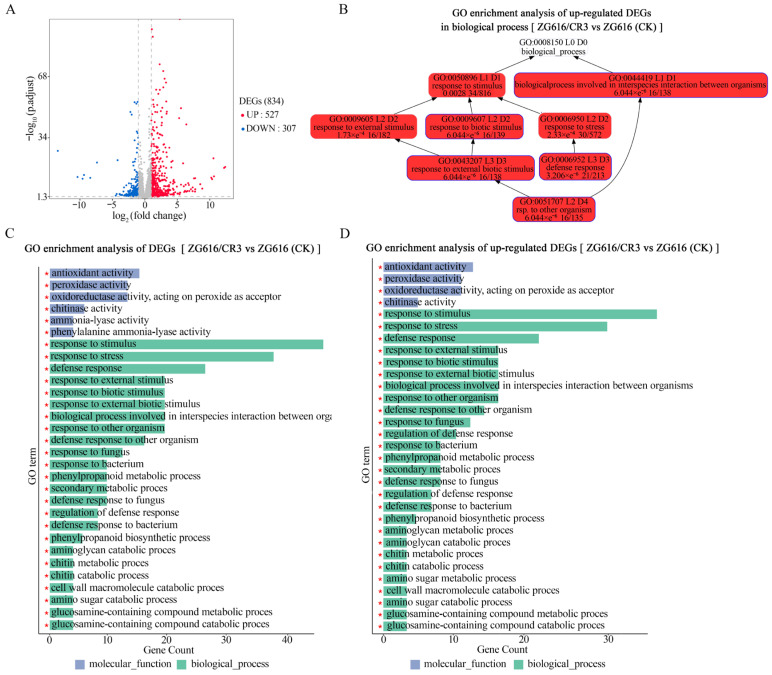 Figure 7
Peer Reviews
No public reviews on file for this paper yet. If you reviewed it on a platform where reviews are public (OpenReview, ICLR, NeurIPS, ICML), you can paste yours below so the community can read it here.
Videos
No videos yet. Explain this paper in a talk, walkthrough, or lecture? Add one.
Taxonomy
TopicsCRISPR and Genetic Engineering · Plant-Microbe Interactions and Immunity · Plant Pathogenic Bacteria Studies