46,XY DSD with Partial Gonadal Dysgenesis and Growth Failure in a Patient with 3q27.1 Microdeletion: Candidate Gene Curation After Exhaustive Literature Review
Lourdes Correa Brito, Sofía Suco, Bárbara Casali, Florencia Villegas, Paula Scaglia, Agustín Izquierdo, Jimena Lopez Dacal, Miguel Podestá, Martín Medin, Romina P. Grinspon, María Gabriela Ropelato, Rodolfo A. Rey

TL;DR
A male patient with a rare genetic deletion showed symptoms of growth failure and gonadal issues, highlighting the need for genomic analysis in diagnosing complex disorders.
Contribution
The study identifies a 3q27.1 microdeletion as a potential cause of 46,XY DSD and growth failure, expanding the known phenotypic spectrum of this deletion syndrome.
Findings
A 2.7 Mb microdeletion at 3q27.1q27.2 was found in a patient with 46,XY DSD and growth failure.
Genes DVL3 and CLCN2 are suggested as possible contributors to the gonadal phenotype.
Periodic re-evaluation of sequencing data improves diagnostic yield in complex genetic cases.
Abstract
Complex genetic syndromes represent a diagnostic challenge due to their diverse phenotypic presentations, which often evolve over time and may not be fully evident at birth. Disorders of sex development (DSD) comprise congenital conditions with discordance between chromosomal, gonadal, and/or genital sex. In 46,XY gonadal dysgenesis, undervirilisation or female-appearing genitalia may occur despite a normal karyotype, and diagnosis increasingly relies on genomic approaches. Prenatal and postnatal growth failure has been described in patients with syndromic 46,XY DSD. We report a male patient with SGA, lack of postnatal catch-up growth, and syndromic dysgenetic 46,XY DSD followed longitudinally from infancy to 11 years, in whom whole-exome sequencing (WES) reanalysis revealed a pathogenic 2.7 Mb microdeletion at 3q27.1q27.2. Systematic review of previously reported 3q27.1 deletions…
Genes, proteins, chemicals, diseases, species, mutations and cell lines named across the full text — each resolved to its canonical identifier and authoritative record.
Click any figure to enlarge with its caption.
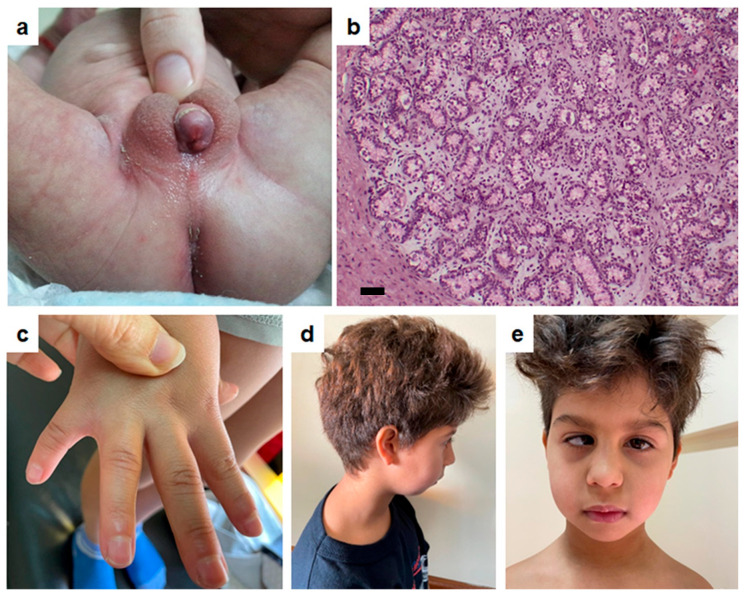 Figure 1
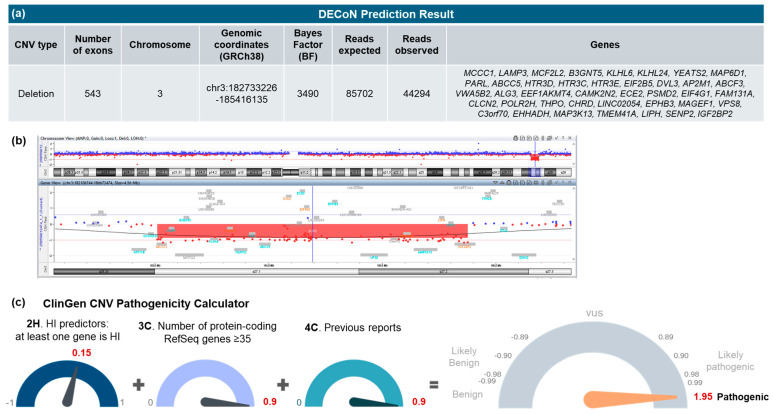 Figure 2
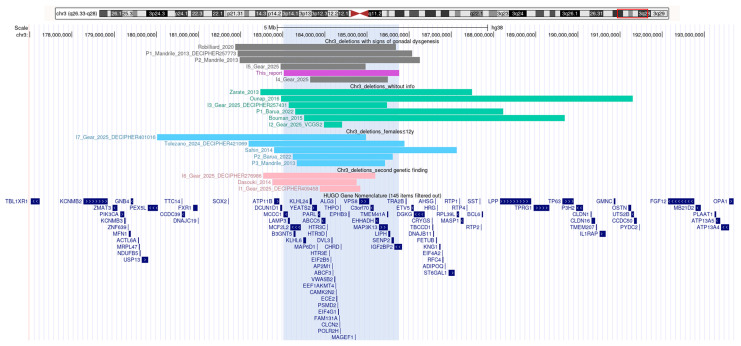 Figure 3
Peer Reviews
No public reviews on file for this paper yet. If you reviewed it on a platform where reviews are public (OpenReview, ICLR, NeurIPS, ICML), you can paste yours below so the community can read it here.
Videos
No videos yet. Explain this paper in a talk, walkthrough, or lecture? Add one.
Taxonomy
TopicsSexual Differentiation and Disorders · Genetic and Clinical Aspects of Sex Determination and Chromosomal Abnormalities · Genomic variations and chromosomal abnormalities