Lactobacillus-Dominated Cervical Microbiota Revealed by Long-Read 16S rRNA Sequencing: A Greek Pilot Study
Despina Vougiouklaki, Sophia Letsiou, Konstantinos Ladias, Aliki Tsakni, Iliana Mavrokefalidou, Zoe Siateli, Panagiotis Halvatsiotis, Dimitra Houhoula

TL;DR
This study used long-read sequencing to analyze the cervical microbiota in Greek women, finding that Lactobacillus species dominate and may protect against disease.
Contribution
The study provides a high-resolution genomic characterization of the cervical microbiota using long-read 16S rRNA sequencing in a Greek cohort.
Findings
Lactobacillus iners, Lactobacillus crispatus, and Aerococcus christensenii dominated the cervical microbiota in over 75% abundance.
Low-abundance taxa like Stenotrophomonas maltophilia and Prevotella amnii were detected, suggesting niche-specific functions.
No HPV genotypes were detected in any of the cervical samples.
Abstract
Background/Objectives: The vaginal microbiota constitutes a highly dynamic microbial ecosystem shaped by the distinct mucosal, hormonal, and immunological environment of the female genital tract. Accumulating evidence suggests that shifts in cervical microbial composition and function may influence host–microbe interactions and contribute to gynecological disease risk. Within this framework, the present study aimed to perform an in-depth genomic characterization of the cervical microbiota in a well-defined cohort of Greek women. The primary objective was to explore the functional microbial landscape by identifying dominant bacterial taxa, taxon-specific signatures, and potential microbial pathways implicated in cervical epithelial homeostasis, immune modulation, and disease susceptibility. Methods: Microbial genomic DNA was isolated from 60 cervical samples using the Magcore Bacterial…
Genes, proteins, chemicals, diseases, species, mutations and cell lines named across the full text — each resolved to its canonical identifier and authoritative record.
Click any figure to enlarge with its caption.
 Figure 1
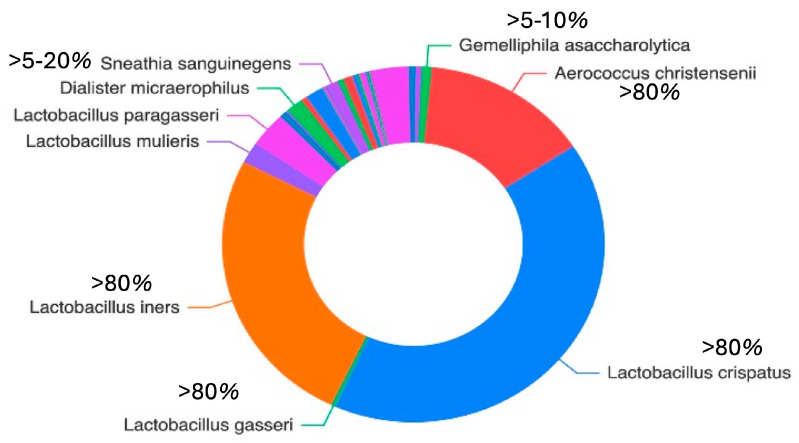 Figure 2
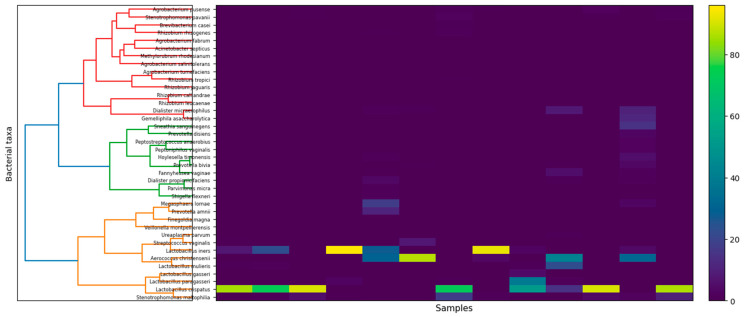 Figure 3
Peer Reviews
No public reviews on file for this paper yet. If you reviewed it on a platform where reviews are public (OpenReview, ICLR, NeurIPS, ICML), you can paste yours below so the community can read it here.
Videos
No videos yet. Explain this paper in a talk, walkthrough, or lecture? Add one.
Taxonomy
TopicsReproductive tract infections research · Gut microbiota and health · Infections and bacterial resistance