Impact of PKC-MAPK Signaling on Cardiac Sympathetic Overactivation in Type-2 Diabetes Mellitus
Jaswinder Singh, Afia Saabea Owusu Konadu, Yu Li, Boris Shabaltiy, Yu-Long Li

TL;DR
This study explores how a specific signaling pathway in the sympathetic nervous system contributes to heart issues in type-2 diabetes.
Contribution
The paper identifies the PKC-MAPK14-ADAM17 signaling pathway in satellite glial cells as a novel mechanism for cardiac sympathetic overactivation in T2DM.
Findings
T2DM rats showed increased MAPK14, PKC-α, and ADAM17 expression and activity in the stellate ganglion.
T2DM increased cardiac sympathetic nerve activity and neuronal excitability via this signaling pathway.
Upregulated PKC-MAPK-ADAM17 signaling enhances cell excitability of cardiac postganglionic sympathetic neurons.
Abstract
Type-2 Diabetes Mellitus (T2DM) is related to cardiac arrhythmias. The stellate ganglion (SG), part of the sympathetic nervous system, regulates heart function. Within the SG, satellite glial cells (SGCs) have gap junction channels (Cx43). Increased Cx43 permeability induces SGC depolarization and activates the PKC-MAPK14-ADAM17 signaling pathway, releasing some endogenous factors that stimulate nearby cardiac postganglionic sympathetic neurons (CPSN). This study investigated the activation of the PKC-MAPK14-ADAM17 signaling pathway in T2DM SGs and SGCs as a novel mechanism of sympathetic overactivation. A total of 56 Sprague-Dawley rats were randomly assigned to sham and T2DM groups, and T2DM was induced using a high-fat diet combined with low-dose streptozotocin. Real-time RT-PCR, Western blot, and ELISA quantified mRNA/protein expression and enzymatic activity. The patch clamp…
Genes, proteins, chemicals, diseases, species, mutations and cell lines named across the full text — each resolved to its canonical identifier and authoritative record.
Click any figure to enlarge with its caption.
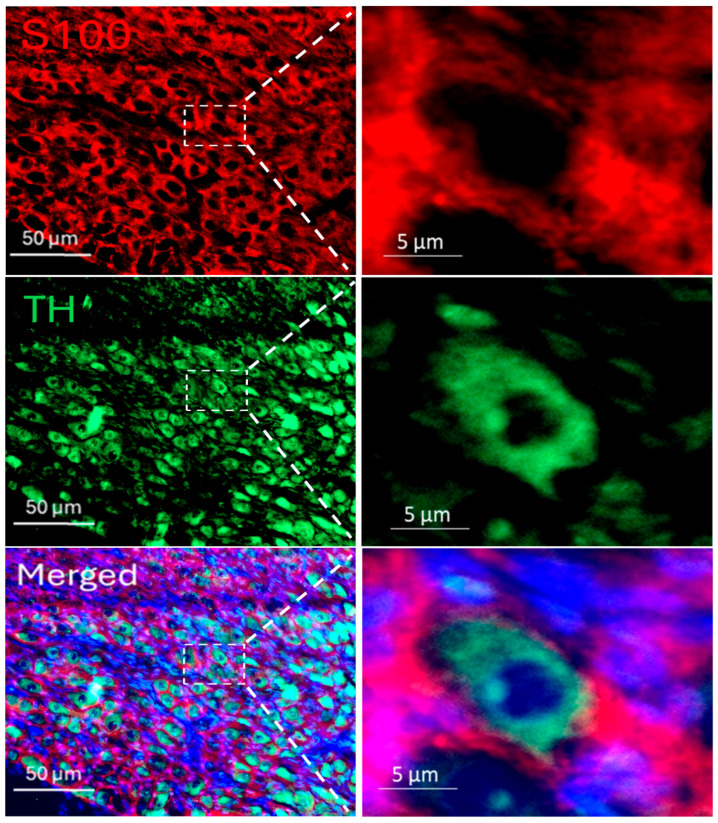 Figure 1
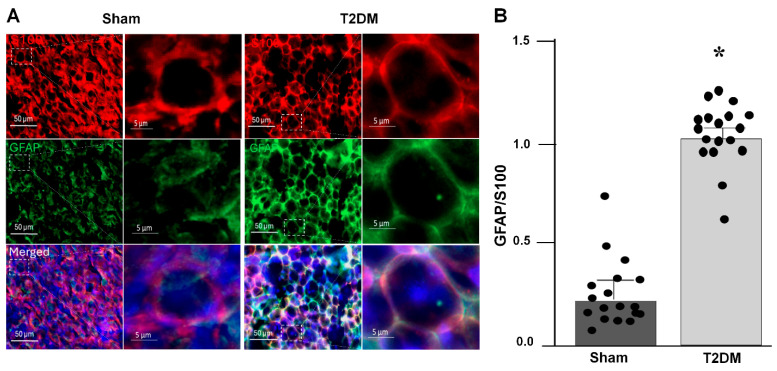 Figure 2
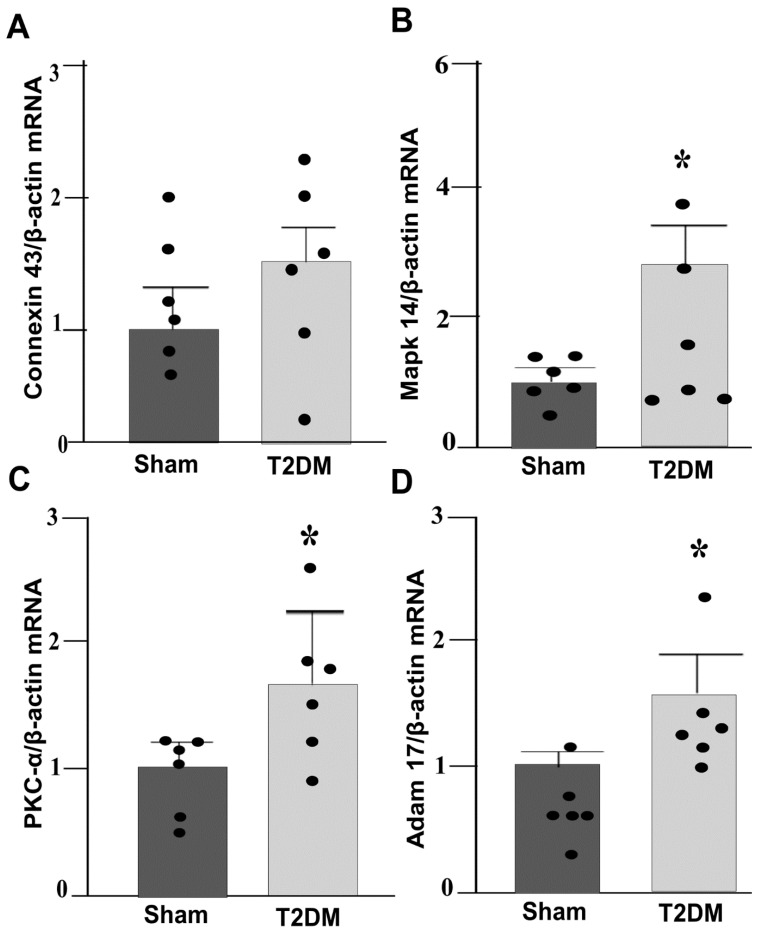 Figure 3
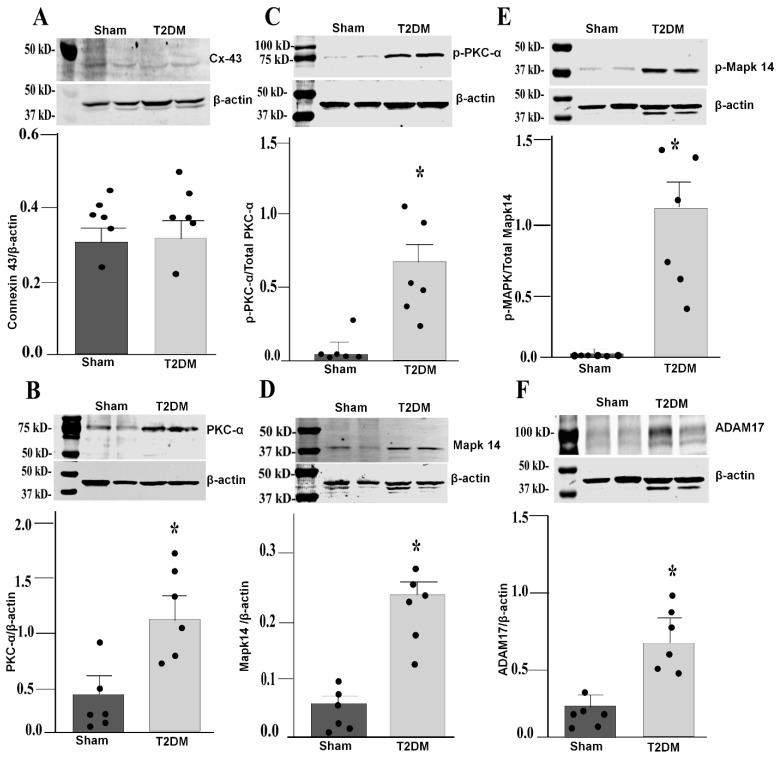 Figure 4
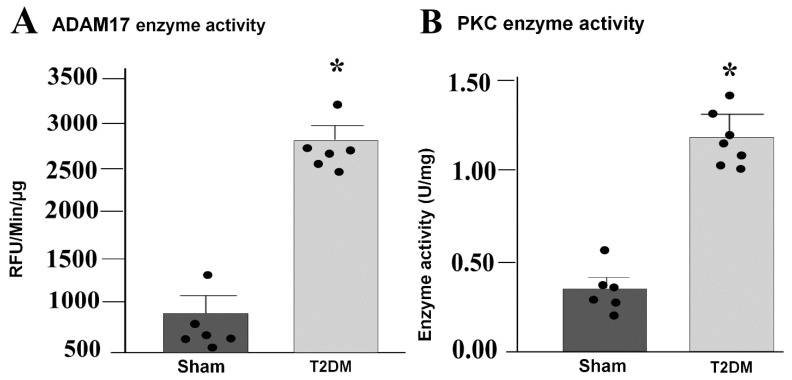 Figure 5
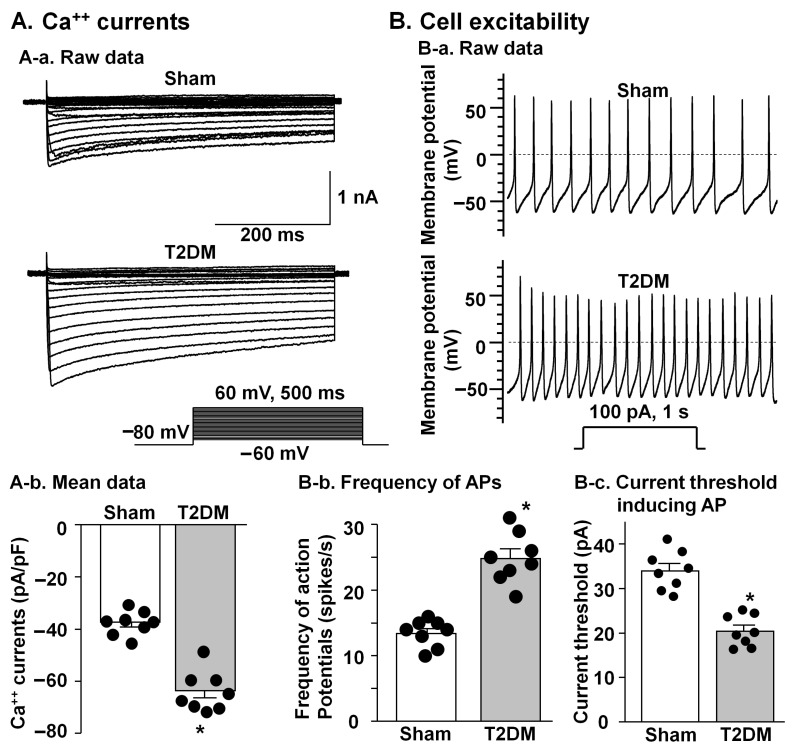 Figure 6
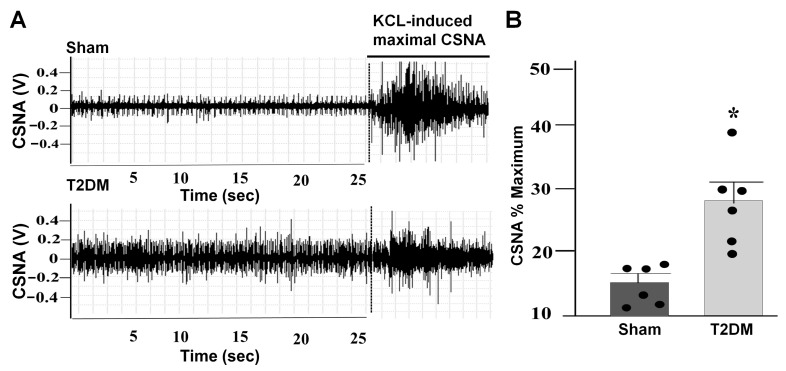 Figure 7
Peer Reviews
No public reviews on file for this paper yet. If you reviewed it on a platform where reviews are public (OpenReview, ICLR, NeurIPS, ICML), you can paste yours below so the community can read it here.
Videos
No videos yet. Explain this paper in a talk, walkthrough, or lecture? Add one.
Taxonomy
TopicsPain Mechanisms and Treatments · Connexins and lens biology · Neuroscience of respiration and sleep