Diversity of Integration Sites of Bovine Leukemia Virus (BLV) and Roles of Genes Related to Development of BLV-Induced Lymphoma in a Large Cohort
Ryosuke Matsuura, Meripet Polat Yamanaka, Noriko Fukushi, Susumu Saito, Keisuke Fukumoto, Kazuyoshi Hosomichi, Shin-nosuke Takeshima, Yoko Aida

TL;DR
This study explores how the bovine leukemia virus integrates into cattle DNA and identifies genes linked to lymphoma development, offering insights into disease mechanisms and potential treatments.
Contribution
The study identifies a unique cluster of genes associated with BLV integration sites, suggesting a key role in lymphoma development.
Findings
235 BLV integration sites were identified, with no preference for CpG islands or repetitive regions.
An 'IS-Clustered genes' group containing 85 genes, including 12 cancer-related genes, was found to be significantly associated with BLV-induced lymphoma.
55.6% of tested cattle had integration sites within the 'IS-Clustered genes', indicating its importance in disease progression.
Abstract
Bovine leukemia virus (BLV) causes enzootic bovine leukosis (EBL), yet its pathogenic mechanisms remain largely unclear. In particular, the role of BLV genomic integration sites (IS(s)) in BLV-induced leukemogenesis has not been fully elucidated. Here, we identified a total of 235 ISs from 99 BLV-infected cattle with lymphoma, of which 4.3% and 46.8% were located within exon and intron, respectively, while no preferential integration into CpG islands or repetitive regions was observed. All identified ISs were distinct, and no identical sites were detected among the samples. We identified 246 genes related with these ISs and protein–protein interaction analysis of these genes demonstrated one “IS-Clustered genes” composed of 85 among 246 genes. This “IS-Clustered genes” contains 12 cancer genes (14.1%) with high significantly proportion. Notably, with 55 among 99 cattle tested (55.6%)…
Genes, proteins, chemicals, diseases, species, mutations and cell lines named across the full text — each resolved to its canonical identifier and authoritative record.
Click any figure to enlarge with its caption.
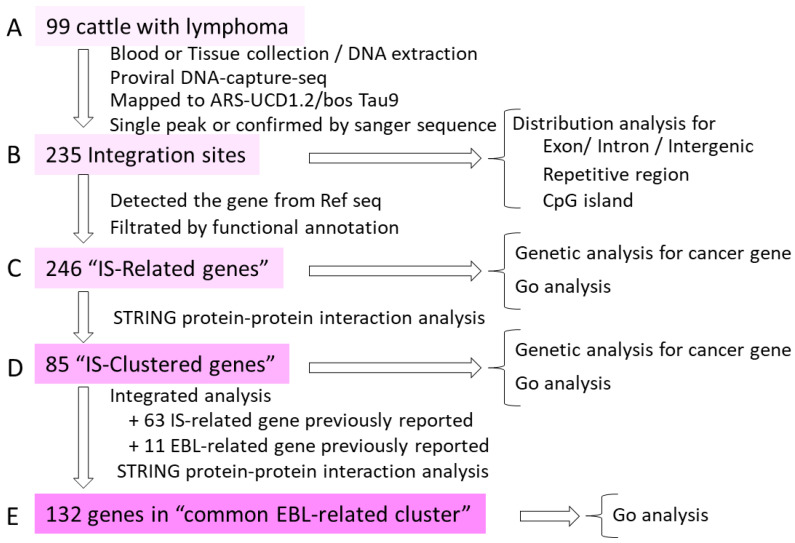 Figure 1
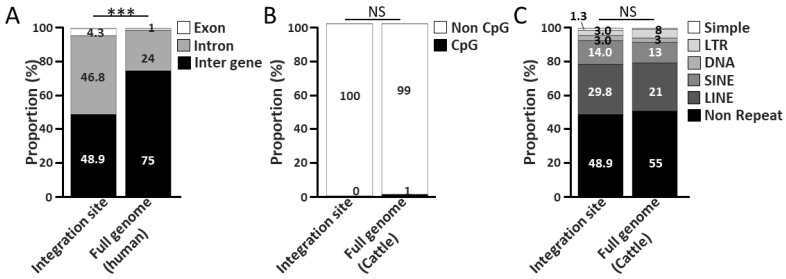 Figure 2
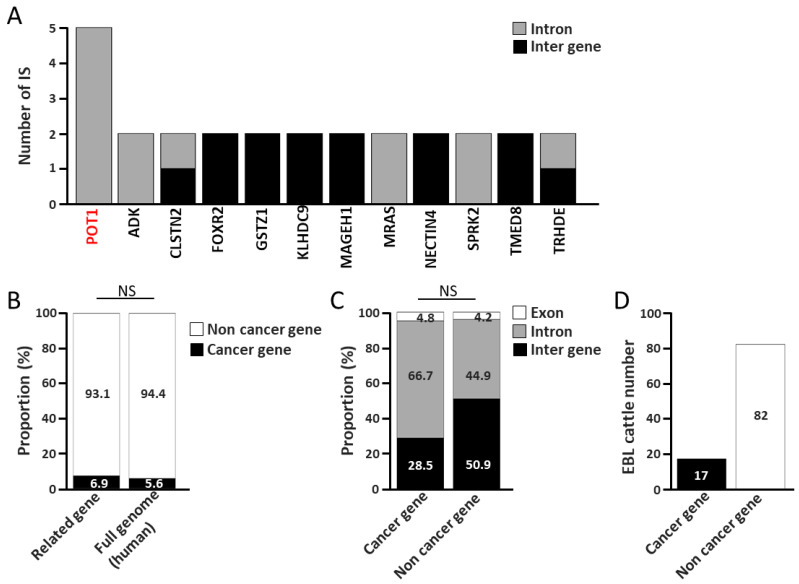 Figure 3
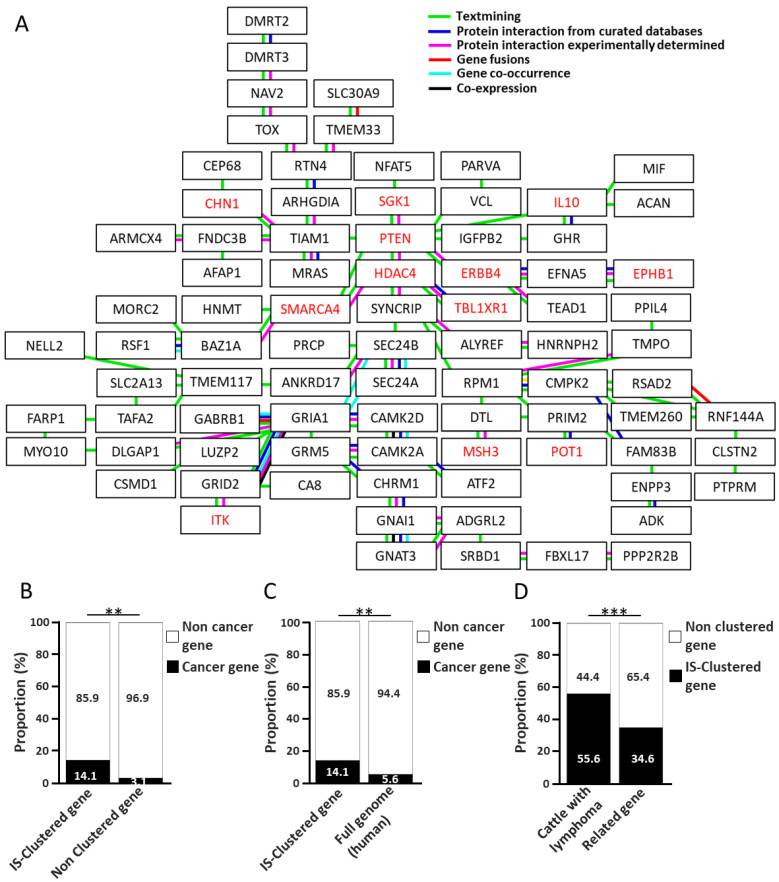 Figure 4
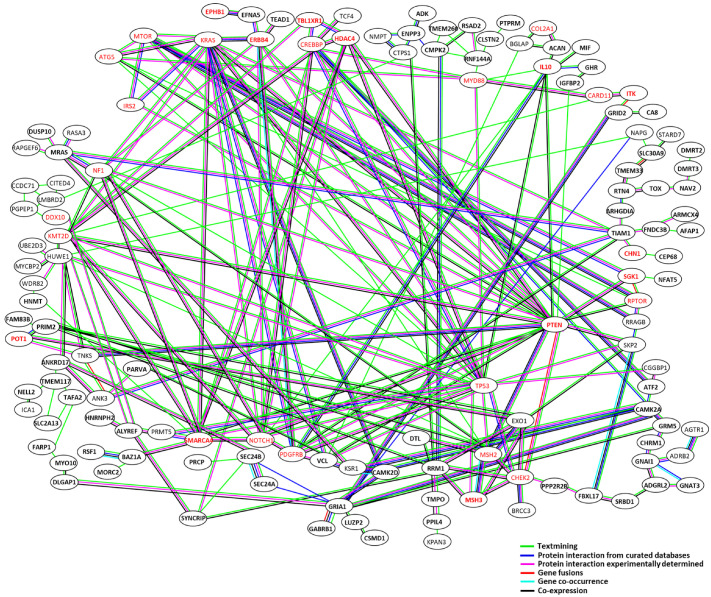 Figure 5
Peer Reviews
No public reviews on file for this paper yet. If you reviewed it on a platform where reviews are public (OpenReview, ICLR, NeurIPS, ICML), you can paste yours below so the community can read it here.
Videos
No videos yet. Explain this paper in a talk, walkthrough, or lecture? Add one.
Taxonomy
TopicsT-cell and Retrovirus Studies · Animal Disease Management and Epidemiology · Vector-Borne Animal Diseases