CDHR1-Associated Retinal Dystrophies: Expanding the Clinical and Genetic Spectrum with a Hungarian Cohort
Ágnes Takács, Balázs Varsányi, Mirella Barboni, Rita Vámos, Balázs Lesch, Dominik Dobos, Emília Clapp, András Végh, Ditta Zobor, Krisztina Knézy, Zoltán Zsolt Nagy, Viktória Szabó

TL;DR
This study expands the understanding of CDHR1-related retinal diseases by analyzing a Hungarian patient group, revealing varied symptoms and genetic changes.
Contribution
The study reports new CDHR1 variants and expands the clinical spectrum of CDHR1-associated retinopathy in a Hungarian cohort.
Findings
Four CDHR1 variants were identified, including a novel splice acceptor site and intronic variant.
Five distinct retinal dystrophy phenotypes were observed in the cohort.
Rod-cone dystrophy was the most common phenotype, observed in 55.6% of cases.
Abstract
Aim: To report on the clinical and genetic spectrum of retinopathy associated with CDHR1 variants in a Hungarian cohort. Methods: A retrospective cohort study was conducted at a single tertiary care referral center. The study enrolled nine patients harboring biallelic variants in the CDHR1 gene. Detailed clinical history, multimodal imaging, electroretinography, and molecular genetics are presented. Results: We identified four CDHR1 variants predicted to cause loss-of-function and five phenotypes (cone dystrophy, central areolar choroidal dystrophy, cone-rod dystrophy, rod-cone dystrophy, and late-onset macular dystrophy). The most frequent variant was the synonymous CDHR1 c.783G>A (p.Pro261=) variant (10/18 alleles, 55.6%). A novel splice acceptor site variant, CDHR1 c.349-1G>A, and a novel intronic variant, CDHR1 c.1168-10A>G, were also detected. Fundus examination revealed macular…
Genes, proteins, chemicals, diseases, species, mutations and cell lines named across the full text — each resolved to its canonical identifier and authoritative record.
Click any figure to enlarge with its caption.
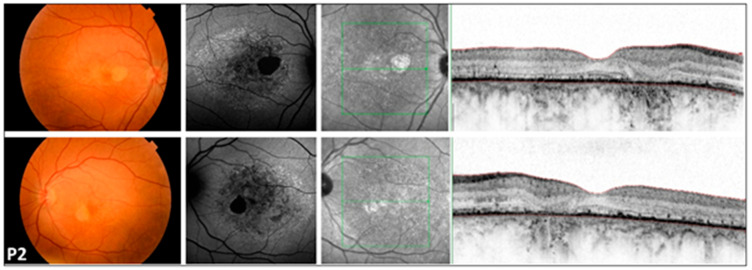 Figure 1
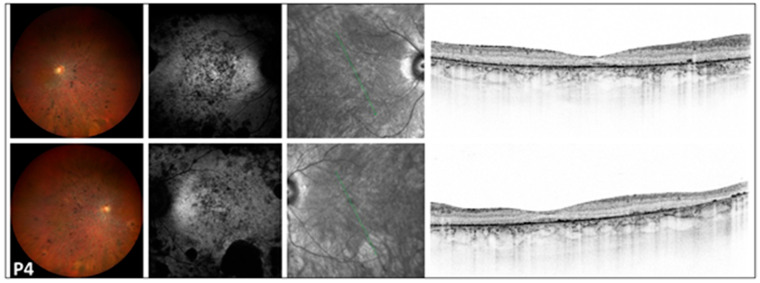 Figure 2
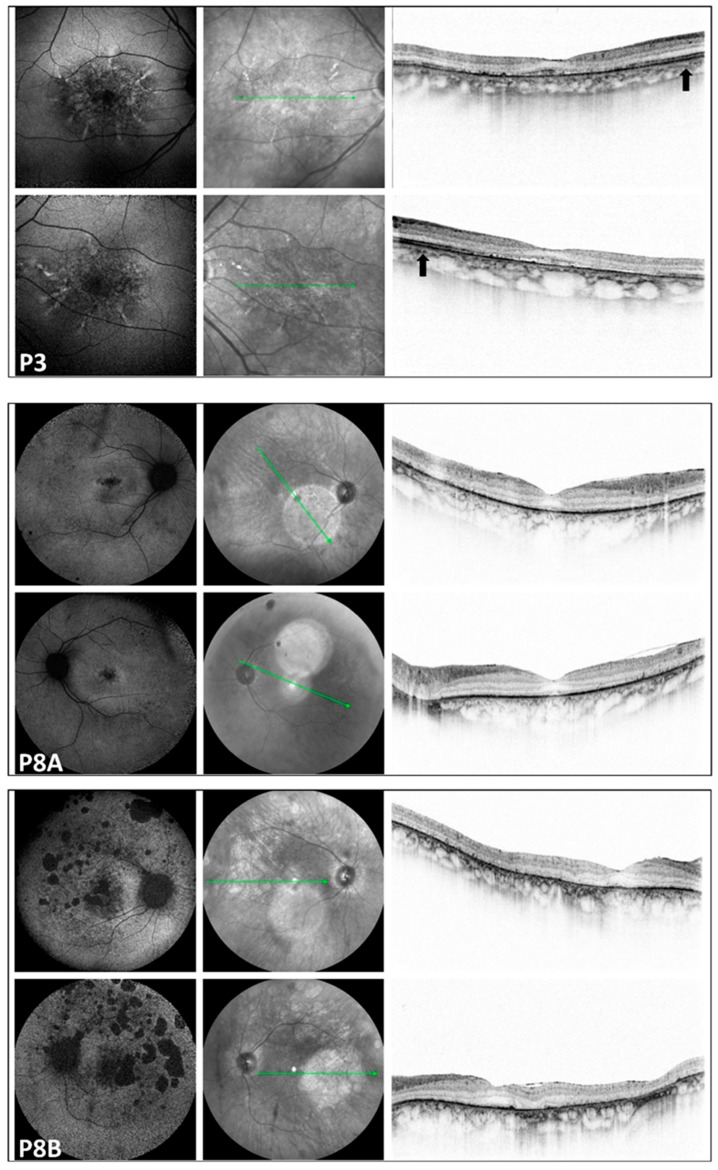 Figure 3
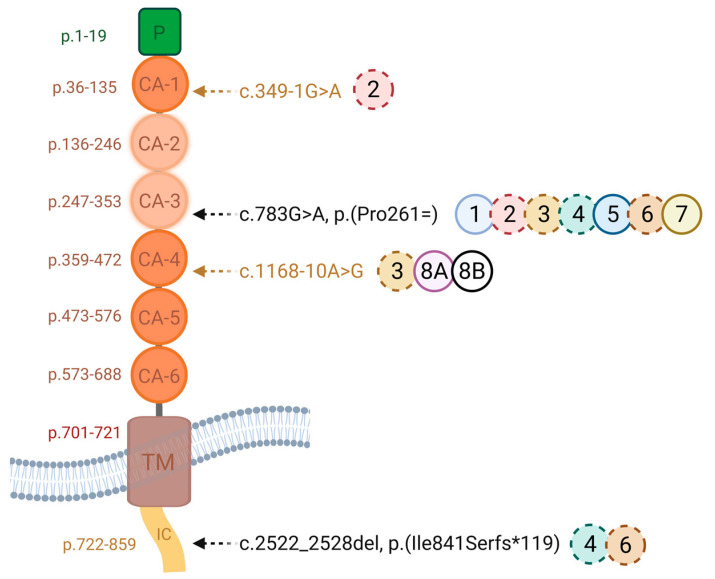 Figure 4
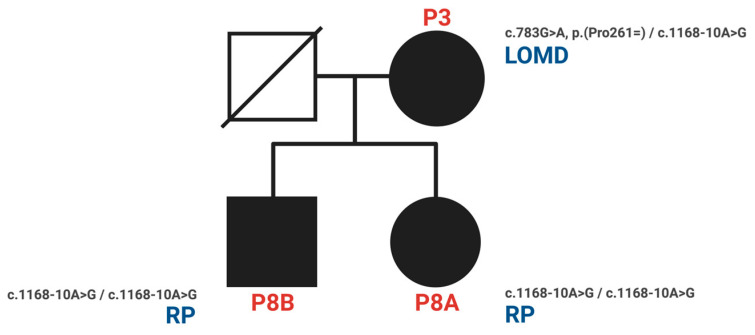 Figure 5
Peer Reviews
No public reviews on file for this paper yet. If you reviewed it on a platform where reviews are public (OpenReview, ICLR, NeurIPS, ICML), you can paste yours below so the community can read it here.
Videos
No videos yet. Explain this paper in a talk, walkthrough, or lecture? Add one.
Taxonomy
TopicsRetinal Development and Disorders · Ocular Disorders and Treatments · Genetic Neurodegenerative Diseases