Ability to Detect Digital Risks: Effects of an Educational Intervention and Dementia Risk Level
Ricardo de Oliveira Ferreira, Isabella Gomes de Oliveira Karnikowski, Emmanuely Nunes Costa, Aline Gomes de Oliveira, Mariana Sodário Cruz, Iolanda Bezerra dos Santos Brandão, Margô Gomes de Oliveira Karnikowski

TL;DR
This study shows that an educational program helps older adults better detect digital risks, especially misinformation, regardless of their dementia risk.
Contribution
The study demonstrates that educational interventions can improve older adults' ability to detect digital risks and enhance their cognitive performance.
Findings
The educational intervention improved the ability to identify digital risks in older adults.
The intervention had a specific effect on the media education dimension, reducing susceptibility to misinformation.
Cognitive gains were observed in participants, regardless of their dementia risk level.
Abstract
Introduction: Several studies have been conducted in the field of education for older adults, with an emphasis on teaching and learning processes related to the use of digital technologies. Among the relevant aspects to be considered in this context is the cognitive vulnerability of this age group in terms of digital security. Objective: The aim of this study was to analyze the relationship between cognitive aspects of older adults and their ability to identify digital risks, before and after participating in an educational intervention, as well as the effect of the intervention on cognition in this age group. Methodology: Analyses were conducted according to the educational intervention and control groups, further stratified by digital risk (SJT) and dementia risk, according to the ACE-R test. The Mann–Whitney test was used to identify possible differences in the likelihood of falling…
Genes, proteins, chemicals, diseases, species, mutations and cell lines named across the full text — each resolved to its canonical identifier and authoritative record.
Click any figure to enlarge with its caption.
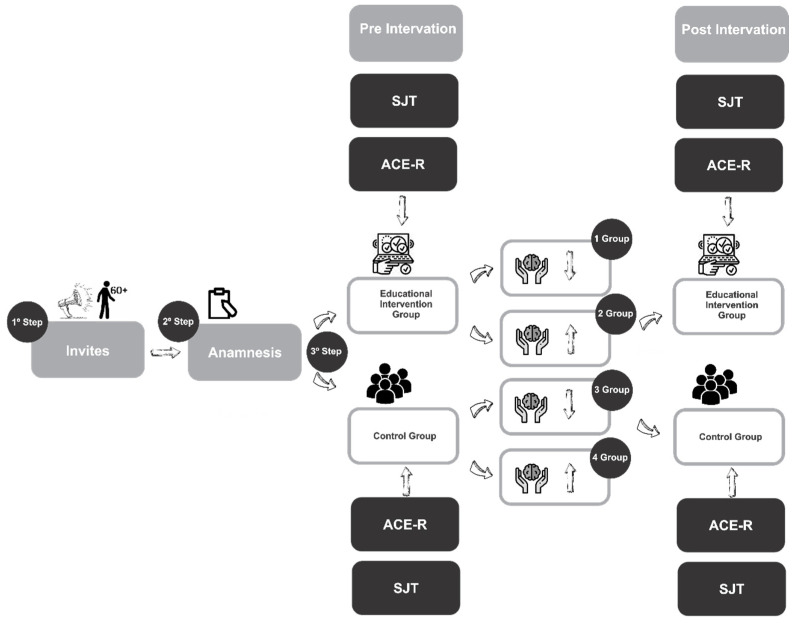 Figure 1
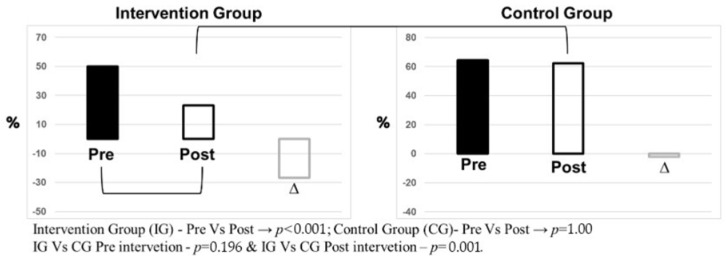 Figure 2
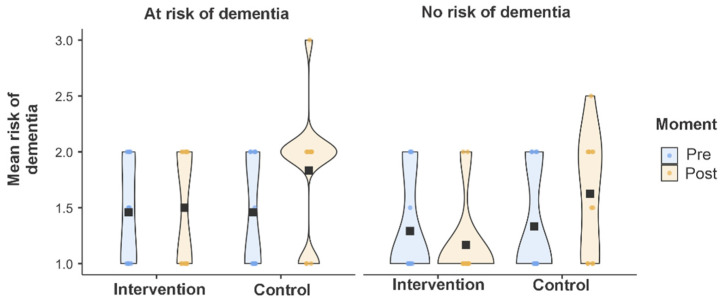 Figure 3
Peer Reviews
No public reviews on file for this paper yet. If you reviewed it on a platform where reviews are public (OpenReview, ICLR, NeurIPS, ICML), you can paste yours below so the community can read it here.
Videos
No videos yet. Explain this paper in a talk, walkthrough, or lecture? Add one.
Taxonomy
TopicsTechnology Use by Older Adults · Cognitive Functions and Memory · Elder Abuse and Neglect