Leveraging Climate Data Through Intelligent Systems for the Prediction of Arbovirus Transmission by Aedes aegypti
Clarisse Lins de Lima, Karla Amorim Sancho, Ana Clara Gomes da Silva, Ranielle Vital, Cecília Cordeiro da Silva, Marcela Franklin Salvador de Mendonça, Fabiano Tonaco Borges, Carlos Eduardo Gomes Siqueira, Wellington Pinheiro dos Santos

TL;DR
This study uses climate and mosquito data with intelligent systems to predict and control arbovirus transmission in Recife, Brazil.
Contribution
The novel use of single-layer extreme learning machines for high-resolution prediction of Aedes aegypti breeding sites in urban tropical settings.
Findings
Single-layer extreme learning machines provided the best balance of accuracy and efficiency in predicting mosquito breeding sites.
High-resolution climate-driven predictions enabled earlier identification of high-risk areas for targeted interventions.
The open-source framework can be adapted to other cities facing similar climate-related arbovirus risks.
Abstract
Public health relevance—How does this work relate to a public health issue? Arboviruses transmitted by Aedes aegypti represent a persistent and climate-sensitive public health threat in tropical urban settings such as Recife, Brazil.This study integrates climate, entomological, and epidemiological surveillance data to improve early prediction of arbovirus transmission risk. Arboviruses transmitted by Aedes aegypti represent a persistent and climate-sensitive public health threat in tropical urban settings such as Recife, Brazil. This study integrates climate, entomological, and epidemiological surveillance data to improve early prediction of arbovirus transmission risk. Public health significance—Why is this work of significance to public health? The study demonstrates that intelligent systems, particularly single-layer extreme learning machines, can accurately and efficiently…
Genes, proteins, chemicals, diseases, species, mutations and cell lines named across the full text — each resolved to its canonical identifier and authoritative record.
Click any figure to enlarge with its caption.
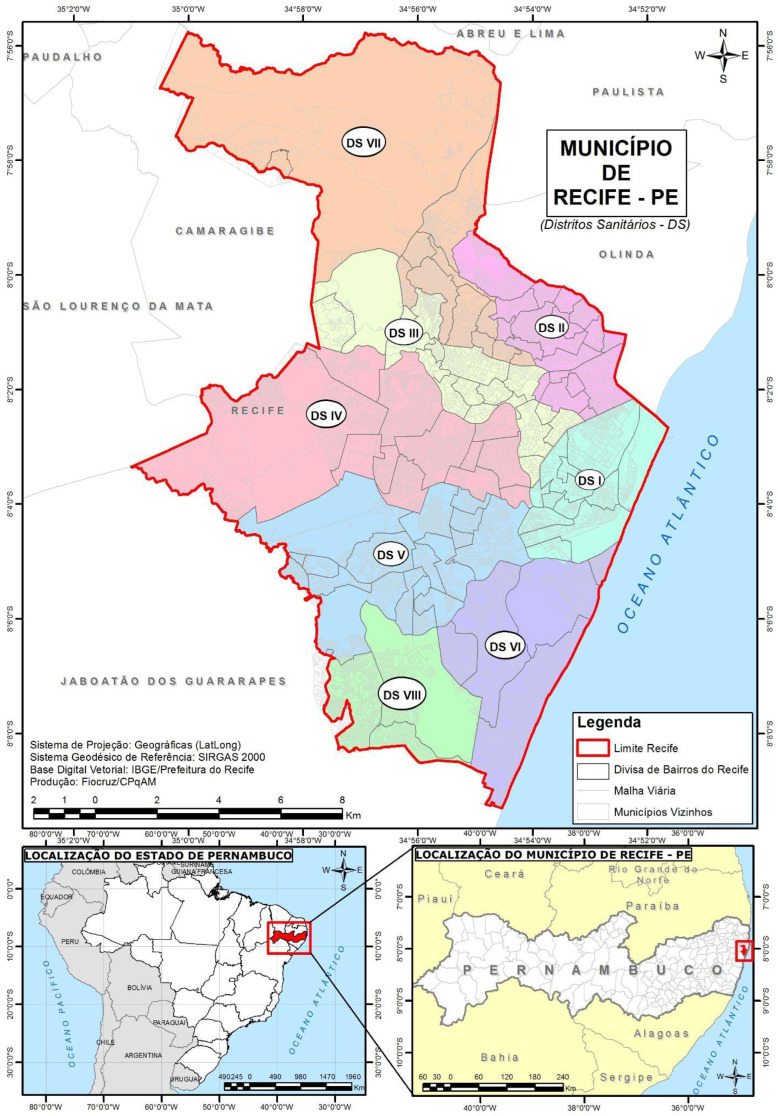 Figure 1
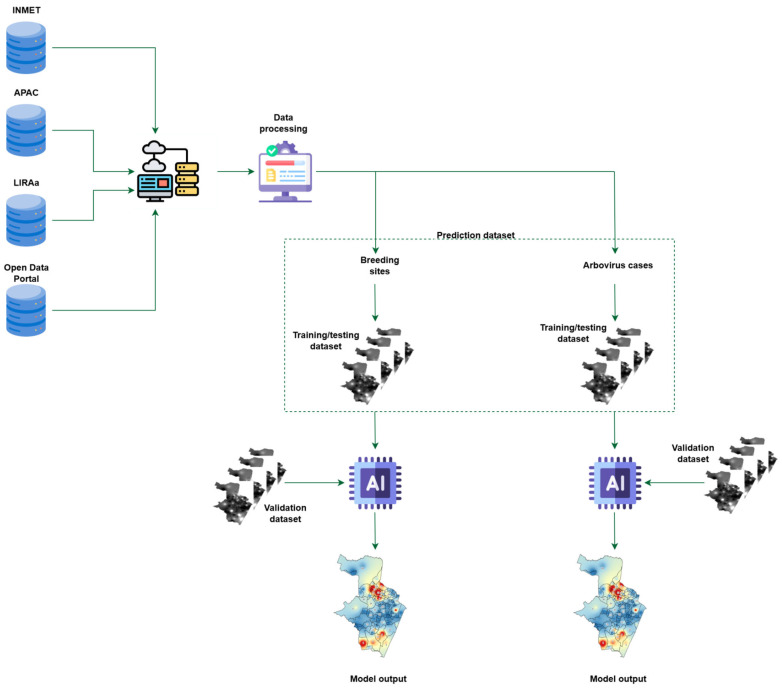 Figure 2
Peer Reviews
No public reviews on file for this paper yet. If you reviewed it on a platform where reviews are public (OpenReview, ICLR, NeurIPS, ICML), you can paste yours below so the community can read it here.
Videos
No videos yet. Explain this paper in a talk, walkthrough, or lecture? Add one.
Taxonomy
TopicsMosquito-borne diseases and control · Phytoplasmas and Hemiptera pathogens · Zoonotic diseases and public health