Unveiling Mucopolysaccharidosis IIIC in Brazil: Diagnostic Journey and Clinical Features of Brazilian Patients Identified Through the MPS Brazil Network
Yorran Hardman Araújo Montenegro, Maria Fernanda Antero Alves, Simone Silva dos Santos-Lopes, Carolina Fischinger Moura de Souza, Fabiano de Oliveira Poswar, Ana Carolina Brusius-Facchin, Fernanda Bender-Pasetto, Kristiane Michelin-Tirelli, Fernanda Medeiros Sebastião

TL;DR
This study reports on the largest cohort of Brazilian patients with Mucopolysaccharidosis IIIC, highlighting clinical features, genetic variants, and regional differences in diagnosis.
Contribution
The study presents the largest MPS IIIC patient cohort in Brazil, identifying novel genetic variants and regional diagnostic patterns.
Findings
101 Brazilian MPS IIIC patients were confirmed, representing one of the largest global cohorts.
Novel and recurrent HGSNAT gene mutations were identified, expanding the mutational spectrum.
Diagnostic delays averaged six years, with regional differences in diagnosis timing and consanguinity rates.
Abstract
Background: Mucopolysaccharidosis type IIIC (MPS IIIC) is a rare lysosomal storage disorder caused by pathogenic variants in the HGSNAT gene. Data from large patient cohorts remain scarce, particularly in Latin America. Methods: We retrospectively analyzed clinical, biochemical, and genetic data from patients diagnosed with MPS IIIC through the MPS Brazil Network. Diagnosis was based on reduced activity of acetyl-CoA:α-glucosaminide N-acetyltransferase (HGSNAT), elevated urinary glycosaminoglycans (uGAGs), and/or molecular genetics tests. Results: A total of 101 patients were confirmed with MPS IIIC, representing one of the largest cohorts worldwide. Females accounted for 60% of cases. The mean age at symptom onset was 5.4 ± 3.9 years, while the mean age at diagnosis was 11.7 ± 6.9 years, reflecting a 6-year diagnostic delay. Most patients initially presented with developmental delay…
Genes, proteins, chemicals, diseases, species, mutations and cell lines named across the full text — each resolved to its canonical identifier and authoritative record.
Click any figure to enlarge with its caption.
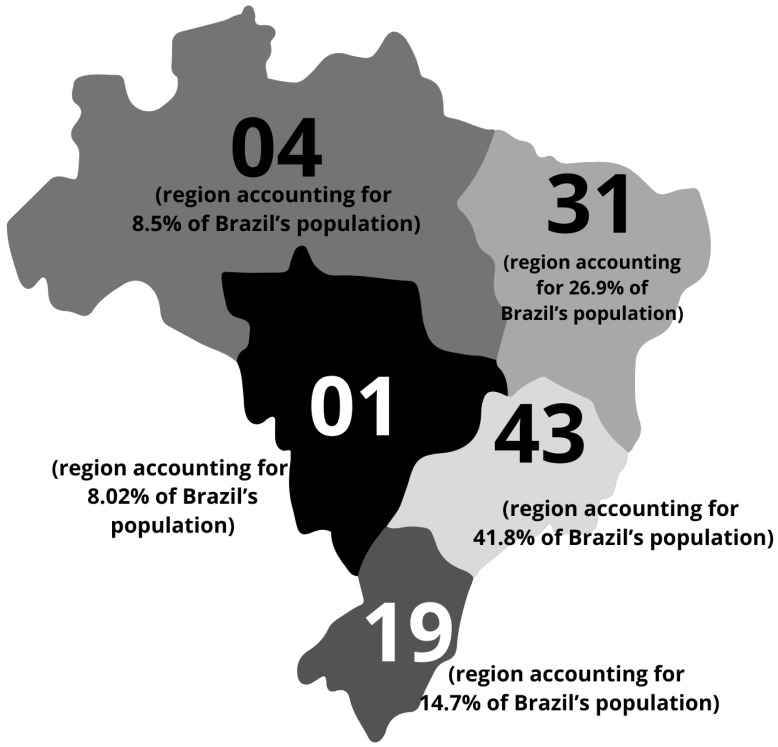 Figure 1
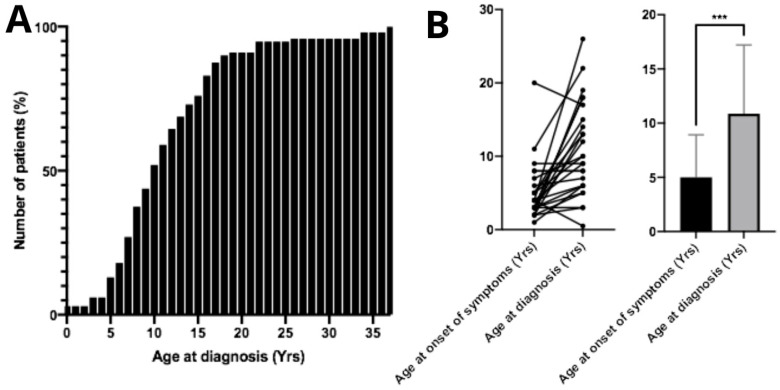 Figure 2
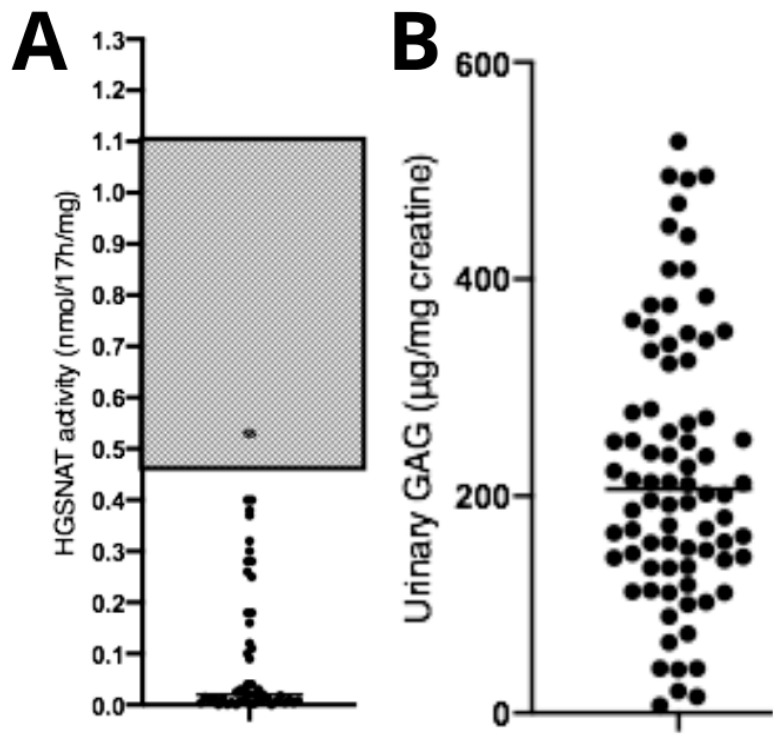 Figure 3
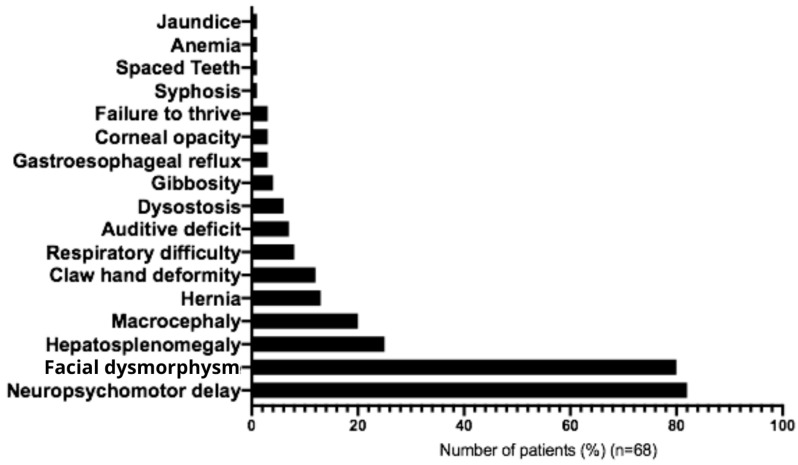 Figure 4
 Figure 5
Peer Reviews
No public reviews on file for this paper yet. If you reviewed it on a platform where reviews are public (OpenReview, ICLR, NeurIPS, ICML), you can paste yours below so the community can read it here.
Videos
No videos yet. Explain this paper in a talk, walkthrough, or lecture? Add one.
Taxonomy
TopicsLysosomal Storage Disorders Research · Trypanosoma species research and implications · Biomedical Research and Pathophysiology