A Real-Time Dynamic Warning Method for MODS in Trauma Sepsis Patients Based on a Pre-Trained Transfer Learning Algorithm
Jiahe Wen, Guanjun Liu, Panpan Chang, Pan Hu, Bin Liu, Chunliang Jiang, Xiaoyun Xu, Jun Ma, Guang Zhang

TL;DR
This paper introduces a real-time warning system for MODS in trauma sepsis patients using a pre-trained AI model that improves early risk assessment and clinical decision-making.
Contribution
The novel contribution is a pre-trained transfer learning model with strong generalizability and interpretability for MODS prediction in trauma sepsis.
Findings
The pre-trained model achieved an average AUC of 0.906 across 6-, 12-, and 24-hour prediction windows.
Fine-tuning on 100 trauma sepsis cases yielded an AUC of 0.846, outperforming non-pre-trained models by 0.165.
SHAP analysis identified platelet count as a key variable in MODS prediction.
Abstract
Objectives: Multiple organ dysfunction syndrome (MODS) is a serious, prognostically poor complication in trauma sepsis. We developed an interpretable, multicenter-validated prediction model to enable early, individualized risk assessment and guide timely care. Methods: Using MIMIC-IV and eICU data, we built a pre-trained transfer-learning model with a separation processing strategy and assessed interpretability with SHAP. Results: Internal validation included 700 MIMIC-IV patients; external validation included 110 eICU patients. Across 6-, 12-, and 24-h prediction windows, the best pre-trained model achieved an average AUC of 0.906. Notably, fine-tuning on only 100 trauma sepsis cases (3.6% of the training set) still yielded an AUC of 0.846, surpassing the non-pre-trained model by 0.165. SHAP analysis further revealed that platelet count was one of the most important variables…
Genes, proteins, chemicals, diseases, species, mutations and cell lines named across the full text — each resolved to its canonical identifier and authoritative record.
Click any figure to enlarge with its caption.
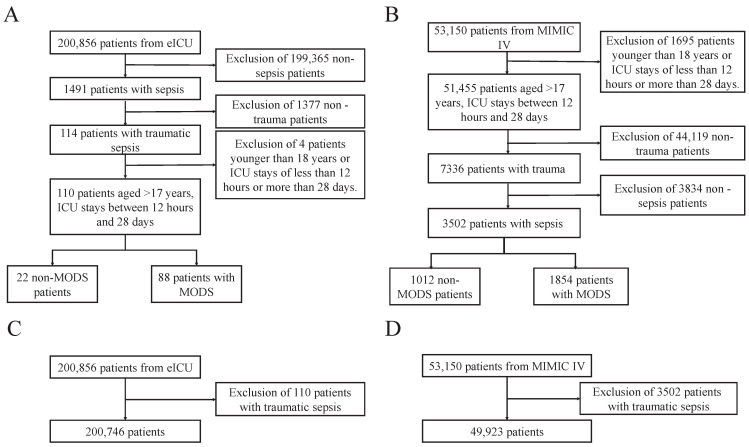 Figure 1
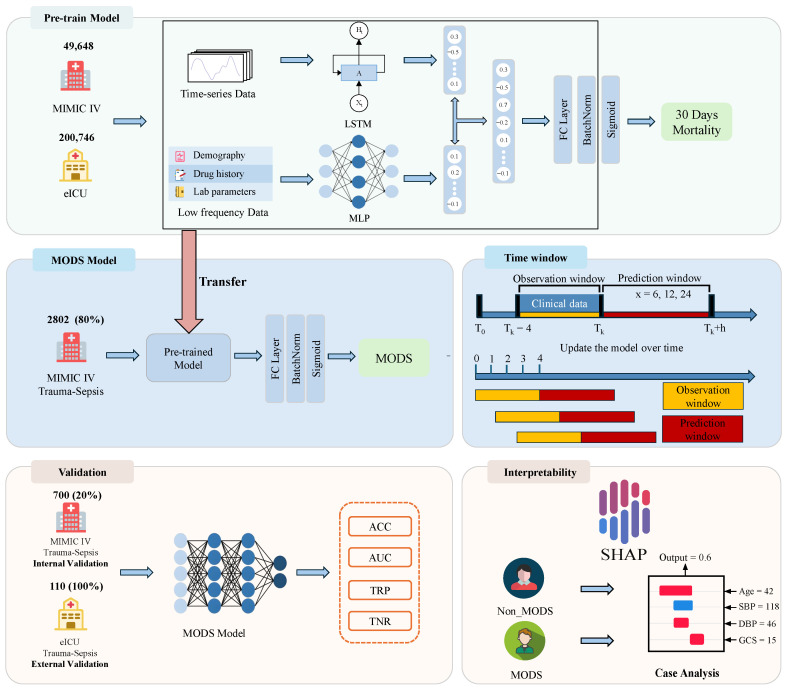 Figure 2
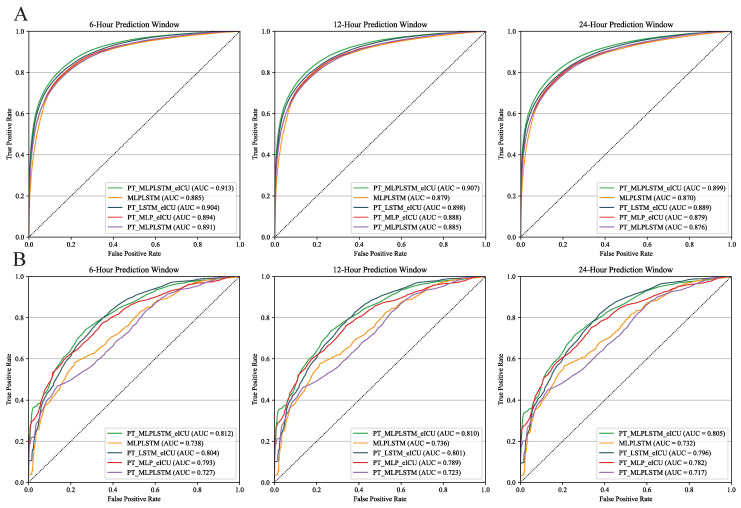 Figure 3
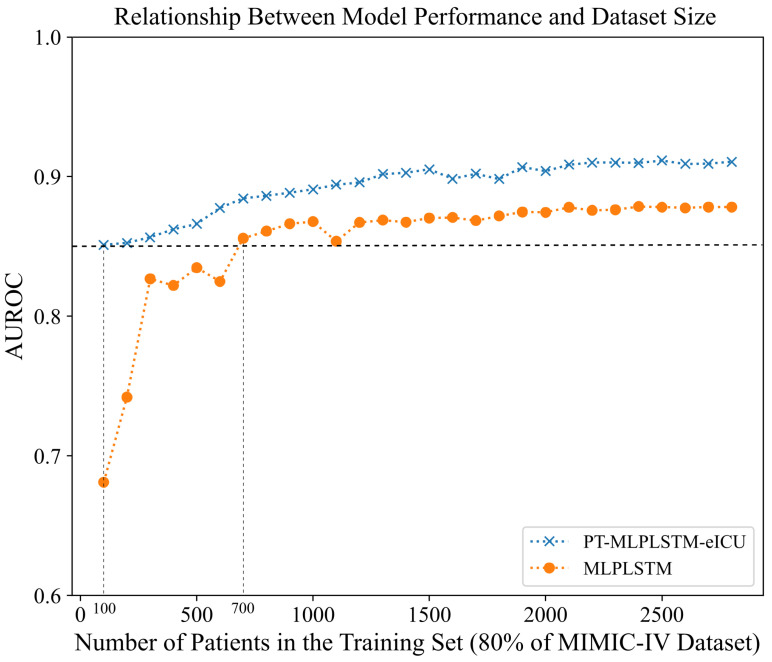 Figure 4
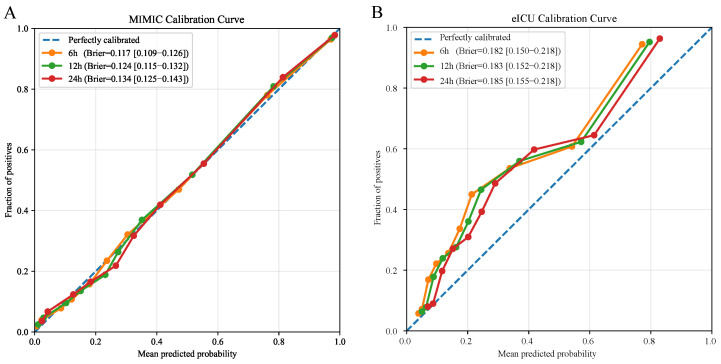 Figure 5
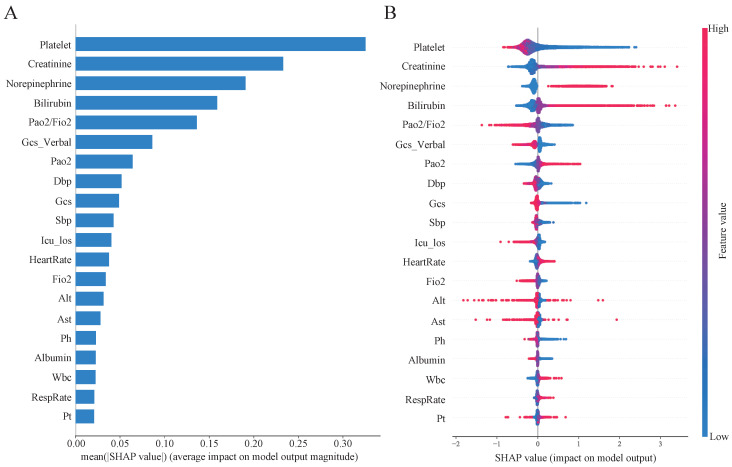 Figure 6
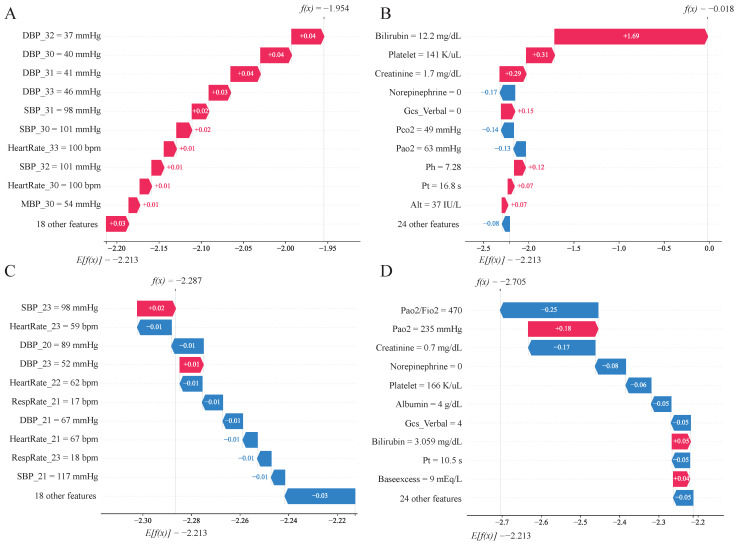 Figure 7
Peer Reviews
No public reviews on file for this paper yet. If you reviewed it on a platform where reviews are public (OpenReview, ICLR, NeurIPS, ICML), you can paste yours below so the community can read it here.
Videos
No videos yet. Explain this paper in a talk, walkthrough, or lecture? Add one.
Taxonomy
TopicsSepsis Diagnosis and Treatment · Trauma, Hemostasis, Coagulopathy, Resuscitation · Immune Response and Inflammation